Understanding Leucaena leucocephala: The "Miracle" and "Conflict" Tree
Known by many names—including ipil-ipil, white leadtree, and horse tamarind—Leucaena leucocephala is a fast-growing mimosoid tree that occupies a unique position in the natural world. Native to southern Mexico and northern Central America, this resilient species has naturalized across the tropics, from Asia to the Pacific Islands. While it has been celebrated as a "miracle tree" for its immense utility, it is equally recognized as a highly invasive species and a "conflict tree" due to its tendency to spread aggressively.
Whether used for high-protein livestock fodder, firewood, or industrial pulp, this legume plays a significant role in various ecosystems and economies. However, its rapid growth and chemical properties require careful management to prevent ecological imbalance.
Key Facts
- Scientific Name: Leucaena leucocephala
- Growth Rate: Extremely fast; young trees can exceed 6 meters (20 ft) in just two to three years.
- Primary Use: High-protein cattle fodder, firewood, and paper pulp.
- Toxicity: Contains mimosine, an amino acid toxic to non-ruminant vertebrates.
- Invasive Status: Ranked among the 100 worst invasive species by the IUCN Species Survival Commission.
- Ecological Benefit: Highly efficient at nitrogen fixation (over 500 kg/ha/year).
Botanical Description and Characteristics
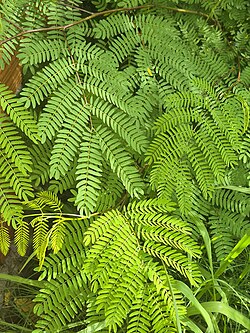
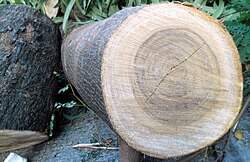
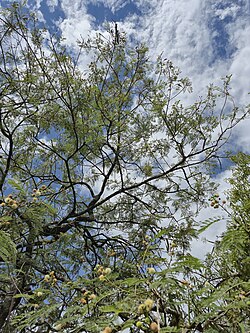
Leucaena leucocephala is a small tree that typically reaches heights of 7 to 18 meters (23–59 ft). It is characterized by grey, cracked bark and branches that are notably free of thorns. The foliage consists of 6–8 pairs of leaf stalks, each bearing between 11 and 23 pairs of small, pale green leaflets that feature a whitish underside.
The tree produces cream-colored, puff-like inflorescences (flower clusters) containing numerous stamens. Following flowering, it develops flat, straight seed pods that measure 13–18 cm (5.1–7.1 in) in length. These pods transition from green to brown as they mature, with each pod containing between 15 and 30 seeds.
Scientific Classification
| Rank | Classification |
|---|---|
| Kingdom | Plantae |
| Clade | Tracheophytes (Vascular plants) |
| Clade | Angiosperms (Flowering plants) |
| Order | Fabales |
| Family | Fabaceae (Legumes) |
| Subfamily | Caesalpinioideae |
| Genus | Leucaena |
| Species | L. leucocephala |
Ecological Impact and Invasive Nature
While beneficial in controlled environments, L. leucocephala is a formidable competitor in the wild. It is considered one of the 100 worst invasive species by the IUCN. It forms dense thickets that can crowd out native vegetation, particularly in arid regions of Taiwan, South Africa, Australia, and various islands in the Pacific and Caribbean. In the United States, it has established itself in states such as Hawaii, Florida, California, Arizona, and Texas.
In urban settings, the tree can become a nuisance. In cities like Pune, India, it is noted for its tendency to be uprooted by wind and rain, accounting for a significant portion of wind-related tree damage. Additionally, the species is susceptible to insect infestations, such as the psyllid attacks that caused widespread loss in Southeast Asia during the 1980s.
Versatile Uses: From Food to Fuel
Livestock Fodder and the Mimosine Challenge
One of the most significant uses of this legume is as a high-protein source of cattle fodder. However, the seeds contain mimosine, an amino acid that can be toxic. While ruminants (animals like cattle) can often metabolize this, non-ruminant vertebrates like horses and donkeys may suffer from hair loss if fed the plant. In some regions, farmers overcome this by inoculating livestock with specific rumen organisms, such as Synergies jonesii, which help degrade the toxic compounds.
Culinary Applications
In various cultures, parts of the tree are consumed by humans. In Mexico, the pods are known as guaje and are used in soups and tacos. In Southeast Asian countries like Thailand, Laos, and Indonesia, the young pods are used in salads and spicy dishes. It is generally believed that cooking the pods helps remove most of the toxic elements.
Industrial and Agricultural Benefits
The tree offers several high-value industrial applications:
- Paper Industry: The wood is a vital source of pulp, particularly in southern and central India.
- Biomass and Energy: Due to its rapid growth, it is used for firewood, charcoal, and large-scale biomass production.
- Soil Fertility: As a legume, it excels at nitrogen fixation, which improves soil quality for other crops.
- Bioherbicidal Potential: The tree is allelopathic, meaning it releases chemicals (such as gallic acid and mimosine) that can inhibit the growth of other plants and aquatic weeds.
Frequently Asked Questions
Is Leucaena leucocephala safe to eat?
Young pods are eaten in various cuisines, including Mexican tacos and Southeast Asian salads. However, because the seeds contain mimosine, cooking is thought to be necessary to remove most of the toxicity.
Why is this tree considered invasive?
It grows extremely quickly and forms dense thickets that outcompete native plant species for resources, making it difficult for local flora to survive.
Can all animals eat Leucaena?
No. While it is an excellent protein source for ruminants like cattle, it is toxic to non-ruminant vertebrates. For example, horses and donkeys fed the plant can experience hair loss.
How does the tree help the environment?
It is highly efficient at nitrogen fixation, which helps enrich the soil. It is also used for biomass production and as a source of firewood in many developing regions.
What is the difference between Ipil-ipil and the Ipil plant?
While they share similar names, Leucaena leucocephala (Ipil-ipil) is a distinct species and should not be confused with the Ipil plant.