Leopold Infeld: The Physicist Who Collaborated with Einstein
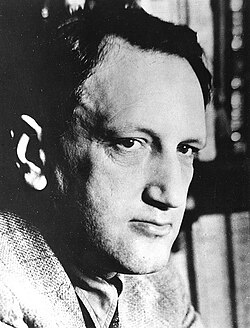
Leopold Infeld was a distinguished Polish physicist whose career spanned several continents and some of the most significant intellectual partnerships of the 20th century. Best known for his deep expertise in the theory of relativity—the study of gravity and the universe's large-scale structure—Infeld played a pivotal role in refining the mathematical frameworks used to describe the cosmos.
From his early academic pursuits in Kraków to his high-profile collaboration with Albert Einstein at Princeton, Infeld's life was marked by both scientific brilliance and political turbulence. His journey reflects the intersection of theoretical physics and the geopolitical upheavals of the mid-century.
Key Facts
- Primary Field: Theoretical physics, specifically the theory of relativity.
- Major Collaboration: Co-authored The Evolution of Physics with Albert Einstein.
- Key Contributions: Developed the Born–Infeld model and the Infeld–Hull factorization method.
- Academic Legacy: Professor at the University of Toronto and the University of Warsaw.
- Activism: Signatory of the Russell–Einstein Manifesto and the Letter of 34.
Early Life and Academic Foundation
Born on August 20, 1898, in Kraków, Austria-Hungary (which became part of Poland in 1918), Leopold Infeld was raised in a family of Polish Jews. He began his higher education at the Jagiellonian University in Kraków. Seeking further knowledge, he moved to Berlin in 1920, where he secured admission to the University of Berlin with the assistance of Albert Einstein. Infeld earned his doctorate in 1921, setting the stage for a career dedicated to the complexities of space and time.
Scientific Contributions and the Einstein Partnership
Infeld's professional trajectory took him through several prestigious institutions, including the University of Lwów and Cambridge University, where he served as a Rockefeller fellow from 1933 to 1934. However, his most famous period of research occurred between 1936 and 1938 at Princeton University.
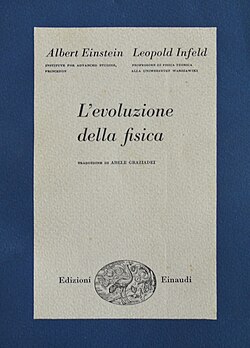
During this time, Infeld collaborated closely with Albert Einstein. Together, they formulated the Einstein–Infeld–Hoffmann equations, which describe the movement of stars. Their partnership also produced The Evolution of Physics, a book designed to make complex physical concepts accessible to a wider audience.
Major Theoretical Developments
Beyond his work with Einstein, Infeld contributed several key concepts to the field of physics:
- Born–Infeld Theory: A model proposed alongside Max Born to address issues in classical electromagnetism.
- Infeld–Hull Factorization Method: A mathematical approach used to find general sets of solutions to the Schrödinger equation, which describes how the quantum state of a physical system changes over time.
- Infeld–Van der Waerden symbols: Specialized mathematical notations used in relativity.
Political Turmoil and Return to Poland
Following the use of nuclear weapons in 1945, Infeld became a dedicated peace activist. This stance, combined with the Cold War atmosphere, led to accusations of communist sympathies while he was teaching at the University of Toronto (1939–1950). Despite his work being in relativity—a field not directly linked to nuclear weapons research—he was viewed with suspicion by the Canadian government.
In 1950, Infeld resigned from his post at the University of Toronto and returned to Poland to help rebuild Polish science after the devastation of World War II. He was stripped of his Canadian citizenship and denounced as a traitor by some in Canada. It was not until 1995 that the University of Toronto formally recognized his contributions by granting him the posthumous title of professor emeritus.
In Poland, he served as the president of the Polish Physical Society (1955–1957) and became a professor at the University of Warsaw, where he remained until his death on January 15, 1968.
Summary of Career and Legacy
| Category | Details |
|---|---|
| Education | Jagiellonian University, University of Berlin |
| Key Institutions | Cambridge, Princeton, University of Toronto, University of Warsaw |
| Notable Works | The Evolution of Physics, Quest: An Autobiography |
| Major Theories | Born–Infeld model, Infeld–Hull factorization |
| Advocacy | Russell–Einstein Manifesto, Letter of 34 |
Frequently Asked Questions
What was Leopold Infeld's relationship with Albert Einstein?
Infeld was a close collaborator of Albert Einstein, particularly between 1936 and 1938 at Princeton. They co-authored the book The Evolution of Physics and jointly developed equations describing the movement of stars.
Why was Infeld stripped of his Canadian citizenship?
During the Cold War, Infeld's peace activism led to accusations of communist sympathies. When he returned to Poland in 1950, the Canadian government feared he might betray nuclear secrets, despite his specialization being in the theory of relativity rather than nuclear weapons.
What is the Born–Infeld theory?
The Born–Infeld model is a theoretical framework in physics proposed by Max Born and Leopold Infeld to resolve certain singularities in the classical theory of the electron.
Was Leopold Infeld a Nobel Prize winner?
No. Interestingly, Infeld was one of the 11 signatories of the 1955 Russell–Einstein Manifesto, and he is the only signatory of that document who never received a Nobel Prize.
What other books did Leopold Infeld write?
In addition to his scientific collaborations, Infeld wrote an autobiography titled Quest and a biography of the mathematician Évariste Galois titled Whom the Gods Love.