Leipheim: A Bavarian Town of Aviation History and Tradition
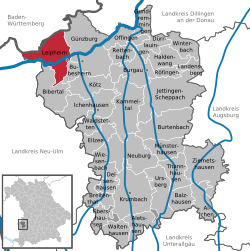
Nestled along the banks of the Danube in the district of Günzburg, Leipheim is a town that blends deep historical roots with significant industrial and aviation milestones. Located just 5 kilometers west of Günzburg and 17 kilometers northeast of Ulm, this Bavarian community serves as a gateway to the region of Schwaben, encompassing the village of Riedheim and the hamlet of Weissingen.
From its medieval origins as a market town to its role in the birth of jet aviation, Leipheim offers a compelling narrative of resilience and innovation. Since 1993, the town has maintained a friendly international bond through its twinning with Fonyód, Hungary.
Key Facts
- Location: Situated in Bavaria, Germany, within the Günzburg district.
- Population: 7,434 residents (as of December 31, 2024).
- Aviation Milestone: Site of the first flight of the Messerschmitt Me 262, the world's first operational turbojet fighter.
- Economic Hub: Home to three production sites for Wanzl, a global leader in shopping cart manufacturing.
- Cultural Tradition: Hosts the annual Kinderfest every second weekend of July.
A Journey Through History
Medieval Origins and Early Governance
Leipheim's formal development began under the ownership of the Güß von Güssenberg family between 1270 and 1373. Through the influence of Louis IV (Ludwig the Bavarian), the settlement was granted market privileges in 1327 and officially became a town in 1330. Ownership later shifted to the Count of Württemberg in 1343, before the Free Imperial City of Ulm purchased the town in 1453 for 23,000 Gulden.
The town's religious identity shifted in 1531 when it followed Ulm's conversion to Protestantism. However, the 16th century also brought conflict; in 1525, during the German Peasants' War, approximately 5,000 peasants known as the Leipheimer Haufen (the Leipheim Bunch) gathered here to rise against Ulm, only to be defeated by the Swabian League.
The Path to Modern Bavaria
During the German Mediatisation of 1803, Leipheim was integrated into Bavaria. While many territories were shifted back to Württemberg after 1810, Leipheim remained Bavarian. The community's current administrative form was established in 1818 under King Maximilian I Joseph of Bavaria.
One of the town's most cherished traditions, the Kinderfest (Festival of Children), was born from hardship. Following the Napoleonic Wars and severe weather in 1816 and 1817, the town suffered a devastating famine. After a successful harvest in 1818, the citizens fulfilled a promise to celebrate the end of the famine. Today, this festival continues every July, blending traditional songs and dances with a modern fairground atmosphere.
Aviation and Military Significance
The 20th century transformed Leipheim into a center of aerospace engineering. In 1937, the town saw the completion of the A8 autobahn and a motorway bridge over the Danube, alongside the construction of an air base. This facility produced the Messerschmitt Me 321 cargo glider and the Me 323 strategic transport aircraft.
Most notably, on July 18, 1942, the prototype of the Messerschmitt Me 262 Schwalbe (Swallow)—the world's first operational turbojet fighter aircraft—took its first flight in Leipheim. Approximately 800 units were mass-produced here starting in 1944.
Following World War II, the air base served a humanitarian purpose. From 1945 to 1950, it housed a displaced persons camp for up to 3,150 Jewish survivors of the Holocaust. The site later returned to military use, hosting U.S. Army troops, including the 54th Combat Engineer Battalion in the mid-1950s, until 1993.
Economy and Community
Today, Leipheim is recognized globally through Wanzl, a world-leading manufacturer of shopping carts. Since 1947, this family business has expanded from a small workshop into a global powerhouse, with three of its four German production sites located within the town.
The community is supported by dedicated local organizations, including the Voluntary Fire Brigade, established in 1865, and the Leipheim/Günzburg district association of the German Life Saving Association (Deutsche Lebensrettungsgesellschaft), which boasts 450 members.
| Category | Detail |
|---|---|
| State / Region | Bavaria / Schwaben |
| Total Area | 32.15 km² |
| Elevation | 470 m |
| Population (2024) | 7,434 |
| Postal Code | 89340 |
| Vehicle Registration | GZ |
Frequently Asked Questions
What is the significance of the Kinderfest?
The Kinderfest is an annual celebration held on the second weekend of July. It commemorates the end of a severe famine that struck Leipheim in 1816 and 1817, honoring a promise made by the townspeople to celebrate once harvests returned to normal.
Why is Leipheim important to aviation history?
Leipheim was the site of the first flight of the Messerschmitt Me 262 on July 18, 1942, which was the world's first operational turbojet fighter aircraft.
Which major company is based in Leipheim?
Wanzl, a global leader in the production of shopping carts, operates three of its four German production facilities in Leipheim.
What is the history of the town's coat of arms?
The coat of arms, featuring a blue shield with a golden diagonal bar and three red six-pointed stars, dates back to the 14th century (first sourced in 1404) and uses the colors of the Güß von Güssenberg family.
What happened at the Leipheim air base after World War II?
Between 1945 and 1950, the former air base served as a displaced persons camp for up to 3,150 Jewish survivors of the Holocaust before returning to military use in 1957.