League of Arab States
The League of Arab States, commonly known as the Arab League, is a prominent regional organisation dedicated to strengthening the ties between its member states. Spanning two continents, the organisation serves as a central forum for political, economic, and social cooperation among Arabic-speaking nations in Africa and Asia.
Founded on the principles of regional solidarity, the League manages a vast territory and a diverse population, coordinating efforts on everything from judicial cooperation to free trade agreements.
Key Facts
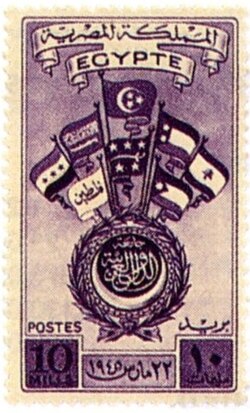
- Established: 22 March 1945 via the Alexandria Protocol.
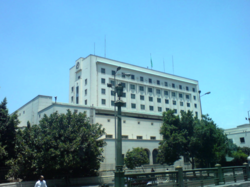
- Headquarters: Cairo, Egypt.
- Membership: 22 member states.
- Total Area: Approximately 13,132,327 km².
- Estimated Population (2025): 481,233,000.
- Official Language: Arabic.
- Current Secretary-General: Ahmed Aboul Gheit.
Geography and Demographics
The member states of the Arab League cover over 13 million square kilometers, straddling Africa and Asia. While much of the region is characterized by arid deserts, such as the Sahara, it also encompasses some of the world's most fertile regions. These include the Nile Valley, the Fertile Crescent in Mesopotamia and the Levant, and the Jubba and Shebelle Valleys in the Horn of Africa.
The region's geography is further defined by the Atlas Mountains in the Maghreb and the Nile, the world's longest river. With a 2025 population estimate of over 481 million people, the League represents one of the most populous regional blocs globally.
Membership and Evolution
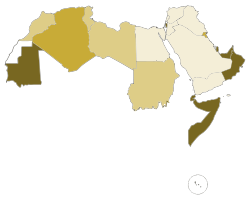
Since its inception in 1945 with seven founding members, the League has grown to include 22 states, 10 of which are located in Africa. Membership has evolved over decades to reflect the changing political landscape of the Arab world.
Suspensions and Reinstatements
The League's history has been marked by several high-profile suspensions due to political conflicts:
- Egypt: Suspended on 26 March 1979 following the Egypt–Israel peace treaty. During this period, the headquarters moved to Tunis, Tunisia. Egypt was readmitted in May 1989, and the headquarters returned to Cairo in September 1990.
- Libya: Suspended on 22 February 2011 during the first Libyan civil war. Membership was restored on 27 August 2011 via the National Transitional Council.
- Syria: Suspended on 16 November 2011 following the Syrian civil war. Its seat was briefly given to the Syrian National Coalition in 2013. After a process of normalisation, Syria's membership was reinstated on 7 May 2023.
Politics and Administration
The Arab League operates through a structured administrative system, including the Arab Parliament and the leadership of the Secretary-General. A significant part of its political history involves the Palestinian cause. In 1964, the League initiated the creation of an organisation to represent the Palestinian people, leading to the founding of the Palestine Liberation Organization (PLO). Today, the State of Palestine is a full member of the League.
The organisation continues to navigate complex diplomatic waters, such as the normalisation of ties between certain member states and Israel, while maintaining the overarching goal of establishing an independent Palestinian state on the 1967 borders with East Jerusalem as its capital.
Diplomatic Summits
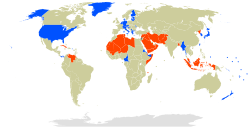
The League convenes regular and emergency summits to address urgent regional crises and long-term strategic goals. These meetings have been hosted in various cities, including Cairo, Baghdad, Riyadh, and Algiers.
Economic and Social Indicators
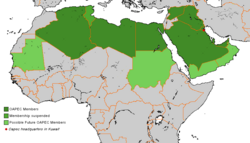
The Arab League members possess significant economic resources, particularly in the energy sector, with many members belonging to the Organization of Arab Petroleum Exporting Countries (OAPEC).
Economic performance varies across the region, with a total nominal GDP estimated at $3.546 trillion for 2025. Socially, literacy rates show a wide range, with Qatar and Palestine leading the group, while Somalia and Mauritania have lower rates.
| Metric | Value |
|---|---|
| Total Area | 13,132,327 km² |
| Total Population | 481,233,000 |
| Nominal GDP (Total) | $3.546 Trillion |
| GDP (PPP) Total | $9.423 Trillion |
| GDP Per Capita (Nominal) | $7,369 |
Frequently Asked Questions
Where is the Arab League headquartered?
The headquarters of the Arab League are located in Cairo, Egypt, although they were temporarily moved to Tunis, Tunisia, between 1979 and 1990.
How many member states are in the Arab League?
There are currently 22 member states, including 10 countries located in Africa.
What is the role of the Arab Parliament?
The Arab Parliament serves as the legislative body of the regional organisation, working alongside the Secretary-General and the member states.
Has any country been suspended from the League?
Yes, Egypt, Libya, and Syria have all faced suspensions at different times due to political conflicts or treaties, though all have since been readmitted.
What is the official language of the organisation?
The official language of the League of Arab States is Arabic.