Leaf Miner Biology: How These Tiny Insects Shape Plant Ecosystems
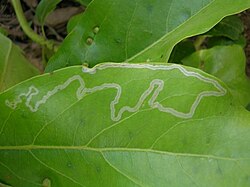
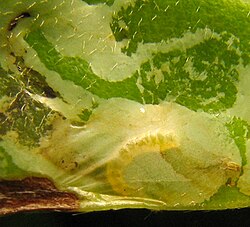
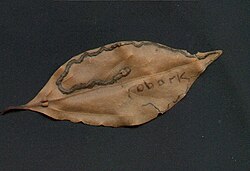
To the casual observer, a leaf might appear to have strange, winding trails or irregular blotches etched into its surface. These markings are often the work of leaf miners—the larval stage of various insect species that live and feed directly within the internal tissues of a plant's leaves. Rather than being a single taxonomic group, "leaf mining" describes a specialized feeding behavior that has evolved independently across several different insect orders.
This ancient ecological strategy dates back to at least the beginning of the Permian period, approximately 295 million years ago. By consuming the nutrient-rich inner tissues while leaving the protective outer epidermal layers largely intact, these larvae have carved out a unique niche in the natural world. Because they impact both wild ecosystems and human agriculture, leaf miners are considered both ecologically significant and economically important.
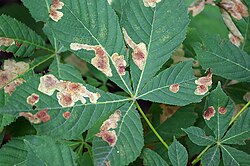
Key Facts
- Definition: A feeding behavior where insect larvae live and eat inside leaf tissue.
- Ancient Origins: This strategy has existed for at least 295 million years.
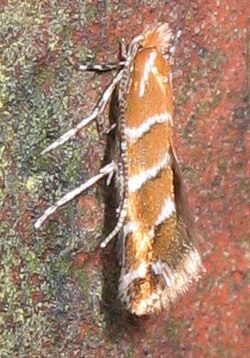
- Diverse Taxonomy: Includes moths (Lepidoptera), flies (Diptera), sawflies (Hymenoptera), and beetles (Coleoptera).
- Identification: Patterns of "mines," shape, and frass (insect droppings) help identify the species.
- Plant Defense: Plants use structural, chemical, and physiological methods to fight infestations.
Taxonomy and Life Cycles
Leaf mining is not limited to one type of insect. It is a convergent evolutionary trait seen in several distinct groups:
- Lepidoptera: Various species of moths.
- Diptera: Flies, particularly those in the Agromyzidae family.
- Hymenoptera: Specifically certain types of sawflies.
- Coleoptera: Various beetle species.
The life cycle typically begins when an adult insect lays eggs on or within the surface of a host leaf. Upon hatching, the larvae burrow into the leaf to feed between the epidermal layers. This lifestyle offers a significant advantage: much like woodboring beetles, leaf miners are shielded from many predators by the very tissue they consume. They are highly selective, often eating only the layers with the least cellulose. Once development is complete, the insect pupates either within the mine, on the leaf surface, or in the soil below.
How Plants Defend Themselves
Plants are not passive victims; they have evolved sophisticated strategies to combat leaf miners. These defenses can be categorized into structural, chemical, and physiological responses.
Structural Defenses
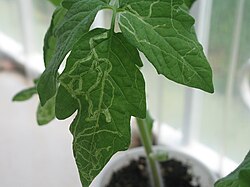
Some plants use physical barriers to prevent infestation. For example, trichomes (tiny leaf hairs) can deter insects. The species Solanum pennellii uses these hairs to resist the leaf mining fly Liriomyza trifollii. In contrast, the cultivated tomato (Solanum lycoperticum) has fewer trichomes, making it more susceptible to damage.
Leaf thickness and age also play a role. In citrus trees, older and larger leaves can often resist the citrus leaf miner (Phyllocnistis citrella), whereas younger, thinner leaves are highly vulnerable. Additionally, some plants use leaf variegation—patterned coloring—to mimic existing damage. This deception may trick adult insects into thinking a leaf is already occupied, as seen in Caladium steudnerifolium.
Chemical and Physiological Defenses
Plants also deploy chemical warfare. Many species produce tannins, organic polyphenolic compounds that can poison herbivores or make them more susceptible to natural parasites. Other plants, such as the Red buckeye (Aesculus pavia), produce saponins to resist the Horse Chestnut Leafminer.
In some cases, plants employ a physiological response known as abscission, where they intentionally shed infected leaves to remove the larvae from the plant. The arroyo willow (Salix lasiolepis) uses this method to reduce the survival rates of Phyllonorycter species.
Summary of Plant Defense Mechanisms
| Defense Type | Mechanism | Example |
|---|---|---|
| Structural | Trichomes (hairs) | Solanum pennellii |
| Structural | Leaf Variegation (Mimicry) | Caladium steudnerifolium |
| Chemical | Tannins | Various species |
| Chemical | Saponins | Red buckeye (Aesculus pavia) |
| Physiological | Leaf Abscission (Shedding) | Arroyo willow (Salix lasiolepis) |
Human Management and Impact
For farmers and gardeners, leaf miners are often viewed as pests. Because the larvae live inside the leaf, they are difficult to reach with standard insecticide sprays. One option is spinosad, an organic insecticide. However, spinosad must be ingested to work and can have harmful ecological effects on beneficial arthropods like bees if not used carefully.
A more ecological approach is companion planting. By using trap crops—such as lambsquarter or columbine—gardeners can lure leaf miners away from their primary crops. While individual infestations are manageable, certain species can experience population spikes, leading to massive outbreaks that defoliate entire forests or plantations, altering local nutrient cycles and ecosystems.
Frequently Asked Questions
How can I identify a leaf miner?
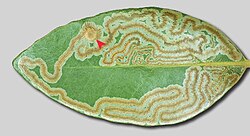
Identification is often based on the specific pattern of the feeding tunnel (the "mine"), the shape of the mine, the layer of the leaf being eaten, and the presence of frass (insect droppings) within the trail.
Are leaf miners a single type of insect?
No. Leaf mining is a behavior found in several different insect orders, including moths, flies, sawflies, and beetles.
Can I use organic sprays to control them?
Yes, spinosad is an organic insecticide used for control, but it must be ingested by the larvae and requires careful application to avoid harming beneficial insects like bees.
What is companion planting in the context of leaf miners?
Companion planting involves placing "trap crops" (like columbine) near your main plants to attract the leaf miners to the trap crop instead of your desired plants.
Why are leaf miners so hard to kill with sprays?
Because the larvae live protected inside the leaf tissue between the epidermal layers, they are physically shielded from many topical insecticides.