Stalk Borer: Biology and Impact of Papaipema nebris
The stalk borer (Papaipema nebris) is a specialized moth belonging to the family Noctuidae. Known primarily for its larval stage, which can cause significant damage to various plants, this insect is a notable figure in the ecology of North American grasslands and agricultural fields.
Key Facts
- Scientific Name: Papaipema nebris
- Family: Noctuidae
- Wingspan: 25–44 mm
- Flight Period: June to September
- Primary Host: Corn and other large-stemmed plants
- Distribution: Southern Canada to the Gulf of Mexico (excluding Florida)
Classification and Taxonomy
The stalk borer is classified within the order Lepidoptera, which encompasses all butterflies and moths. It belongs to the superfamily Noctuoidea and the family Noctuidae. Historically, the species has been referred to by several synonyms, including Gortyna nebris, Gortyna nitela, and Papaipema nitella.
The species was formally described by Guenée in 1852.
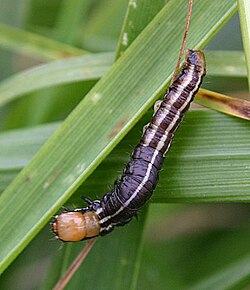
Distribution and Habitat
The geographic range of Papaipema nebris is extensive, covering much of the eastern portion of the North American continent. It is found from southern Canada, extending through the Eastern United States—specifically areas east of the Rocky Mountains—down to the Gulf of Mexico. Notably, the species is absent from Florida.
Physical Characteristics and Life Cycle
Adult stalk borers are characterized by a wingspan ranging from 25 to 44 mm. Depending on the specific geographic location, the adult moths are typically active and flying between June and September.
Larval Behavior and Diet
The larval stage of the stalk borer is the most impactful phase of its life cycle. These larvae are considered agricultural pests, particularly in corn crops. Beyond corn, they are known to feed on other large-stemmed plants, such as Ambrosia trifida (giant ragweed).
Summary of Species Data
| Category | Details |
|---|---|
| Kingdom | Animalia |
| Phylum | Arthropoda |
| Class | Insecta |
| Order | Lepidoptera |
| Genus | Papaipema |
| Wingspan | 25–44 mm |
Frequently Asked Questions
What is the scientific name of the stalk borer?
The scientific name of the stalk borer is Papaipema nebris.
Which crops are most affected by the stalk borer?
The larvae are considered a pest of corn, though they also feed on other large-stemmed plants like Ambrosia trifida.
Where is the stalk borer found in North America?
It is found from southern Canada through the Eastern United States (east of the Rocky Mountains) to the Gulf of Mexico, though it does not occur in Florida.
When do adult stalk borer moths fly?
Depending on the location, the moths typically fly from June to September.
What is the wingspan of an adult Papaipema nebris?
The wingspan of the adult moth ranges from 25 to 44 mm.