Law of Return: Israel's Legislation on Jewish Immigration and Citizenship
The Law of Return (Hebrew: ḥok ha-shvūt) is a cornerstone of Israeli legislation that grants Jews and their eligible relatives the legal right to enter Israel, reside there, and acquire citizenship. Initially passed in 1950 and expanded in 1970, the law serves a primary objective of the Zionist movement: to establish the State of Israel as a secure homeland where all Jews can live, particularly in the aftermath of the Holocaust.
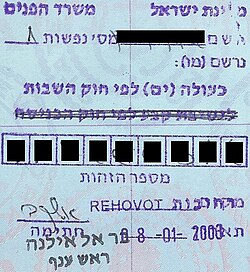
Under this law, an immigrant is referred to as an oleh. Upon arrival, eligible individuals receive a certificate confirming their status. They are then given a three-month window to decide if they wish to become full citizens, a process that may involve renouncing other citizenships.

Key Facts
- Established: Passed unanimously by the Knesset on July 5, 1950.
- Eligibility: Extended to all Jews, children and grandchildren of Jews, and their spouses.
- Exclusions: Individuals who voluntarily changed their religion from Judaism are ineligible.
- Restrictions: Since 2005, residents of the Gaza Strip and West Bank are no longer eligible.
- Security: Rights can be denied to those posing a threat to public health, security, or those with dangerous criminal records.
Evolution of Eligibility and Ancestry
The original 1950 law focused on the right of every Jew to return. However, the 1970 amendment significantly broadened the scope of who is eligible. This change was driven by several factors, including the need to facilitate immigration from Poland following antisemitic campaigns in 1967 and a desire to avoid the restrictive definitions used in the Nazi-era Nuremberg Laws.
The 1970 amendment ensures that the right of return is vested in the children and grandchildren of Jews, as well as their spouses, regardless of whether they meet strict halakhic (Orthodox Jewish religious law) definitions of being Jewish.

The Question of Religious Conversion
The Israeli Supreme Court has played a vital role in defining the law's applicability. In 2005, the court ruled that conversions performed outside of Israel are recognized for the purposes of the Law of Return, regardless of whether the conversion was Orthodox, Conservative, or Reform. This applies even if the individual performed preparatory work for the conversion while living in Israel.
Messianic Judaism and the Law
The status of Messianic Jews has been a point of legal contention. In 1989, the Supreme Court ruled that Messianic Judaism is a separate religion, making those who converted to it ineligible. However, a 2008 ruling clarified that Messianic Jews are eligible for return if they can prove Jewish ancestry (such as having a Jewish father or grandfather), as they were not born Jewish and therefore did not "voluntarily change" their religion in the eyes of the law.
Citizenship and Modern Applications
The application of the Law of Return has evolved to address modern social structures. In 2011, the Ministry of the Interior granted citizenship to the non-Jewish spouse of a gay Jewish man, marking the first time a same-sex, different-religion couple received joint aliyah status. This was further clarified in 2014 by Interior Minister Gideon Sa'ar, who confirmed that same-sex couples married abroad are eligible for citizenship under the law.

Since 1948, approximately 3,340,000 Jews have immigrated to Israel. This includes hundreds of thousands of individuals who do not meet Orthodox halakhic standards but are eligible through ancestry.
Summary of Eligibility
| Category | Eligibility Status | Conditions/Notes |
|---|---|---|
| Jews | Eligible | Full right to enter and acquire citizenship. |
| Children/Grandchildren of Jews | Eligible | Includes those not meeting strict halakhic definitions. |
| Spouses of Eligible Persons | Eligible | Includes same-sex spouses married abroad. |
| Former Jews (Converted) | Ineligible | Applies to those who voluntarily changed their religion. |
| West Bank/Gaza Residents | Ineligible | Restriction implemented in 2005. |
Public Debate and Controversy
The Law of Return is viewed differently across various demographics. Within the Jewish Israeli population, support remains very high; a 2016 Pew Forum poll indicated that 98% favored the law. Conversely, support is significantly lower among Israeli Arabs, with a 2017 poll showing only 25.2% acceptance.
Critics, including some politicians and international observers, argue that the law creates a double standard compared to the rights of Palestinian refugees. Others within Israel have expressed concern that the law is occasionally exploited by individuals who do not share the state's values, citing the 2007 discovery of a Neo-Nazi cell composed of immigrants from the former Soviet Union.
Frequently Asked Questions
Who is considered an 'oleh'?
An oleh is an immigrant who enters Israel under the Law of Return and receives a certificate confirming their status, granting them the right to reside in the country and apply for citizenship.
Can a non-Jew obtain citizenship through this law?
Yes, the law extends eligibility to the spouses, children, and grandchildren of Jews, meaning many people who are not halakhically Jewish can acquire Israeli citizenship.
Are conversions to Judaism recognized?
Yes, the Israeli Supreme Court has ruled that conversions performed outside of Israel—whether Orthodox, Conservative, or Reform—are recognized for the purposes of the Law of Return.
What happens if someone converts away from Judaism?
Individuals who were previously Jewish but voluntarily changed their religion are ineligible to immigrate under the Law of Return.
Are there any security-based exclusions?
Yes, the right to an oleh certificate can be denied if the applicant has a criminal record that endangers public welfare, poses a threat to public health or security, or has engaged in anti-Jewish activity.