Latter Day Saint Movement and Judaism: A Comparative Analysis
While originating from different historical contexts, the Latter Day Saint movement and Judaism share a deep interest in the Abrahamic tradition, the restoration of ancient covenants, and the importance of divine law. From the nature of the Divine to the structure of the priesthood, these two faith traditions offer contrasting perspectives on how humanity relates to God and the afterlife.
Key Facts
- Nature of God: Judaism adheres to strict monotheism (one indivisible God), while the LDS Church believes in three distinct beings (Father, Son, and Holy Ghost) united in purpose.
- Prophecy: Jewish tradition generally holds that prophecy ceased after Malachi; Latter-day Saints believe prophecy was restored through Joseph Smith.
- Dietary Laws: Judaism follows kashrut (kosher laws), while Latter-day Saints follow the Word of Wisdom, a modern revelation on health.
- Priesthood: Judaism has various views on clergy (rabbis/hakhamim), while the LDS Church utilizes the Aaronic and Melchizedek priesthoods.
- Afterlife: Judaism focuses on a period of reflection and penance; the LDS movement teaches a complex system of degrees of glory and the possibility of exaltation.
The Nature of God and Prophecy
Jewish theology is defined by strict monotheism. God is viewed as an absolutely singular, incorporeal, and indivisible being who serves as the ultimate cause of all existence. In this tradition, any "foreign gods" are considered non-existent entities.
In contrast, the largest denomination of the Latter-day Saint movement teaches that God the Father, Jesus Christ, and the Holy Ghost are three separate and distinct beings in both personhood and substance, though they are one in purpose.
The Restoration of Prophecy
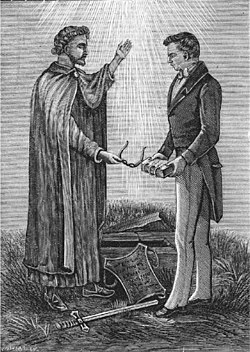
Normative Jewish tradition maintains that prophecy ceased after the death of Malachi and will only return during the Messianic era. Latter-day Saints, however, believe that prophecy was restored in the modern age through Joseph Smith. Smith reported visions of Jesus, Moses, Elijah, and Elias, which he believed granted him the authority to gather Israel and administer the keys of the Abrahamic dispensation.
Temples and Sacred Spaces
Temples hold significant meaning in both traditions. While the LDS Church operates 173 temples today, the Salt Lake Temple is notable for containing a "Holy of Holies," a feature previously found in the Manti Utah Temple. Latter-day Saints also believe that the Jewish people will one day rebuild a temple in Jerusalem and restore the rituals of the Law of Moses.
![Laie Hawaii Temple is the fifth oldest temple of the LDS Church in the world. It is also one of three church temples designed to look like Solomon's Temple, as described in scripture.[citation needed]](/images/3f/2e/3f2ef088b244594a62fc76cf2e2e84199481185f60f35f1db1b2680412829594.jpg)

Priesthood, Clergy, and Authority
In Judaism, the role of the rabbi varies by movement. Orthodox Judaism accepts only male rabbis, while Reform, Reconstructionist, and Conservative Judaism have ordained women and LGBTQ+ individuals. Karaite Judaism utilizes male hakhamim, who serve a different purpose than rabbinic leaders.
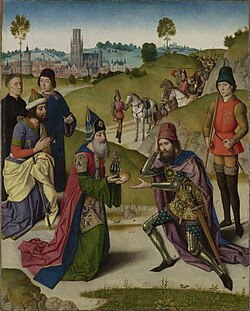
The LDS Church organizes its authority into two primary orders: the Aaronic priesthood (modeled after Aaron the Levite) and the Melchizedek priesthood (modeled after the prophet Melchizedek). Historically, the Aaronic priesthood was held by the Tribe of Levi by birth, but it is now conferred by the laying on of hands, typically at age twelve.
Evolution of Priesthood Access
The LDS Church prohibited Black people from receiving the priesthood until 1978, when a revelation permitted all worthy males to hold it. Additionally, while the mainstream LDS Church does not ordain women, some break-off groups, such as the Community of Christ, have adopted women in clerical roles.
Dietary Laws and the Sabbath
Both traditions emphasize dietary discipline. Judaism follows kashrut, a set of biblical dietary laws. Latter-day Saints follow the Word of Wisdom (D&C 89), which discourages the use of wine, strong drink, and tobacco, while encouraging the consumption of grains (especially wheat), fruits, and herbs. Meat is encouraged to be eaten sparingly.
Regarding the Sabbath, Latter-day Saints typically follow the customs of their surrounding community. In most Christian nations, they observe Sunday, focusing on rest, church meetings, and family. However, in Israel and some Arab countries, they may observe Saturday or Friday. A unique practice is the monthly fast, where members abstain from two meals for 24 hours and donate the saved money as a "fast offering" to help the poor.
Scriptures and Sacred Texts
The foundation of Jewish scripture is the Tanakh, which is supplemented by the Talmud (consisting of the Mishnah and Gemara). The Torah is traditionally believed to have been given to Moses at Mount Sinai and is still copied by hand by trained scribes.


Perspectives on the Afterlife
Religious Jews generally believe the soul undergoes a period of reflection and penance for up to 12 months after death, during which mourners recite prayers like the Kaddish.
Latter-day Saint theology describes a more tiered afterlife. Following death, spirits enter a Spirit World, divided into Paradise for the righteous and a "spirit prison" for the rebellious or those who have not heard the gospel. After a general resurrection, individuals are assigned to one of three degrees of glory: the telestial, terrestrial, or celestial kingdoms. The most evil are cast into "outer darkness." A central tenet of exaltation is the belief that humans can eventually attain a godhood status similar to that of God the Father.
Marriage and Polygamy
Polygamy has a complex history in both faiths. In Judaism, Ashkenazi Jewry banned the practice in the 11th century via Rabbenu Gershom. While some Sephardi and Mizrahi groups practiced it more recently, it is now banned in the State of Israel, though existing families were "grandfathered" in.
The LDS Church practiced "plural marriage" in the 19th century, introduced by Joseph Smith. This led to significant legal conflict in the U.S., including the seizure of church property and the delay of Utah's statehood. The practice was formally discontinued with the 1890 Manifesto and a subsequent 1904 Manifesto. Today, the mainstream LDS Church excommunicates members who practice or advocate for polygamy, though small fundamentalist sects continue the practice.
| Feature | Judaism | Latter Day Saint Movement (LDS) |
|---|---|---|
| Concept of God | Strict Monotheism (Indivisible) | Three distinct beings, one in purpose |
| Prophecy | Ceased after Malachi | Restored via Joseph Smith |
| Dietary Code | Kashrut (Kosher) | Word of Wisdom |
| Sabbath | Saturday (Shabbat) | Typically Sunday (varies by region) |
| Afterlife | Reflection/Penance (up to 12 months) | Spirit World $\rightarrow$ Three Degrees of Glory |
| Polygamy | Banned (with rare historical exceptions) | Practiced historically; now banned in mainstream |
Frequently Asked Questions
Do Latter-day Saints believe in the Jewish Messiah?
Yes, Latter-day Saints believe that Jesus Christ is the Messiah and that he will return in a second coming to establish his kingdom on earth.
What is the "Word of Wisdom"?
The Word of Wisdom is a health code revealed to Joseph Smith that prohibits the consumption of alcohol, tobacco, and "strong drink," while encouraging the use of grains, fruits, and herbs.
How does the LDS view of the afterlife differ from Judaism?
While Judaism focuses on the soul's transition and penance shortly after death, the LDS movement teaches a detailed progression through a Spirit World followed by a physical resurrection and assignment to specific kingdoms of glory based on faithfulness.
Is polygamy still practiced in the LDS Church?
No. The mainstream LDS Church formally ended the practice in the late 19th and early 20th centuries. Anyone practicing or advocating for it today is subject to excommunication, although some small fundamentalist break-away groups still practice it.
What is the relationship between the Aaronic and Melchizedek priesthoods?
The LDS Church views the Aaronic priesthood as a lesser authority modeled after Aaron the Levite, while the Melchizedek priesthood is the higher authority. The Aaronic is considered a subset of the Melchizedek priesthood.