Chosen People: The Theology and Evolution of Divine Election in Judaism
The concept of the Chosen People is a foundational belief in Judaism, asserting that the Jewish people were selected by God to enter into a unique covenant. This divine election is rooted in the Mosaic and Abrahamic covenants, establishing a spiritual and ethical relationship between the Creator and a specific community. While central to the faith, the interpretation of what it means to be "chosen" has evolved over millennia, shifting from biblical mandates to complex theological frameworks in the modern era.
Key Facts
- Covenantal Basis: Chosenness is derived from the covenants made with Abraham and Moses.
- Purpose: It is often viewed as a mission to be a "light unto the nations" by exemplifying God's laws.
- Not Supremacy: In Jewish theology, being chosen does not imply ethnic superiority or the exclusion of other peoples from God's grace.
- Accountability: Biblical prophets, such as Amos, emphasized that election brings greater responsibility and divine scrutiny.
- Denominational Agreement: Orthodox, Conservative, and Reform Judaism all maintain a belief in chosenness, though they define its nature differently.
Biblical Origins of Election
The Torah provides the scriptural basis for the concept of chosenness. It describes a relationship where God promises never to exchange His people for another, designating them as a "holy nation" and a "kingdom of priests." These passages establish the identity of the Israelites as a people set apart for a divine purpose.
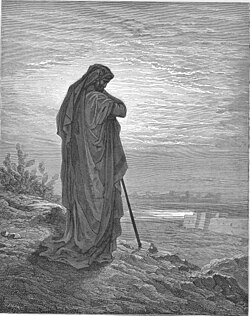
However, this status was never presented as a mere privilege. The prophet Amos highlighted the burden of this election, stating that because the Israelites were singled out from all the families of the earth, God would visit upon them all their iniquities. In this context, chosenness is inextricably linked to accountability.
Rabbinic Interpretations and Universalism
Rabbinic literature expands on the biblical text to clarify that divine election does not preclude a relationship between God and non-Jews. Judaism teaches that God entered into a covenant with all humankind. This is supported by the Tanakh, which identifies prophets outside of Israel and recounts the prophet Jonah's mission to the non-Jewish people of Nineveh.
The 12th-century Yemenite theologian Natan'el al-Fayyumi suggested that God sends prophets to every people in their own language, allowing different laws for different groups. Furthermore, the Mishnah (Sanhedrin 4:5) emphasizes the inherent dignity of all humans, noting that while all were created from one man, Adam, no two individuals are identical, reflecting the greatness of the Creator.
Modern Denominational Perspectives
In the contemporary era, the three largest branches of Judaism interpret the "chosen" status through different theological lenses:
Conservative Judaism
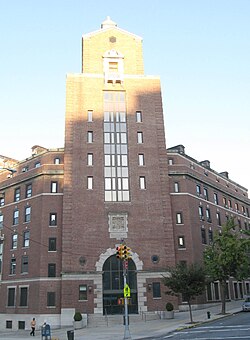
Conservative Judaism explicitly rejects the idea of innate superiority. According to its 1988 Statement of Principles, chosenness is a covenantal responsibility. It frames the election as a mission to build a just society, particularly in the Land of Israel, serving as a moral example to the rest of the world.
Orthodox and Reform Judaism
Both Orthodox and Reform Judaism maintain the belief that Jews were chosen for a purpose, though they differ on the application of the law. For many, this remains a calling to uphold monotheism and the ethical standards of the Torah in a diverse world.
External Perspectives and Critiques
The concept of the chosen people has been a point of contention and analysis outside of Judaism. In early Christian history, Saint Paul became a pivotal figure in arguing that Jewish law was no longer the sole valid path to God. Later, Augustine criticized the notion of Jewish chosenness as "carnal," arguing that the election of Israel was based "according to the flesh."


Philosophically, thinkers like Baruch Spinoza questioned the theoretical possibility of a chosen people, while others have analyzed how the concept intersected with the rise of Zionism. In some secular Zionist interpretations, the religious notion of divine election was transformed into a political-ethical identity, viewing the Jewish people as a "vanguard" of history.
Summary of Chosenness Concepts
| Perspective | Core Interpretation | Primary Focus |
|---|---|---|
| Biblical/Prophetic | Divine selection for a covenant | Accountability and holiness |
| Rabbinic | Special role within a universal God | Universal relationship with humanity |
| Conservative | Covenantal responsibility | Social justice and moral example |
| Early Christian | Supersession or "carnal" election | Shift toward faith over law |
Frequently Asked Questions
Does being a "chosen people" mean Jews are superior to others?
No. Within Jewish theology, chosenness does not connote ethnic or innate supremacy. Instead, it is viewed as a specific mission or a set of additional responsibilities and obligations to God and humanity.
What is the "light unto the nations" concept?
This is the belief that the Jewish people are charged with exemplifying the covenant with God through ethical behavior and the laws of the Torah, thereby serving as a moral example for all of humanity.
How does the prophet Amos view chosenness?
Amos emphasized that being chosen increases one's accountability. He taught that because the Israelites were singled out, they would be held more strictly accountable for their sins and iniquities.
Do Jews believe God only has a relationship with them?
No. Judaism holds that God has a relationship with all of humankind. Rabbinic literature and the Tanakh acknowledge prophets among non-Jewish people and assert that all humanity is created in the image of God.
How did early Christianity view the concept of the chosen people?
Early Christian figures like Saint Paul argued that the validity of Jewish law had changed, and later theologians like Augustine described the Jewish election as "carnal" or based on physical descent rather than spiritual grace.