Language Homelands: Tracing the Urheimat of Global Proto-Languages
In the study of historical linguistics, the search for a language's Urheimat (a German term meaning "original home") is a quest to identify the specific geographic region where a proto-language was spoken before it diverged into various daughter languages. A proto-language serves as the reconstructed or historically documented parent of a group of genetically related languages.
Determining these homelands varies in difficulty depending on the age of the language family. While some migrations are recorded in historical texts, others date back to deep prehistory, leaving scholars to rely on a multidisciplinary approach. To reconstruct these ancient origins, researchers combine internal linguistic evidence with data from archaeology and archaeogenetics (the study of ancient DNA to trace population movements).
Key Facts
- Urheimat refers to the original homeland of a proto-language.
- Reconstruction relies on a combination of linguistics, archaeology, and archaeogenetics.
- The Japonic language is believed to have moved from the Korean Peninsula to Kyushu between 700 and 300 BCE.
- The Afroasiatic homeland is most likely located in northeast Africa, though some theories suggest the Middle East.
- The Niger-Congo core likely originated in the West African savanna belt.
Homelands of Major Language Families
Western and Central Eurasia
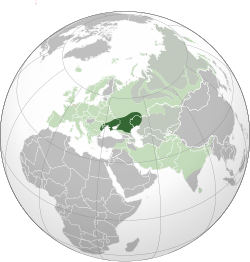
This region is home to several influential language families, including Indo-European, Caucasian, Dravidian, Turkic, and Uralic. The distribution of these languages provides critical clues about prehistoric migrations across the Eurasian landmass.
Eastern Eurasia
The origins of the Japonic language are closely tied to the Yayoi culture. Most scholars agree that wet-rice farmers brought Japonic from the Korean Peninsula to northern Kyushu around 700 to 300 BCE. From there, the language spread across the Japanese archipelago and eventually reached the Ryukyu Islands. Fragmentary evidence from placenames suggests that extinct Japonic languages persisted in central and southern Korea for several centuries after the initial migration.
North America
The Uto-Aztecan language family presents a subject of academic debate. Some authorities place the Proto-Uto-Aztecan homeland in the Sonoran Desert, specifically the upland regions of Arizona, New Mexico, Sonora, and Chihuahua, spoken by foragers roughly 5,000 years ago. Conversely, researcher Hill (2001) suggests a more southern origin in Mesoamerica, proposing that maize cultivators moved north between 4,500 and 3,000 years ago, spreading agriculture as the language diverged.
Africa and the Middle East
The Afroasiatic family's origins are often placed in northeast Africa, as Semitic is the only branch found outside the continent. However, an alternative theory suggests a Neolithic expansion from the Middle East. Proto-Afroasiatic is estimated to have begun splitting in the 8th millennium BCE, while Proto-Semitic was likely spoken in the Near East between 4400 and 7400 BCE, with Akkadian as its earliest known branch.
The Niger-Congo family, comprising over 1,000 languages, is thought to have originated in the West African savanna belt. A major event in its history was the Bantu expansion, which began around 3000 BCE, moving through the equatorial rainforests of Central Africa. Additionally, the Mande homeland is placed in the Southern Sahara (modern-day Mauritania or southern Western Sahara) during the second half of the 4th millennium BCE.
Summary of Language Homeland Theories
| Language Family | Proposed Homeland | Estimated Period/Date | Key Driver/Culture |
|---|---|---|---|
| Japonic | Korean Peninsula → Kyushu | 700–300 BCE | Yayoi wet-rice farmers |
| Uto-Aztecan (Theory A) | Sonoran Desert (USA/Mexico) | ~5,000 years ago | Foragers |
| Uto-Aztecan (Theory B) | Mesoamerica | 4,500–3,000 years ago | Maize cultivators |
| Afroasiatic | Northeast Africa / Middle East | 8th millennium BCE | Neolithic expansion |
| Niger-Congo | West African savanna belt | ~3000 BCE (Bantu expansion) | Agricultural expansion |
| Mande | Southern Sahara | Late 4th millennium BCE | Regional migration |
Frequently Asked Questions
What is an Urheimat?
An Urheimat is the original geographic region where a proto-language was spoken before it split into different daughter languages.
How do linguists find ancient homelands?
They use a combination of internal linguistic evidence, archaeological findings, and archaeogenetics to reconstruct where a population likely lived.
Where did the Japonic languages originate?
Most scholars believe they were brought from the Korean Peninsula to northern Kyushu by Yayoi culture wet-rice farmers between 700 and 300 BCE.
What are the two main theories for the Uto-Aztecan homeland?
One theory places the homeland in the Sonoran Desert among foragers 5,000 years ago; the other suggests Mesoamerican maize cultivators moved north 4,500 to 3,000 years ago.
When did the Bantu expansion begin?
The Bantu expansion, part of the Niger-Congo family, began around 3000 BCE, moving from West Africa through the Central African equatorial rainforests.