Language and Linguistics: The Science of Human Communication
Language is far more than just a collection of words; it is a structured system of communication comprising grammar (the rules governing sentence structure) and vocabulary (the set of words used). It serves as the primary vehicle through which humans convey meaning, whether through spoken sounds, signed gestures, or written symbols. Unlike basic communication, human language is defined by productivity—the ability to create an infinite number of unique sentences—and displacement, which allows us to discuss objects, events, and ideas that are not physically present.
Because language relies on social convention and is acquired through learning, it exhibits immense cultural and historical diversity. This diversity reflects the evolution of human societies and the ways in which different groups have adapted their communication to fit their environments and needs.
Key Facts

- Global Diversity: As of 2026, Ethnologue catalogs approximately 7,170 living human languages.
- Dominant Families: Indo-European languages are the most widely spoken, used by 46% of the global population.
- Endangerment Crisis: Academic consensus suggests that 50% to 90% of current languages may become extinct by the year 2100.
- Core Properties: Human language is unique due to its capacity for productivity and displacement.
- Major Families: The two largest groups are Indo-European (46%) and Sino-Tibetan (20%).
The Scientific Study of Language

The formal study of language is known as linguistics. While the scientific discipline is relatively modern, the philosophical debate over language has existed since ancient Greece, with thinkers like Plato and Gorgias examining how words represent experience and the relationship between language and thought.
Different philosophical schools have proposed various origins for language. Jean-Jacques Rousseau argued that language sprang from emotions, while Immanuel Kant believed it originated from rational and logical thought. In the 20th century, Ludwig Wittgenstein proposed that philosophy itself is essentially the study of language.

Foundations of Modern Linguistics
Contemporary linguistics has been shaped by several pivotal figures. Ferdinand de Saussure developed the structuralist approach, focusing on the internal systems of language, while Noam Chomsky revolutionized the field with his theories on the innate nature of linguistic ability.
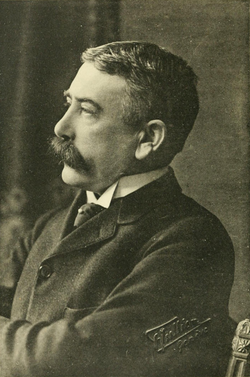

The Architecture of Language
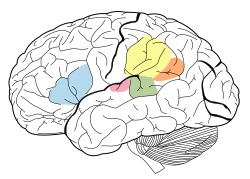
Language is processed through a complex interplay of biological and cognitive systems. The brain contains specific language areas that coordinate the production and comprehension of speech and signs.
Physiology and Modality
Most hearing cultures utilize the oral modality, employing the vocal tract to produce sounds. However, language can also be expressed through manual modality, such as in sign languages. These systems are equally complex and follow rigorous grammatical rules.
Structure and Grammar
Linguists analyze language through several layers of structure:
- Phonetics and Phonology: The study of sounds and symbols.
- Morphology: How words are formed from smaller meaningful units.
- Syntax: The arrangement of words to create well-formed sentences.
- Semantics: The study of meaning within language.

Language Evolution and Diversity

Languages are not static; they evolve and diversify over time. By comparing modern languages, linguists can reconstruct ancestral traits to determine how different tongues are related.
Language Families and Isolates
A language family consists of languages that descend from a common ancestor. For example, the Indo-European family includes English, Spanish, French, German, Russian, and Hindustani. In contrast, a language isolate is a language with no demonstrable relationship to any other known living or extinct language.
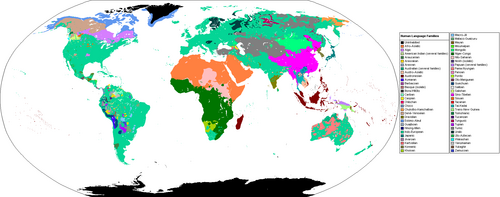
Global Distribution
The distribution of languages is highly uneven. While a few languages have hundreds of millions of speakers, many others are spoken by tiny communities. The top 20 languages, each with over 50 million speakers, are used by half of the world's population.

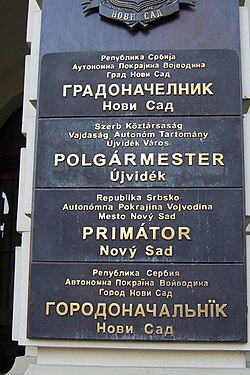

| Language | Native Speakers (Millions) |
|---|---|
| Mandarin | 848 |
| Spanish | 329 |
| English | 328 |
| Portuguese | 250 |
| Arabic | 221 |
| Hindi | 182 |
| Bengali | 181 |
| Russian | 144 |
| Japanese | 122 |
| Javanese | 84.3 |
Language Endangerment

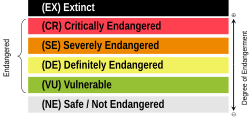
Linguistic diversity is currently under threat. Dominant languages often displace minority languages, leading to a loss of cultural heritage and cognitive diversity. Many of the world's most endangered languages are concentrated in a small number of highly diverse countries.
![Together, these eight countries contain more than 50% of the world's languages. These areas are the most linguistically diverse[142] in the world, and the locations of most of the world's endangered languages.](/images/3b/7e/3b7e3966c97b2c8cfff124d2cf51c0b73b38ee779fc0039c97aacc464da81e9d.png)
Frequently Asked Questions
What is the difference between a language and a dialect?
The distinction is often complex and depends on the definition used. Some classifications rely on mutual intelligibility—if two speakers can understand each other, they are speaking dialects of the same language. However, other catalogs, like Ethnologue, may classify them as separate languages based on different criteria.
How old is spoken language?
Estimates vary, but some scholars, such as Stephen Anderson, suggest that spoken languages are between 60,000 and 100,000 years old.
What are the two largest language families in the world?
The Indo-European family is the largest, spoken by 46% of the population, followed by the Sino-Tibetan family, spoken by 20% of the population.
Why are so many languages becoming extinct?
Language extinction typically occurs when more commonly spoken, dominant languages replace less common ones within a population, leading to a decrease in native speakers until the language is no longer used.
What is a language isolate?
A language isolate is a language that has been proven to have no relationship—either living or extinct—with any other known language.