Landing Craft Assault (LCA): Service History and Operational Impact in WWII
The Landing Craft Assault (LCA) served as a cornerstone of Allied amphibious operations throughout the Second World War. Designed to deliver specialized troops—most notably Commandos—from larger transport ships to hostile shores, the LCA was utilized in nearly every major and minor operation across the European theatre, North Africa, and the Indian Ocean, with limited service in the Pacific toward the war's end.
Unlike larger landing ships, the LCA was designed for stealth and agility, allowing forces to achieve surprise. However, its operational success often depended on the volatile intersection of tide, weather, and enemy defenses.
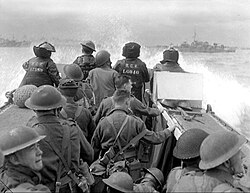
Key Facts
- Primary Role: Transporting assault troops (especially Commandos) from Landing Ships Infantry (LSI) to the beach.
- Global Reach: Deployed in Europe, North Africa, the Mediterranean, and the Indian Ocean.
- Key Vulnerabilities: Susceptible to stranding during fast-ebbing tides and vulnerable to beach obstacles (mines/steel barriers).
- Operational Strength: Armored hulls provided critical protection against machine-gun fire during the final approach.
- Versatility: Used not only for initial assaults but also for ferrying troops through flooded river networks.
Early Operations and the Mediterranean Theatre
Madagascar and the Indian Ocean
In 1942, LCAs played a pivotal role in the Madagascar campaign. During the assault on Diégo Suarez, LCAs landed No. 5 Commando and the East Lancashire Regiment at the base of a 50-foot (15 m) cliff in Courrier Bay, achieving complete surprise over Vichy gun crews. Later, at Majunga, LCAs landed the 29th Brigade. While some craft suffered mechanical breakdowns, the high tide allowed others to reach the seafront road, though at least one craft remained stranded until the next tide.
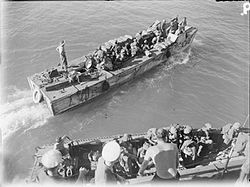
Operation Torch and North Africa
During the Torch landings in November 1942, LCAs were used extensively in the Eastern Task Force's assault on Algiers. In the "Apple" sectors, flotillas launched from ships like the Karanja and Viceroy of India. These operations highlighted a recurring challenge: the lack of prior beach reconnaissance led to delays and damage when craft encountered unexpected sandbars and shallow waters.
The Dieppe Raid: A Test of Endurance
The Jubilee plan (the Dieppe Raid) on August 19, 1942, demonstrated both the strengths and limitations of the LCA. Troops were lowered 10 miles (16 km) offshore and navigated to the coast in darkness. At Orange Beach, the armored hulls of the LCAs protected No. 4 Commando from pillbox machine-gun fire during the touchdown.
However, the withdrawal phase proved perilous. A rapidly ebbing tide forced troops to wade neck-deep in water to reach the LCAs, which waited 50 yards offshore to avoid being stranded. To bridge this gap, LCA crews deployed Goatley boats (collapsible boats) to ferry wounded soldiers from the shore to the craft.
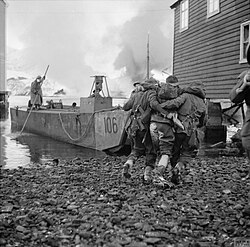
The cost at Dieppe was high; of the 33 landing craft of all types lost, 17 were LCAs. Despite the losses, the craft proved their durability by returning approximately 65 miles (105 km) to England under their own power after the evacuation.
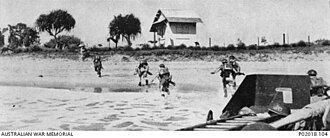
The Italian Campaign and Sicily
In July 1943, during the Joss landings near Licata, LCAs delivered US Rangers to secure the western flank. While the mission was successful, severe surf resulted in two LCAs becoming stranded on the beach. Similarly, during the Bark South landings, LCAs successfully delivered the 51st (Highland) Division despite a violent storm that had caused casualties during the initial transfer from transport ships.
The Baytown operation in September 1943 involved a shore-to-shore transit across the Strait of Messina. Coxswains faced extreme difficulties due to irregular currents, whirlpools, and a massive artillery barrage that obscured navigation lights with smoke.
The Normandy Landings and Northwest Europe
Gold and Juno Beaches
On June 6, 1944, LCAs faced brutal conditions at Gold Beach, with swells reaching 6 feet (1.8 m). The tide, driven by strong north-westerly winds, arrived 30 minutes earlier than expected. German beach obstacles proved devastating; near Asnelles, five LCAs transporting No. 47 Royal Marine Commando were destroyed by mines or obstacles, resulting in the loss of over a fifth of the unit.
At Juno Beach, the LCA's shallow draft became a tactical advantage. While deeper-draft vessels struggled with shoals (which were later found to be floating seaweed), LCAs navigated the transit without trouble. However, high water levels prevented demolition teams from clearing lanes, forcing LCAs to either smash through obstacles or disembark troops directly among them.
The Battle of the Scheldt
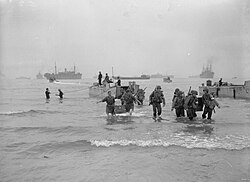
In the fighting around Walcheren Island, LCAs were essential due to the inability of destroyers to enter the shallow approaches. Despite strong currents of 4 to 5 knots (9.3 km/h), bullet-proof LCAs successfully landed No. 4 Commando. Following the initial assault, these craft were repurposed as ferries to move troops through the extensive flooded areas and river networks of the region.
Operational Summary
| Operation/Location | Key Advantage | Primary Challenge | Outcome/Note |
|---|---|---|---|
| Diégo Suarez | Stealth/Surprise | Cliff terrain | Successful surprise assault |
| Dieppe (Orange Beach) | Armored protection | Fast-ebbing tide | High craft loss; successful evacuation of some |
| Sicily (Joss) | Small profile | Severe surf | Some craft stranded on beach |
| Normandy (Juno) | Shallow draft | Beach obstacles | Navigated shoals better than larger craft |
| Walcheren | Bullet-proof hull | Strong currents | Used as ferries in flooded zones |
Frequently Asked Questions
Why were LCAs preferred for Commando operations?
LCAs provided a balance of armor protection and a low profile, which was essential for stealthy landings and protecting troops from machine-gun fire during the final approach to the beach.
What was the biggest environmental threat to the LCA?
The tide was a critical factor. A fast-ebbing tide could strand an LCA on the beach or force troops to wade long distances to reach the craft during evacuation, as seen at Dieppe.
How did LCAs handle beach obstacles during D-Day?
Depending on the sector, LCAs either smashed through the obstacles or disembarked troops directly into them when demolition teams were unable to clear lanes due to high water levels.
Were LCAs used for anything other than initial assaults?
Yes. In the Battle of the Scheldt, LCAs were used as ferries to transport troops through flooded areas and complex river networks where larger ships could not operate.
How did the LCA compare to other landing craft in terms of draft?
The LCA had a shallower draft than many other landing craft, allowing it to navigate shoals and shallow waters—such as those at Juno Beach—more effectively than deeper-draft vessels.