La Máquina: The Revolutionary River Plate Team of the 1940s
In the annals of football history, few teams have left as profound a tactical legacy as La Máquina (The Machine). Active between 1941 and 1947, this legendary River Plate squad is widely regarded by the media as the greatest Argentine team of its era and one of the most formidable lineups to ever grace the global game.
More than just a collection of talented individuals, La Máquina represented a paradigm shift in how football was played, blending technical brilliance with a fluid approach to positioning that would influence the sport for decades to come.
Key Facts
- Active Period: 1941 to 1947.
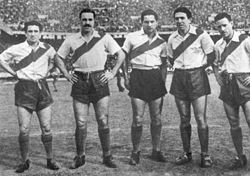
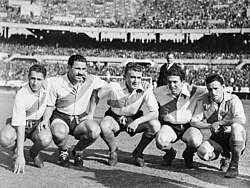
- Core Forwards: Juan Carlos Muñoz, José Manuel Moreno, Adolfo Pedernera, Ángel Labruna, and Félix Loustau.
- Major Honors: 10 titles in total, including four Primera División and three Copa Aldao trophies.
- Tactical Legacy: A pioneer of Total Football and the early use of the false nine.
- Origin of Name: Coined by Uruguayan journalist Borocotó of El Gráfico in 1942.
The Birth of "The Machine"
The nickname "La Máquina" was born on June 12, 1942, following a dominant 6–2 victory by River Plate over Chacarita Juniors. Borocotó, a sports journalist for the magazine El Gráfico, used the term to describe the seamless, mechanical precision and overwhelming performance of the team's forward line.
While the core group was established, the team's chemistry evolved over time. The first time the primary unit played together was on June 28, 1942, at the Estadio Monumental against Platense, resulting in a 1-0 win. During this period, Félix Loustau stepped in as the left winger, replacing Aristóbulo Deambrossi.
Tactical Innovation and Total Football
La Máquina is frequently cited as a South American predecessor to the "Clockwork Orange" (the Netherlands national team of the 1970s) and the Hungarian national teams of the 1950s. Their style was characterized by dynamism and the constant rotation of positions, a precursor to what is now known as Total Football—a system where any outfield player can take over the role of any other player in the team.
A critical component of this innovation was the role of Adolfo Pedernera. Under the guidance of coaches Renato Cesarini and Carlos Peucelle, Pedernera transitioned from a traditional left winger to a more central, withdrawn role. By alternating between directing play from deep and driving into the box to finish, Pedernera became one of the first examples of a false nine (a center-forward who drops deep to pull defenders out of position).
When Pedernera eventually transferred to Atlanta, the legendary Alfredo Di Stéfano stepped in to fill the void, continuing the team's legacy of attacking fluidity. The squad also featured the debut of goalkeeper Amadeo Carrizo.
Achievements and Honors
Between 1943 and 1946, the team maintained a high level of consistency, securing two championships and finishing as runners-up twice. In total, the era of La Máquina was marked by significant domestic and international success.
| Competition | Titles Won | Years Won |
|---|---|---|
| Primera División | 4 | 1941, 1942, 1945, 1947 |
| Copa Aldao | 3 | 1941, 1945, 1947 |
| Copa Ibarguren | 2 | 1941, 1942 |
| Copa Adrián Escobar | 1 | 1941 |
Frequently Asked Questions
Who were the main players of La Máquina?
The core forward line consisted of Juan Carlos Muñoz, José Manuel Moreno, Adolfo Pedernera, Ángel Labruna, and Félix Loustau. Other contributors included Aristóbulo Deambrossi, Carlos Peucelle, Alberto Gallo, and Renato Cesarini.
Why was the team called "The Machine"?
The name was coined by journalist Borocotó of El Gráfico after a 6–2 win against Chacarita Juniors in 1942 to describe the precise and efficient performance of the forward line.
How did La Máquina influence modern football tactics?
The team pioneered the rotation of positions and the use of the "false nine" through Adolfo Pedernera, making them a tactical precursor to the Total Football played by the Netherlands in the 1970s.
Which famous players debuted during the La Máquina era?
Both the legendary forward Alfredo Di Stéfano and the influential goalkeeper Amadeo Carrizo debuted as part of this era.
How many titles did La Máquina win?
The team won a total of 10 titles, including four Primera División championships and three Copa Aldao titles.