Alfredo Di Stéfano: The Eternal Legend of Real Madrid and Global Football
Few names in the history of sport command as much reverence as Alfredo Di Stéfano. A versatile powerhouse who could dictate the game from the midfield and finish with clinical precision as a forward, Di Stéfano redefined the role of the modern footballer. From his early days in Argentina to his era-defining dominance in Spain, his career was a masterclass in athletic excellence and leadership.
Key Facts
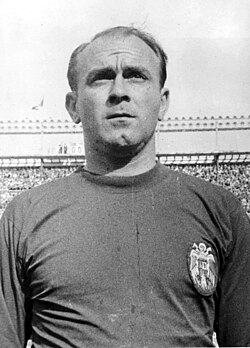
- Full Name: Alfredo Stéfano Di Stéfano Laulhé.
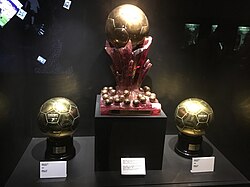
- Major Achievement: Only player to ever receive the Super Ballon d'Or (1989).
- European Dominance: Won five consecutive European Cups with Real Madrid.
- Goal Scoring: Scored in five consecutive European Cup finals, totaling seven goals in those finals.
- Versatility: Represented three different national teams: Argentina, Colombia, and Spain.
- Managerial Success: Won league titles with Valencia, Boca Juniors, and River Plate.
Early Career and the South American Journey
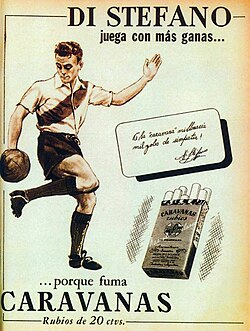
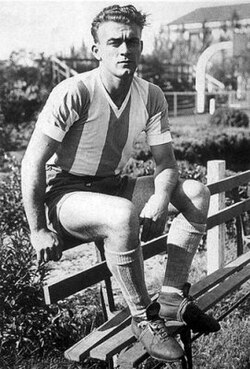
Born on July 4, 1926, in Buenos Aires, Argentina, Di Stéfano began his professional journey with River Plate in 1945. His early years were marked by rapid growth, including a brief loan spell at Huracán in 1946 where he scored 10 goals in 25 appearances.
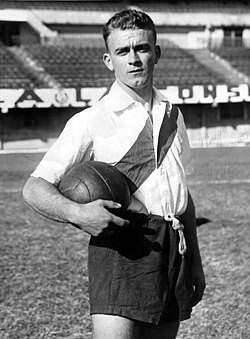
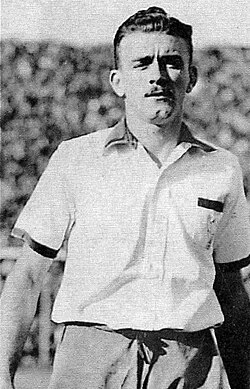
Upon returning to River Plate, he became a pivotal part of the legendary "La Máquina" (The Machine) attack, helping the club secure Argentine Primera División titles in 1945 and 1947. His international promise was evident early on when he won the South American Championship with Argentina in 1947.
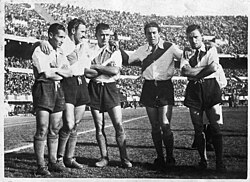
In 1949, Di Stéfano moved to Colombia to play for Millonarios. During his tenure from 1949 to 1953, he became a dominant force in the Campeonato Profesional, winning three league titles and scoring 90 goals in 101 appearances.
The Real Madrid Empire
Di Stéfano's move to Real Madrid in 1953 sparked one of the most successful periods in the history of club football. He became the cornerstone of a team that dominated both Spain and Europe. Between 1953 and 1964, he won eight La Liga titles and five European Cups.
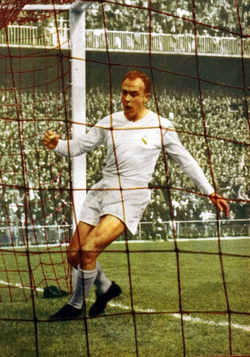
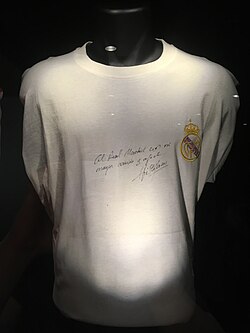
His individual brilliance was recognized globally; he won the Ballon d'Or (the award for the best player in Europe) in 1957 and 1959. He also claimed the Pichichi Trophy—awarded to the top scorer in La Liga—five times. Even as he aged, his influence remained; at 37, he helped Real Madrid secure the 1962–63 league title.
Di Stéfano eventually finished his playing career at Espanyol (1964–1966) before transitioning into management.
Managerial Career and Later Life
As a manager, Di Stéfano proved to be as tactically astute as he was technically gifted. He led Valencia to a La Liga title in 1970–71 and a European Cup Winners' Cup in 1979–80. He also achieved domestic success with Boca Juniors (1969) and River Plate (1981).
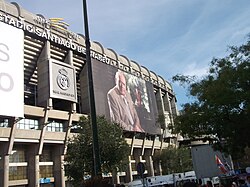
In his later years, he remained deeply connected to Real Madrid, being named Honorary President in 2000. The club further honored his legacy by inaugurating the Alfredo Di Stéfano Stadium at the City of Real Madrid in 2006.
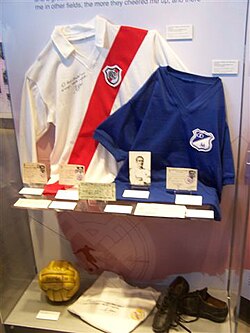
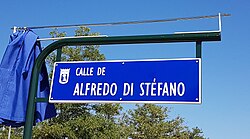
Alfredo Di Stéfano passed away on July 7, 2014, in Madrid at the age of 88, leaving behind a legacy that continues to inspire generations of footballers.
Career Summary Table
| Category | Details |
|---|---|
| Playing Positions | Forward / Midfielder |
| Total Club Apps (League) | 521 |
| Total Club Goals (League) | 376 |
| National Teams | Argentina, Colombia, Spain |
| Major Individual Awards | Super Ballon d'Or, 2x Ballon d'Or, 5x Pichichi |
| European Cup Titles | 5 (1956, 1957, 1958, 1959, 1960) |
Legacy and Honors
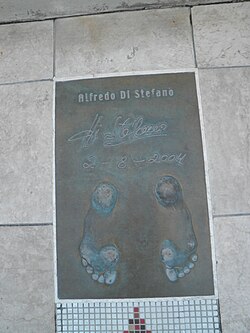
Beyond the trophies, Di Stéfano's impact is immortalized through various tributes. From the Golden Foot award on the seafront of Monaco to the Super Ballon d'Or, his status as one of the greatest players of the 20th century is undisputed.
Frequently Asked Questions
Which national teams did Alfredo Di Stéfano play for?
Di Stéfano had a unique international career, representing Argentina (1947), Colombia (1951), and Spain (1957–1961).
What is the Super Ballon d'Or?
The Super Ballon d'Or is a unique trophy awarded to the best player of the best players. Alfredo Di Stéfano is the only player in history to have received this honor, which was awarded to him in 1989.
How many European Cups did he win with Real Madrid?
He won five European Cups consecutively from 1956 to 1960, establishing Real Madrid as the dominant force in European football.
Did he have success as a manager?
Yes, he was a highly successful manager, winning titles with Valencia (La Liga and European Cup Winners' Cup), Boca Juniors, and River Plate.
What was his goal-scoring record in European Cup finals?
Di Stéfano scored in five consecutive European Cup finals, totaling seven goals in those matches, a record he shared with Ferenc Puskás.