Kudzu: The Complex History and Ecology of the Vine that Ate the South
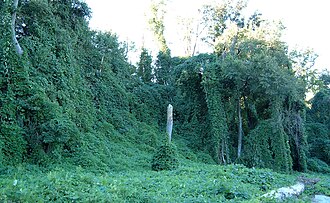
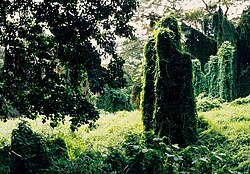
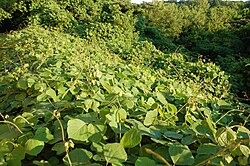
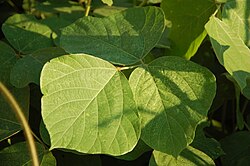
Known as the "vine that ate the South," Kudzu (also called Japanese or Chinese arrowroot) is a group of deciduous perennial vines characterized by their climbing, coiling, and trailing growth habits. While native to East Asia, Southeast Asia, and various Pacific islands, it has become one of the most infamous invasive species in North America.
The plant is scientifically classified under the genus Pueraria, with Pueraria montana being the primary species. Its ability to rapidly cover vast areas of land has made it both a cultural symbol of the American South and a significant ecological challenge.
Key Facts
- Native Range: East Asia, Southeast Asia, and some Pacific islands.
- Primary Invasive Region: North America, specifically across 32 U.S. states.
- Reproduction: Primarily spreads via stolons (runners) and rhizomes, though seeds are produced.
- Historical Use: Promoted in the 1930s-40s to combat soil erosion during the Dust Bowl.
- Industrial Use: The fiber (ko-hemp) is used for traditional clothing and paper.
Taxonomy and Biological Profile
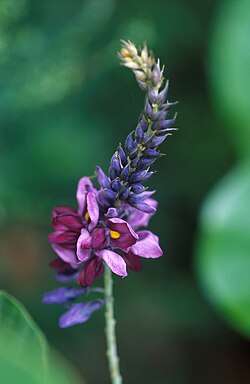
Kudzu belongs to the Pueraria genus. The most common varieties include Pueraria montana var. chinensis, Pueraria montana var. lobata, and Pueraria montana var. thomsonii. Other related species include P. edulis and P. phaseoloides.
Propagation and Growth
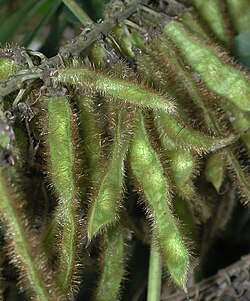
Kudzu spreads primarily through vegetative reproduction. It utilizes stolons—runners that root at the nodes to create new plants—and rhizomes. While the plant produces seeds in pods that mature in autumn, seed-based spreading is rare. For a seed to germinate, it requires a hard coat to break and soil that remains persistently soggy for five to seven days at temperatures above 20 °C (68 °F).
The Invasion of the Americas
Kudzu first arrived in the United States as an ornamental plant, showcased at the 1876 Centennial Exposition in Philadelphia and later at the Chicago World's Fair. However, its role shifted dramatically during the Dust Bowl era of the 1930s and 1940s.
To combat severe soil erosion, the Soil Conservation Service promoted kudzu, growing 70 million seedlings and paying farmers $8 per acre (approximately $184 in 2025) to plant it. It was also used by road and rail builders to stabilize steep slopes. The "Kudzu Club of America," founded by Channing Cope, grew to 20,000 members by 1943, aiming to plant 8 million acres. By 1945, cultivation peaked at over one million acres.
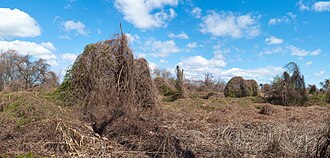
Once government payments ceased in the 1950s, the plant was largely abandoned, allowing it to spread unchecked. Today, it is found in 32 states, ranging from the Southeast up to the New York City Metropolitan Area and Boston. Spread rates are debated, with estimates varying from 2,500 to 150,000 acres annually.
Control and Management
Managing kudzu is difficult due to its massive underground system. However, total removal of the root system is not required for control. The primary target is the root crown—a fibrous knob of tissue located on top of the roots.
These crowns can range from the size of a pea to a basketball, and in some cases, the attached tuberous roots can weigh 400 to 500 pounds and extend twenty feet into the ground. Because roots cannot produce vines—only nodes and crowns can—removing the crown is the most effective way to prevent regrowth.
Diverse Uses of Kudzu
Despite its reputation as a weed, kudzu has several practical applications in agriculture and industry.
Animal Feed
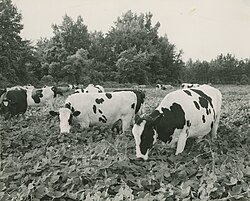
Kudzu is a high-quality, palatable forage for livestock, particularly goats. It boasts a crude protein content of 22–23% and a total digestible nutrient value of over 60%. However, it is difficult to bale because it retains water and its forage yield is relatively low (two to four tons of dry matter per acre annually).
Textiles and Fiber
The plant produces a bast fiber known as ko-hemp, similar to linen. This fiber has been used for clothing in China for 6,000 years and in Japan for 1,500 years. In Japan, a specific material called Kuzu-fu is still used to weave summer kimono and obi.
| Feature | Detail |
|---|---|
| Scientific Name | Pueraria montana |
| Primary Spread Method | Vegetative (Stolons and Rhizomes) |
| Key Control Point | Root Crown Removal |
| Nutritional Value | 22-23% Crude Protein (as forage) |
| Traditional Textile | Kuzu-fu (Japan) / Ko-hemp |
Frequently Asked Questions
Why was kudzu originally planted in the United States?
It was promoted by the Soil Conservation Service during the 1930s and 1940s as a fast-growing tool to stop soil erosion during the Dust Bowl era.
How do you effectively kill a kudzu plant?
The most effective method is the removal of the root crown, the fibrous knob of tissue from which vines grow. If any part of the crown remains, the plant can regrow.
Is kudzu useful for anything other than erosion control?
Yes, it is used as high-protein livestock forage and as a source of bast fiber (ko-hemp) for traditional clothing and paper.
Does kudzu spread mainly by seeds?
No. While it does produce seeds in pods, seed-based propagation is rare. It spreads primarily through vegetative reproduction via runners (stolons) and rhizomes.