Krupp: The Rise and Legacy of Germany's Industrial Giant
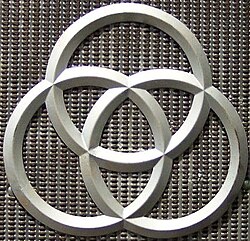
For nearly two centuries, the name Krupp was synonymous with the industrial might of Germany. From its humble beginnings as a steel foundry in Essen to becoming the largest company in Europe at the dawn of the 20th century, Krupp shaped the modern world through its innovations in metallurgy, transportation, and weaponry. Today, its legacy continues through the global conglomerate ThyssenKrupp.
Key Facts
- Founded: 1811 in Essen, Germany, by Friedrich Krupp.
- Peak Status: The largest industrial company in the German Empire by the late 19th century.
- Core Specializations: High-grade steel, railway tires, and heavy armaments.
- Major Contributions: Developed the 88 mm anti-aircraft gun and the spherical pressure chamber for the Trieste dive vessel.
- Final Fate: Merged with Thyssen AG in 1999 to form ThyssenKrupp.
The Foundation of an Empire
The Krupp dynasty began in 1811 when Friedrich Krupp established a pioneering steel foundry. Following his death, his son Alfred Krupp took the helm, eventually becoming the sole owner in 1848. Known as the "Cannon King" or "Alfred the Great," he transformed the business by investing in cutting-edge technology, including the Bessemer process—a method for the mass production of steel from molten pig iron.
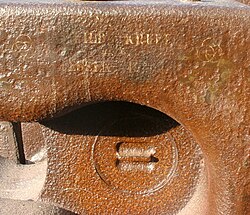
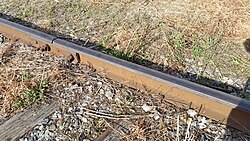
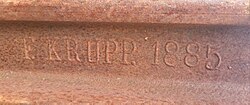
Alfred expanded the company's reach by producing steel rollers for utensils and seamless railroad wheel tires, known as Radreifen. Beyond technical innovation, Alfred was an early adopter of corporate social responsibility, providing his employees with subsidized housing, health benefits, and retirement plans.
The Shift Toward Armaments
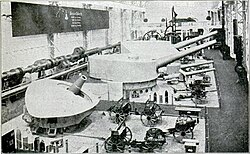
While Krupp produced a vast array of commodities, the company increasingly specialized in weapons due to government subsidies and fluctuating civilian demand. By the late 1880s, armaments accounted for approximately 50% of the company's total output. Krupp's steel cannons became essential for the Prussian, Russian, and Turkish armies.
Global Influence and Military Dominance
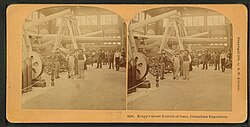
Krupp's influence extended far beyond German borders. In the late 19th and early 20th centuries, the company exported thousands of guns to the Balkans and the Ottoman Empire. Its technological superiority was vividly demonstrated during the Franco-Prussian War, where Krupp's breech-loaded steel cannons outperformed the muzzle-loaded brass guns of the French army.
World War I and the "Big Bertha"
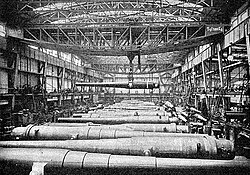
During the First World War, Krupp was the primary supplier of artillery for the Imperial German Army. They produced legendary siege guns, including the 420 mm Big Bertha and the Paris Gun. The company also operated the Germaniawerft shipyard in Kiel, producing warships and U-boats.
World War II and the Third Reich
Under the leadership of Gustav Krupp von Bohlen und Halbach and later his son Alfried, the company became the center of German rearmament after 1933. Krupp manufactured Panzer I tanks, armor plating, and the massive 800 mm railway guns, Schwerer Gustav and Dora. They also developed the 88 mm anti-aircraft cannon, which became a feared anti-tank weapon.
This era was marked by severe human rights abuses. Krupp utilized conscripted and slave labor from across occupied Europe. Thousands of workers suffered under atrocious sanitary conditions, starvation, and brutal discipline, a fact later detailed during the Nuremberg Trials.
Post-War Recovery and Diversification
Following Germany's defeat, Alfried Krupp was convicted as a war criminal for the use of slave labor. However, as the Cold War intensified, he was released in 1951 and resumed control of the firm. To distance the brand from its wartime image, the company initially sold its trucks under the name "Südwerke" until 1954.
In the latter half of the 20th century, Krupp diversified into high-performance materials and mechanical engineering. The company also achieved significant peacetime milestones, such as constructing the 100-meter Effelsberg Radio Telescope and the pressure sphere for the Trieste, the first vessel to reach the ocean's deepest point in 1960.
The Path to ThyssenKrupp
The late 20th century brought financial volatility. After a period of recession in 1967 and a merger with Hoesch AG in 1992, the company eventually sought a merger with its rival, Thyssen AG. After an initial failed hostile takeover attempt in 1997, the two firms successfully merged in 1999 to form ThyssenKrupp AG.
Company Summary
| Era/Entity | Key Focus | Notable Outcome |
|---|---|---|
| Friedrich Krupp (1811) | Steel Foundry | Establishment of the family business in Essen |
| Alfred Krupp (Mid-1800s) | Industrialization | Bessemer process; Railway tires; Steel cannons |
| World War Era | Heavy Armaments | Big Bertha; 88mm gun; U-boats |
| Post-War/Modern | Diversification | Deep-sea exploration; Radio telescopes |
| ThyssenKrupp (1999) | Global Conglomerate | One of the world's largest steel producers |
Frequently Asked Questions
Who was known as the "Cannon King"?
Alfred Krupp, the son of the founder, earned this nickname due to his massive investment in steel cannon technology and his success in supplying armaments to various global powers.
What was the significance of the Bessemer process for Krupp?
The Bessemer process allowed for the mass production of steel. Although initially hindered by the high phosphorus content of German iron ore, Krupp's chemists eventually overcame this, enabling the company to scale its production significantly.
How did Krupp contribute to deep-sea exploration?
Krupp Steel Works manufactured the 13-tonne spherical pressure chamber for the dive vessel Trieste, which allowed humans to reach the deepest known point of the ocean in 1960.
Why did Ford label its cars "T-5" in Germany?
Because Krupp held the rights to the name "Mustang" for some of its products in Germany, Ford had to rename the Mustang as the "T-5" for the German market until Krupp's rights expired in 1978.
What happened to the company after World War II?
After the Nuremberg Trials and a period of rehabilitation, the company transitioned into an Aktiengesellschaft (public company) in 1968, with ownership transferring to the Alfried Krupp von Bohlen und Halbach Foundation before eventually merging into ThyssenKrupp.