The Evolution of a Global Giant: A Comprehensive History of Siemens
From its humble beginnings in 19th-century Prussia to its current status as a global powerhouse in technology and industry, Siemens has undergone a remarkable transformation. Founded on the principles of innovation and engineering excellence, the company has shaped the modern world through electrification, transportation, and digital transformation.
Today, Siemens operates as a massive conglomerate—a large corporation made up of several different business sectors—serving industries across nearly 190 countries. Headquartered in Munich, Germany, the company continues to lead in sectors ranging from smart infrastructure to advanced medical imaging.

Key Facts
- Founded: 1 October 1847 in Berlin, Kingdom of Prussia.
- Founder: Werner von Siemens.
- Headquarters: Munich, Germany.
- Current CEO: Roland Busch.
- Global Reach: Operations in approximately 190 countries with 285 production facilities.
- Workforce: Approximately 327,000 employees (as of 2024).
A Legacy of Innovation: From Telegraphs to Locomotives
The story of Siemens began with Siemens & Halske. In its early years, the company was instrumental in the electrification of the world, driven by the dynamoelectric principle—a method of generating electricity through motion. One of the company's earliest triumphs was the Indo-European Telegraph Line, which allowed communication to travel halfway around the world in just 28 minutes.

As the industrial revolution progressed, Siemens expanded into various forms of transport. By the late 19th century, the company was experimenting with electric vehicles, including the Siemens & Halske Omnibus, which could reach speeds of 28 km/h by 1899.

The 20th Century and Industrial Shifts
The 1900s saw Siemens diversify into aviation and heavy machinery. During World War I, the company manufactured airplanes, a legacy of engineering that continued into the following decades. However, the company's history also includes dark chapters; during the Nazi era, Siemens was involved in the use of forced labor at various sites, including the Ravensbrück and Bobrek concentration camps.

![Prisoners around 1944 working at a Siemens factory in KZ Bobrek, a subcamp of Auschwitz concentration camp[21]](/images/ac/c7/acc7cbc32918d45b067991b49cebd64d110607ea33b45e1be6f93d0c4a890347.jpg)


Following the war, Siemens focused on rebuilding and technological advancement, eventually evolving into the modern Siemens AG. The company has navigated significant transitions, including the spin-off of major divisions like Siemens Healthineers and Siemens Energy to allow for more specialized growth.


Modern Operations and Business Divisions
In the 21st century, Siemens has transitioned from a traditional industrial manufacturer to a leader in digitalization and smart technology. The company's current portfolio is organized into several core divisions:
- Siemens Digital Industries: Focusing on industrial automation and software.
- Siemens Smart Infrastructure: Connecting energy systems and buildings.
- Siemens Mobility: Providing advanced rail and transport solutions.
- Siemens Healthineers: A leading provider of medical technology (Siemens retains a 75% majority stake).
- Siemens Financial Services: Offering specialized financial solutions for industrial clients.

Transportation and Energy
Siemens Mobility remains a cornerstone of the company, producing everything from the Bangkok Skytrain to high-speed rail systems like the Velaro. In the energy sector, the company contributes to the global transition toward renewables through wind power technology.


Scientific Advancement
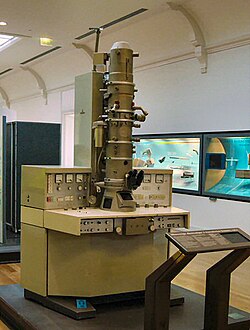
The company's impact extends into the laboratory. High-precision instruments, such as electron microscopes, have become essential tools for scientific research worldwide.
Financial Performance and Global Presence
Siemens maintains a massive global footprint, with its largest revenue shares coming from Europe, the CIS, Africa, and the Middle East (29.7%), followed by the United States (24.5%) and Asia/Australia (22.1%).
| Metric | Value |
|---|---|
| Revenue | €75.93 billion |
| Operating Income | €11.23 billion |
| Net Income | €8.992 billion |
| Total Assets | €147.8 billion |
| Total Equity | €51.26 billion |

Frequently Asked Questions
What are the main business areas of Siemens today?
Siemens primarily operates through four major divisions: Digital Industries, Smart Infrastructure, Mobility, and Siemens Healthineers (of which it holds a 75% majority stake), alongside Siemens Financial Services.
Who is the current leader of Siemens?
Roland Busch has served as the CEO of Siemens AG since 2021. The Chairman of the Supervisory Board is Jim Hagemann Snabe.
How much of Siemens is owned by the Siemens family?
The Siemens family holds a 6.9% stake in the company, while other shareholders hold the remaining 93.1%.
Where is Siemens headquartered?
The global headquarters of Siemens is located in Munich, Germany.
What happened to Siemens Mobile and Osram?
These were former operations. Siemens Mobile was part of the company's mobile division, and Osram was a business that Siemens eventually divested in 2013.