Kowloon: The Vibrant Urban Heart of Hong Kong
Kowloon is one of the three primary regions of Hong Kong, alongside Hong Kong Island and the New Territories. Comprising the Kowloon Peninsula and New Kowloon, it stands as the smallest of the three divisions yet remains the most densely populated. Known for its high-energy urban atmosphere, Kowloon serves as a critical commercial and residential hub situated directly north of Hong Kong Island.
The region is defined by its unique geography, bordered by Victoria Harbour to the south and the Lei Yue Mun strait to the east. To the west lie Stonecutter's Island, Butterfly Valley, and Mei Foo Sun Chuen, while the north is guarded by a mountain range featuring the iconic Lion Rock and Tate's Cairn.
Key Facts
- Literal Meaning: The name translates to "Nine Dragons," referring to eight mountains and Emperor Bing of Song.
- Population: Approximately 2,108,419 residents (as of 2011).
- Population Density: 43,033 people per square kilometer.
- Land Area: 67 square kilometers (26 sq mi).
- Primary Language: Cantonese is spoken by roughly 86% of the population.
The History and Evolution of Kowloon
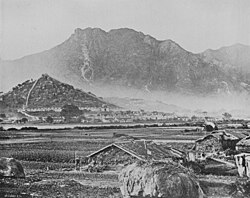
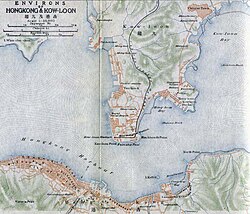
The history of Kowloon is divided by a landmark known as Boundary Street. The area south of this line, including Stonecutters Island, was ceded by Qing China to the United Kingdom via the Convention of Peking in 1860. Initially, the British used this land primarily for tiger-hunting expeditions, leaving it largely undeveloped for years.
In 1898, the Second Convention of Peking saw the British lease the area north of Boundary Street—known as New Kowloon—as part of the New Territories for a period of 99 years. This area once housed the infamous Kowloon Walled City, a unique enclave that was eventually demolished in 1993. During the Song dynasty (960–1279), this same region was known as Kwun Fu Cheung.
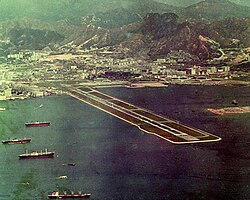
Urbanization accelerated in the early 20th century with the development of the Kowloon Wharf and the Kowloon-Canton Railway. However, the skyline remained lower than that of Hong Kong Island for decades because the proximity of the Kai Tak Airport restricted building heights due to flight paths.
Following World War II, Kowloon experienced a population surge. Refugees from the newly established People's Republic of China led to the creation of slums, which were later replaced by public housing estates. This era transformed the region into a dense mix of residential, industrial, and commercial zones. Additionally, the area now known as West Kowloon was formerly a Royal Navy dockyard.
Demographics and Society
Kowloon is a diverse urban center where approximately 94.2% of the population is of Han Chinese ethnicity. The most prominent ethnic minority groups include Indonesians (1.8%), Filipinos (1.5%), Indians (0.5%), Nepalese (0.4%), and British (0.3%). While Cantonese is the dominant language, English (2.3%) and Mandarin (1.2%) are also utilized by residents.
Administrative Districts
The region is managed through five key districts:
- Kowloon City
- Kwun Tong
- Sham Shui Po
- Wong Tai Sin
- Yau Tsim Mong
Education and Infrastructure
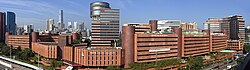
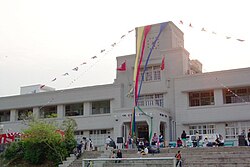
Kowloon is a center for higher learning, hosting several prestigious institutions. Notable tertiary education providers include the Hong Kong Polytechnic University, City University of Hong Kong, Hong Kong Baptist University, and Hong Kong Metropolitan University, among others.
Transport and Connectivity
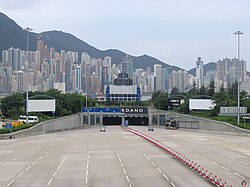
Connecting Kowloon to Hong Kong Island is a complex network of tunnels, as there are no bridges spanning the harbor. These include:
- Road-only tunnels: The Cross-Harbour Tunnel and the Western Harbour Crossing.
- MTR railway tunnels: The Tsuen Wan line, the Tung Chung line/Airport Express, and the East Rail.
- Combined link: The Eastern Harbour Tunnel, which separates road traffic and the Tseung Kwan O line into parallel conduits.
Regional Summary
| Category | Detail |
|---|---|
| Total Land Area | 67 km² |
| 2011 Population | 2,108,419 |
| Population Density | 43,033/km² |
| Time Zone | UTC+8 (Hong Kong Time) |
| Major Ethnicity | Han Chinese (94.2%) |
Frequently Asked Questions
What does the name "Kowloon" mean?
Kowloon literally means "Nine Dragons," a reference to the eight mountains in the area and Emperor Bing of Song.
What is the difference between Kowloon and New Kowloon?
Statutorily, Kowloon refers to the area south of Boundary Street and Stonecutters Island. New Kowloon is the area north of Boundary Street; while technically part of the New Territories, it is commonly regarded as part of the Kowloon urban area.
Why was Kowloon's skyline historically lower than Hong Kong Island's?
The skyline was limited by the flight paths of the old Kai Tak Airport, which restricted the height of buildings in its vicinity.
How is Kowloon connected to Hong Kong Island?
Kowloon is connected via several tunnels, including road-only tunnels (Cross-Harbour and Western Harbour Crossing), MTR railway tunnels, and the combined Eastern Harbour Tunnel. There are no bridges connecting the two.
What was the Kowloon Walled City?
The Kowloon Walled City was a unique enclave located within New Kowloon that existed until its demolition in 1993.