Korean War: The Combat Legacy of RAAF No. 77 Squadron
When conflict erupted on 25 June 1950, the Royal Australian Air Force (RAAF) found itself rapidly transitioning from occupation duties to active combat. No. 77 Squadron, then the sole remaining RAAF unit of the British Commonwealth Occupation Force (BCOF) in Japan, was poised to return home when it was instead placed on standby. Within a week, the squadron joined the United Nations (UN) peacekeeping force, marking the beginning of a grueling campaign defined by rapid technological shifts and courageous leadership.
Leadership Under Pressure: The Command of Squadron Leader Cresswell
The squadron initially faced a leadership crisis following the death of Wing Commander Lou Spence on 9 September 1950. He was replaced by Squadron Leader Cresswell, a highly qualified fighter pilot with extensive experience in single-engined aircraft, including the Mustang. Cresswell holds a unique place in RAAF history as the only officer to lead the same squadron on three separate occasions during wartime.
Despite his expertise, Cresswell remained a squadron leader throughout his tenure, unlike his US counterparts who held higher ranks. This created a challenging command structure, leaving him without a high-ranking operations officer to delegate daily tasks. Nevertheless, Cresswell was noted as a "goer" and a skilled organizer who led from the front, flying four sorties on his very first day of operations to restore morale.
From Mustangs to Jets: Evolution of Air Combat
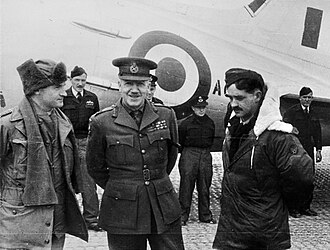
No. 77 Squadron initially operated the P-51 Mustang, focusing heavily on ground-attack missions. After moving to Pohang, South Korea, on 12 October 1950, the squadron provided critical close air support for UN troops advancing from the Pusan Perimeter. Their effectiveness was highly praised, particularly during attacks on Chinese armor at Pakchon, where the support was described as the closest ever witnessed by ground commanders.
The nature of the war shifted in November 1950 with the introduction of the Mikoyan-Gurevich MiG-15, a Russian-designed swept-wing jet that outclassed most aircraft in the theater. To counter this, the Australian government acquired British Gloster Meteor straight-wing jets. Before the Meteors arrived, Cresswell gained vital jet experience by flying F-80 Shooting Stars with the USAF, leading him to insist on the installation of radio compasses for better navigation in poor weather.
Mustang Campaign Statistics (July 1950 – April 1951)
| Category | Quantity/Outcome |
|---|---|
| Armoured Vehicles and Guns Destroyed | 60 |
| Other Vehicles Destroyed | 600 |
| Buildings Destroyed | 2,000+ |
| Aircraft Lost | 16 Mustangs |
| Personnel Lost | 13 Pilots |
The Jet Era and "MiG Alley"
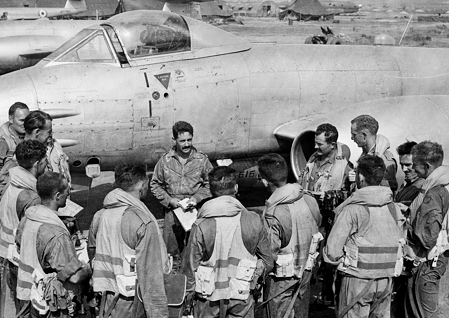
By April 1951, the squadron converted to the Gloster Meteor. While the RAAF's primary goal was interception, the Meteor's limitations compared to the MiG-15 required strategic adaptation. Cresswell determined that the Meteor could match the MiG's maneuverability and climb rate below 25,000 feet (7,600 m). Consequently, the RAAF adopted a tactic of operating at lower altitudes while USAF F-86 Sabres provided high-level cover.
On 29 July 1951, Cresswell led the first RAAF jet squadron into combat during an offensive sweep in MiG Alley—the contested airspace between the Yalu and Chongchon Rivers. While the squadron escorted B-29 Superfortresses and conducted sweeps, they faced a cautious enemy that often refused to engage in the air.
Cresswell's Final Sorties and Legacy
After handing over command on 16 August 1951, Cresswell continued to fly, converting to the F-86 Sabre. He flew ten combat missions with the 336th Fighter Interceptor Squadron, engaging in dogfights with MiG-15s. By the time he returned to Australia, he had flown a total of 144 sorties: 110 in Mustangs, 14 in Meteors, and 10 each in Shooting Stars and Sabres.
For his leadership and skill, he was awarded the Air Medal, the Distinguished Flying Cross, and the Commonwealth Distinguished Flying Cross. Despite some internal RAAF friction regarding his "flamboyance," his contributions were pivotal to the squadron's success. He returned to Korea briefly in 1953 as a Fighter Staff Member to evaluate pilot techniques before the armistice ended the war on 27 July.
Key Facts
- Unique Command: Squadron Leader Cresswell is the only officer to lead No. 77 Squadron three times during wartime.
- Technological Shift: The squadron transitioned from P-51 Mustangs to Gloster Meteors to counter the Soviet-designed MiG-15.
- Tactical Innovation: RAAF Meteors operated below 25,000 feet to maximize maneuverability, coordinated with high-altitude USAF Sabres.
- Combat Record: During the Mustang phase, the squadron destroyed over 660 vehicles and 2,000 buildings.
- Total Sorties: Cresswell flew 144 total sorties across four different aircraft types during the conflict.
Frequently Asked Questions
Why did No. 77 Squadron switch from Mustangs to Meteors?
The introduction of the Russian-designed MiG-15 jet fighter rendered the propeller-driven Mustangs obsolete in air-to-air combat. The Gloster Meteor was acquired to provide the squadron with jet capabilities for interception and combat.
What was "MiG Alley"?
MiG Alley was the region of airspace between the Yalu and Chongchon Rivers on the border of North Korea and Manchuria, where the most intense jet fighter combat of the war occurred.
How did the Gloster Meteor compare to the MiG-15?
The MiG-15 generally outclassed other fighters in the theater. However, Squadron Leader Cresswell found that the Meteor could match the MiG's performance and maneuverability at altitudes below 25,000 feet.
What was the primary role of No. 77 Squadron during the war?
While the squadron's official RAAF role was interception, it spent a significant portion of the war as a ground-attack unit, particularly while operating the P-51 Mustangs.
Who was the most prominent leader of No. 77 Squadron during this period?
Squadron Leader Cresswell was the most prominent leader, serving as the squadron's longest-serving commanding officer during the Korean War and leading the first RAAF jet squadron into combat.