Finding Dispersed Families: The Historic KBS Broadcast That Reunited Korea
In the summer of 1983, a television program transformed from a modest morning segment into one of the most significant humanitarian events in broadcasting history. Finding Dispersed Families (Korean: 이산가족을 찾습니다) was a live television special aired by the Korean Broadcasting System (KBS) that sought to reunite thousands of citizens separated by the tragedies of war and political division.
What began as a planned 95-minute tribute to the 30th anniversary of the Korean War ceasefire evolved into a massive national effort. Over the course of 138 days, the broadcast became a beacon of hope for millions, utilizing the power of mass media to heal wounds left by decades of separation.

Key Facts
- Broadcast Duration: 453 hours and 45 minutes over 138 days (June 30 – November 14, 1983).
- Impact: 53,536 participants appeared on air, resulting in 10,189 family reunions.
- Peak Popularity: Reached a viewership rating of 78%, with nearly 5 million viewers.
- Global Recognition: Included in UNESCO's Memory of the World International Register in 2015.
- Origin: Created by Director Park Hee-ung and aired on KBS1.
The Roots of Separation
To understand the necessity of the program, one must look at the two primary eras of displacement in Korean history: the Liberation period (1945–1950) and the Korean War period (1950–1953).
The Cold War and National Division
Following 35 years of Japanese colonial rule, the Korean peninsula was split along the 38th parallel in 1945 into Soviet and American zones of occupation. This division, a direct consequence of the Cold War, formalized the creation of two separate states in 1948. This political rupture separated over 10 million families, as refugees fled from the North to the South, often losing all contact with their loved ones.

The Impact of the Korean War
The conflict that began on June 25, 1950, further cemented this divide. The three-year war resulted in an estimated 3 to 4 million deaths, with civilians making up as much as 70% of the casualties. The phenomenon of divided families, known as isan kajok, became a national trauma. Families were unable to communicate across the Armistice Line, and many faced political persecution simply for having relatives in the opposing state.
Production and National Mobilization
The program was originally pitched by Director Park Hee-ung as a small segment titled I Still Haven't Found my Family for the morning show Studio 830. However, the overwhelming volume of applications prompted KBS President Lee Won-hong to authorize an extended special broadcast.
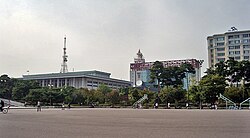
The production began at the KBS Headquarters in Yeouido Park, Seoul, eventually expanding to include nine regional branches. The process was rigorous: applicants were interviewed and categorized into four groups based on the likelihood of a successful reunion, with the most promising cases aired first.
The scale of the event was unprecedented. Participants held up signs with their stories and identification numbers to attract their missing kin. The area surrounding the KBS building became a makeshift hub for the desperate; walls and sidewalks were plastered with posters, and crowds grew so large that police were required to maintain order.

Broadcast Statistics and Reach
The logistical effort involved 1,641 KBS employees and attracted international media attention, with journalists from 25 nations reporting from the lobby. The program's reach was staggering, with over 100,000 applicants and a peak audience of nearly 5 million people.
Global Significance and Legacy
Finding Dispersed Families was more than a television show; it was a diplomatic and humanitarian milestone. It marked the first time mass media was used for post-war reunification on such a scale. South Korea later used the program's success as a bargaining tool to encourage North Korea to reopen communication channels regarding family reunions.

Internationally, the broadcast shed light on the human cost of the Cold War. It was broadcast in real-time across 25 countries and reviewed by major publications like The New York Times. The raw emotion of the reunions prompted responses from global leaders, including U.N. Secretary-General Javier Perez de Cuellar.
Continuing Efforts
The legacy of the 1983 broadcast paved the way for future initiatives, such as the 1990s programs for Sakhalin-Koreans and the regular I Miss Them segment on Achim Madang (1997–2007). Today, reunion efforts are primarily managed by the North and South Korean governments and the Korean Red Cross, including the Inter-Korean Family Reunions held in August 2018.

| Category | Details |
|---|---|
| Network | KBS1 (South Korea) |
| Air Dates | June 30 – November 14, 1983 |
| Total Runtime | 453 hours, 45 minutes |
| Participants | 53,536 individuals |
| Families Reunited | 10,189 |
| UNESCO Status | Memory of the World Register (2015) |
Archives and Accessibility
The historical record of the program is meticulously preserved. The archives consist of 463 videotapes, 15,000 photographs, and 12 volumes of name registers produced by the Korean Red Cross. These records include production notes, storyboards, and the program's emotional soundtracks, such as The Lost Thirty Years.
Today, the KBS website provides public access to these archives, allowing users to stream the broadcasts and search a comprehensive database of participants to find specific footage of reunions.
Frequently Asked Questions
What was the primary goal of Finding Dispersed Families?
The program aimed to reunite Korean families who had been separated due to the division of the peninsula and the casualties and displacements caused by the Korean War.
Why is the program included in the UNESCO Memory of the World Register?
It is recognized for its immense historical value as one of the first vivid records of the war's impact on civilians and for its pioneering use of mass media to facilitate humanitarian reunification.
How many people were actually reunited through the broadcast?
Out of 53,536 participants who appeared on air, 10,189 families were successfully reunited.
What is 'isan kajok'?
Isan kajok is the Korean term for divided families, referring to those separated by the political and military borders established between North and South Korea.
Can the footage from the 1983 broadcast still be viewed today?
Yes, the archives are available to the public via the KBS website, which includes a searchable database of participants and streaming video of the broadcasts.