KBS: The Evolution of South Korea's Public Broadcasting Giant
The Korean Broadcasting System, commonly known as KBS, stands as a cornerstone of South Korean media. As a statutory corporation owned by the Government of South Korea, it serves a worldwide audience through a diverse array of television, radio, and digital platforms. From its early origins in the 1920s to its current status as a high-definition digital broadcaster, KBS has mirrored the dramatic history and technological advancement of the Korean peninsula.
Key Facts
- Founded: Radio service began on 16 February 1927; Television launched in May 1956.
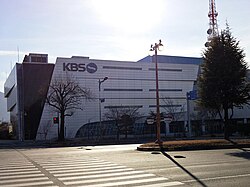
- Headquarters: Yeouido, Yeongdeungpo District, Seoul, South Korea.
- Type: Statutory public broadcasting corporation.
- Primary Services: Terrestrial television, radio, and international services via KBS World.
- Revenue Model: Approximately 49% from mandatory television license fees and 18.7% from commercial advertisements.
A Journey Through History
Early Radio and the Birth of Broadcasting
The roots of KBS trace back to 16 February 1927, when the Gyeongseong Broadcasting Station (call sign JODK) was established by the Governor-General of Korea. In 1932, it transitioned into the Chōsen Broadcasting Corporation. Following the liberation of Korea after World War II, the station adopted the call sign HLKA in 1947 after the US-occupied territory was granted the ITU prefix HL. By 1948, the station was renamed the Seoul Central Broadcasting Station.
The Rise of Television and Public Orientation
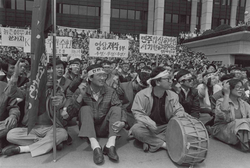
Television broadcasting in South Korea officially commenced on 12 May 1956 via HLKZ-TV. Following financial challenges, KBS acquired the station in 1961. A pivotal shift occurred on 3 March 1973, when KBS moved away from being a state-controlled media entity to adopt a public-oriented broadcasting concept. This era also saw the expansion of radio services, including the 1979 launch of KBS Stereo (now KBS 1FM) and the introduction of color television.

Media Consolidation and the 1980s
The 1980s were a period of significant structural change in the Korean media landscape. Several private broadcasters, including Tongyang Broadcasting Corporation (TBC) and Dong-A Broadcasting System (DBS), were affected by consolidation efforts. During this time, Munhwa Broadcasting Corporation (MBC) also underwent changes, where affiliates were eventually required to transfer majority shares to MBC Seoul, which in turn saw a 65% share transfer to KBS. These structures eventually evolved, leading to the revival of TBC and DBS as JTBC and Channel A in 2011.

Modern Era: Digitalization and Global Reach
Digital Transition and Challenges
KBS has consistently embraced technological progress, having introduced HD programming in 2001 and completing a full switch to digital broadcasting in 2012. However, the transition was not without friction. In 2012, a dispute regarding carriage fees between KBS and the Korea Cable TV Association (KCTA) led to a temporary blackout of the KBS2 channel, which was eventually resolved following intervention by the Korea Communications Commission (KCC).

Global Presence and Cultural Impact
To connect with the global Korean diaspora, KBS launched KBS World 24 in 2014. KBS World Television provides 24-hour programming, with approximately 65% of its content featuring English subtitles. The network has also been a leader in historic live coverage, most notably the 1983 Finding Dispersed Families special, which aired for over 453 hours to address the tragedy of families separated by the Korean War. More recently, in 2018, KBS served as the Host Broadcaster for the historic inter-Korean summit.

Organizational Structure and Services
Television and Radio Channels
KBS maintains a robust lineup of terrestrial and specialized channels. Terrestrial services include KBS1, KBS2, KBS News 24, and KBS UHD. Its radio network is equally comprehensive, featuring:
- KBS Radio 1: News, current affairs, and culture.
- KBS Radio 2 (Happy FM): Popular music.
- KBS 1FM (Classic FM): Classical and folk music.
- KBS 2FM (Cool FM): Entertainment and news.
- KBS Radio 3: A station restructured in 2010 for the disabled.
Summary of KBS Services
| Category | Key Channels/Services | Primary Content Type |
|---|---|---|
| Terrestrial TV | KBS1, KBS2, KBS News 24 | News, Drama, General Programming |
| Radio | Radio 1, Radio 2, 1FM, 2FM | News, Music, Culture, Entertainment |
| International | KBS World | Global Korean Content (English Subtitles) |
| Specialized | KBS Life, KBS UHD | Culture, Drama, Ultra High Definition |

Frequently Asked Questions
How is KBS funded?
KBS generates revenue through two primary streams: a mandatory television license fee (2,500 won) which accounts for approximately 49% of revenue, and commercial advertisement sales, which contribute about 18.7%.
What is KBS World?
KBS World is the international service of KBS, designed to reach audiences worldwide, including the Korean diaspora. It offers 24-hour programming and is available in many countries, often with English subtitles.
When did KBS start broadcasting television?
Television broadcasts in South Korea began on 12 May 1956 on HLKZ-TV, which was later acquired by KBS in 1961.
What was the significance of the 'Finding Dispersed Families' program?
Aired in 1983, this was a massive public affairs program that addressed the issue of families separated by the Korean War. It remains one of the biggest public affairs programs ever produced by KBS.
Does KBS have regional stations?
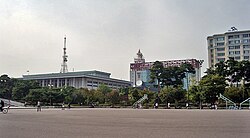
Yes, KBS operates a network of regional broadcasting stations, such as the station located in Changwon, to serve various parts of the country.
