F-86 Sabre: The Legendary Jet Fighter of the Cold War Era
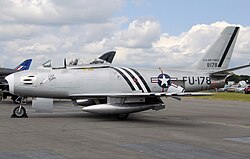
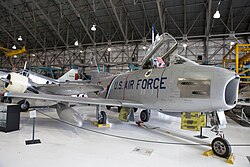
The F-86 Sabre stands as one of the most iconic fighter aircraft in aviation history. Developed by North American Aviation, this jet fighter became a symbol of air superiority during the early years of the jet age. From its first flight in 1947 to its extensive service across the globe, the Sabre played a pivotal role in shaping modern aerial combat tactics.
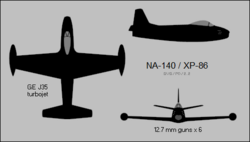
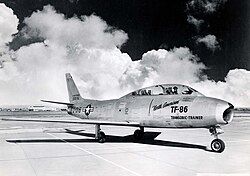
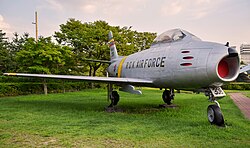
Originally designed as the NA-140 (later the XP-86 prototype), the Sabre was a significant leap forward in aeronautical engineering. It transitioned from a developmental project into the primary air combat fighter for the United States Air Force (USAF) during the Korean War, marking a definitive era in military aviation.
Key Facts
- Manufacturer: North American Aviation
- First Flight: October 1, 1947
- Total Built: Approximately 9,860 aircraft
- Primary Combat Role: Air-to-air combat and ground attack
- Notable Conflict: Korean War
- Key Competitor: Mikoyan-Gurevich MiG-15
Development and Design Evolution
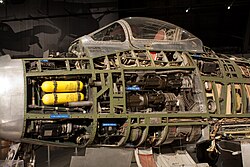
The Sabre's lineage is complex, evolving from the North American FJ-1 Fury. The aircraft saw numerous iterations, including the F-86A, the F-86E, and the F-86F. Each variant brought improvements in performance, radar capabilities, and armament.
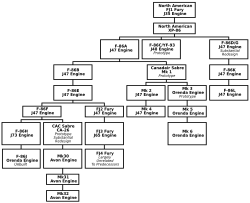
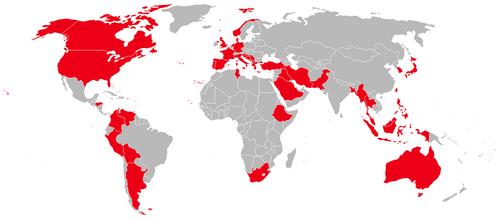
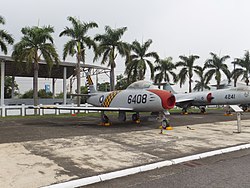
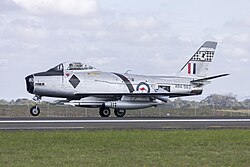
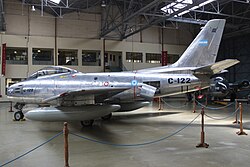
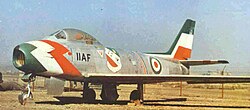
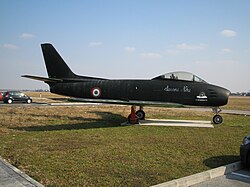
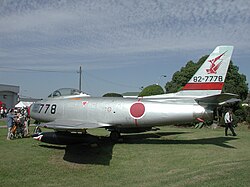
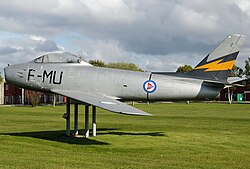
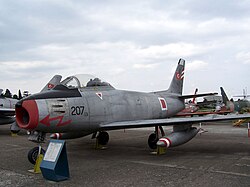
Beyond the American-built models, the Sabre was produced internationally. Canadair in Canada produced 1,815 units, while CAC in Australia built 112. Other manufacturers included Fiat in Italy and Mitsubishi in Japan. This global production ensured that the Sabre became a mainstay for many different air forces around the world.
Technical Specifications (F-86F-40-NA)
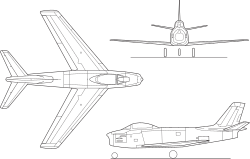
To understand the Sabre's dominance, one must look at its technical capabilities. The F-86F-40-NA variant was a highly capable machine designed for high-speed engagement.
| Feature | Specification |
|---|---|
| Crew | 1 |
| Engine | 1 × General Electric J47-GE-27 turbojet |
| Maximum Speed | 687 mph (at sea level) |
| Service Ceiling | 49,600 ft |
| Armament | 6 × 0.50 in M3 Browning machine guns |
| Range | 1,525 miles |
Operational History and Combat Legacy
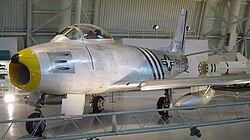
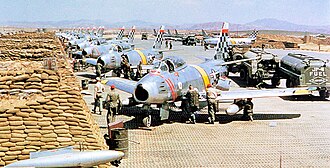
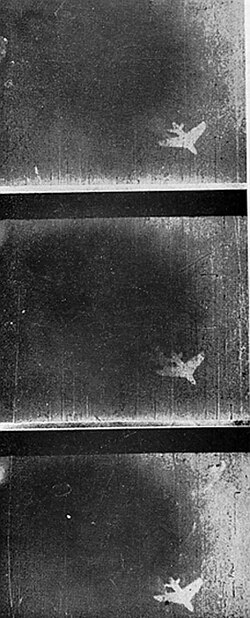
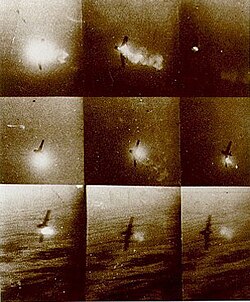
The F-86 Sabre's most famous chapter was written during the Korean War. It was the primary U.S. fighter used to counter the threat of the Soviet-built MiG-15. The intense dogfights in "MiG Alley" tested the limits of both aircraft, but the Sabre's superior handling and pilot training often gave it the edge.
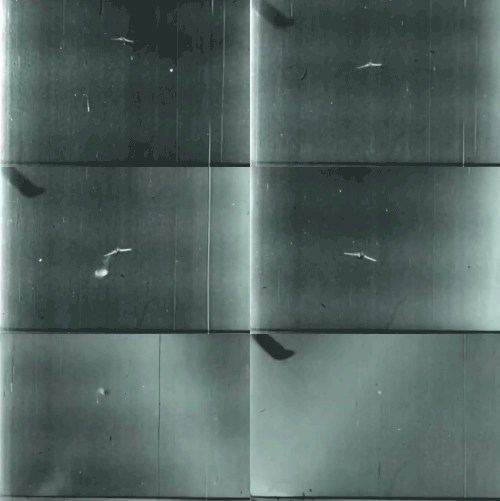
The aircraft was not limited to air-to-air combat. Many units were utilized for ground-attack missions, providing close air support to troops on the ground. This versatility made it an indispensable asset for the USAF and its allies.
Global Service and Regional Conflicts
Following the Korean War, the Sabre continued to serve in various capacities worldwide:
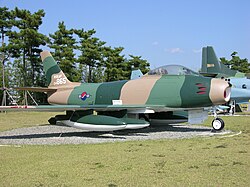
- Taiwan (Republic of China): The ROC Air Force built a massive fleet, including 320 F-86Fs and seven RF-86Fs, to bolster its defense during the Taiwan Strait crisis.
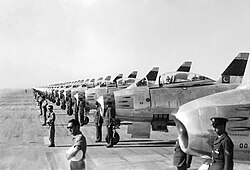
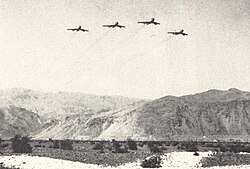
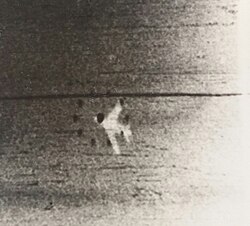
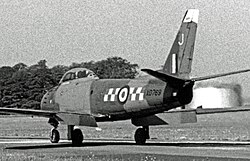
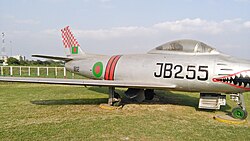
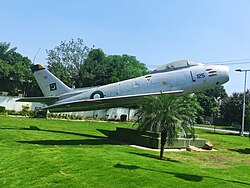
- Pakistan: The Pakistan Air Force (PAF) operated 102 F-86F Sabres, utilizing them extensively in the 1965 Indo-Pakistani War.
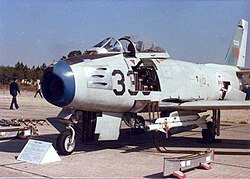
- Portugal: The Portuguese Air Force used F-86Fs for combat sorties, primarily in ground-attack roles.
Variants and Specialized Models
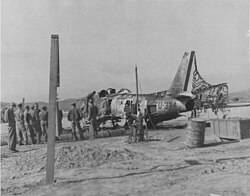
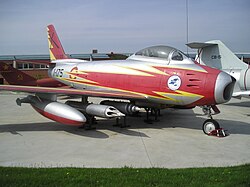
The Sabre family was vast, including specialized versions such as the RF-86 for reconnaissance and the DF-86A for drone direction. There were also all-weather interceptor prototypes like the YF-86D.
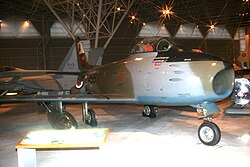
Later versions, such as the F-86H, were designed with different mission profiles in mind, often featuring more powerful engines or different armament configurations. The Canadair Sabre variants, particularly the Mk 6, are often cited by enthusiasts as some of the finest production models ever built.
Frequently Asked Questions
What was the main rival of the F-86 Sabre?
The primary adversary of the F-86 Sabre during the Korean War was the Soviet-designed Mikoyan-Gurevich MiG-15.
Who were the most notable pilots of the Sabre?
Several aces achieved fame flying the Sabre, including James Jabara (15 victories), George Davis (14 victories), and Manuel "Pete" Fernandez (14.5 victories).
How many Sabres were produced in total?
A total of approximately 9,860 aircraft were built across various manufacturers and international licenses.
What happened to the F-86 after the Korean War?
The Sabre remained in service with many nations for decades, serving in various conflicts and roles until being retired by the last operators, such as the Bolivian Air Force, in 1994.
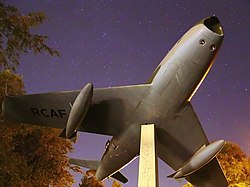
What is a "Canadair Sabre"?
The Canadair Sabre was a version of the F-86 manufactured by Canadair in Canada, which became highly regarded for its performance improvements.