X-15: The Hypersonic Rocket Plane That Shattered Speed and Altitude Records
In the golden age of aerospace experimentation, few machines commanded as much respect and awe as the North American X-15. As a high-speed, rocket-powered research aircraft, the X-15 was designed to push the boundaries of physics, testing the limits of flight at speeds and altitudes previously thought impossible for crewed vehicles. Operated by both the United States Air Force and NASA, this experimental marvel served as a critical bridge between traditional aviation and the dawn of the space age.
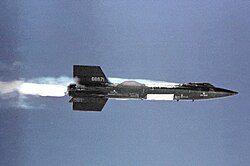
Throughout its operational life in the 1960s, the X-15 program provided invaluable data that would eventually shape the design of modern aircraft and spacecraft. By crossing the edge of outer space, the X-15 didn't just fly; it pioneered the science of hypersonic flight—traveling at speeds many times greater than the speed of sound.
Key Facts
- Manufacturer: North American Aviation
- Primary Users: NASA and the United States Air Force
- World Speed Record: 4,520 mph (Mach 6.7), set by William J. Knight on October 3, 1967
- Total Flights: 199 test flights conducted by 12 pilots
- Space Qualification: 8 pilots exceeded 50 miles in altitude, qualifying them as astronauts
- Engine Type: Primarily powered by the XLR99 liquid-fuelled rocket engine
Design and Propulsion Systems
The X-15 was a masterclass in specialized engineering. To withstand the extreme heat and pressure of hypersonic travel, the aircraft required advanced materials and propulsion. Early flights utilized two Reaction Motors XLR11 liquid-propellant rocket engines, which provided a combined 16,000 pounds-force of thrust using ethyl alcohol and liquid oxygen.
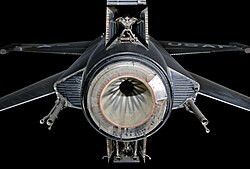
However, the program's true power came with the introduction of the XLR99 rocket engine in November 1960. This single-engine powerhouse generated a massive 57,000 pounds-force of thrust. It utilized anhydrous ammonia and liquid oxygen as propellant, driven by a high-speed turbopump fueled by hydrogen peroxide. The engine was so potent that it could burn 15,000 pounds of propellant in just 80 seconds—a feat so brief that author Jules Bergman titled his book on the program Ninety Seconds to Space.
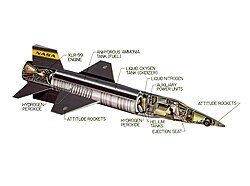
Cockpit and Pilot Safety
Flying at Mach 6 requires more than just a fast engine; it requires a survivable environment. The X-15 cockpit was pressurized with nitrogen gas to 3.5 psi above atmospheric pressure when flying above 35,000 feet. Pilots wore specialized pressure suits to maintain physiological stability. For emergencies, the aircraft featured an ejection seat capable of operating at speeds up to Mach 4 and altitudes of 120,000 feet, utilizing deployable fins to stabilize the seat before the main parachute opened.
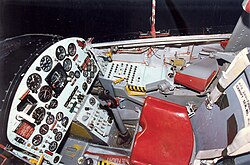
Operational History and Record-Breaking Feats
The X-15 program was launched into a series of historic milestones. The first unpowered glide flight took place on June 8, 1959, piloted by Scott Crossfield. Following this, the program transitioned into powered flight, eventually leading to the legendary speed and altitude records of the mid-1960s.

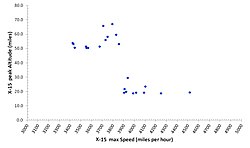
On October 3, 1967, pilot William "Pete" Knight achieved the ultimate milestone: a speed of 4,520 miles per hour (Mach 6.7) at an altitude of 102,100 feet. This remains the official world record for the highest speed ever recorded by a crewed, powered aircraft. Additionally, pilots like Joseph Walker successfully crossed the 100-kilometer (62-mile) threshold, meeting the international definition of outer space.
The Evolution of the X-15 Airframes
Three distinct X-15 aircraft were built, each contributing to the program's success:
- X-15-1 (56-6670): Completed 81 free flights and is currently on display at the Smithsonian.
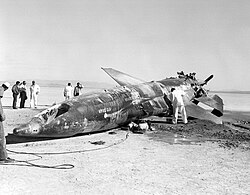
- X-15-2 / X-15A-2 (56-6671): Rebuilt after a 1962 accident, this version featured a 28-inch fuselage extension to carry liquid hydrogen and a heat-resistant ablative coating. It achieved the program's maximum speed record.
- X-15-3 (56-6672): Completed 65 flights, including the tragic Flight 191 in 1967, where Major Michael J. Adams was lost during a hypersonic spin.
Launch Logistics: The B-52 Mothership
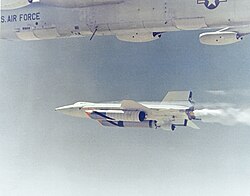
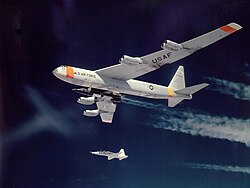
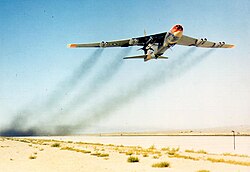
Because the X-15 was a rocket-powered aircraft, it could not take off from a conventional runway. Instead, it relied on a B-52 Stratofortress acting as a "mothership." The X-15 would be carried to high altitude by the B-52 (such as the NB-52B nicknamed Balls 8) and then released to ignite its rocket engine for its research mission.
Technical Specifications Summary
| Feature | Specification |
|---|---|
| Crew | 1 |
| Length | 49 ft 2 in (14.99 m) |
| Wingspan | 22 ft 4 in (6.81 m) |
| Empty Weight | 14,600 lb (6,622 kg) |
| Gross Weight | 33,500 lb (15,195 kg) |
| Maximum Speed | 4,520 mph (7,270 km/h) |
| Service Ceiling | 354,330 ft (108,000 m) |
Legacy and Preservation
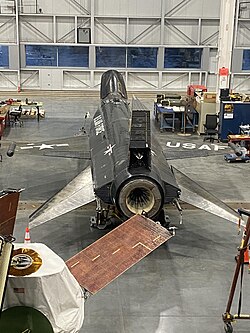
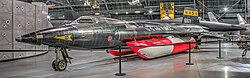
The X-15 program was officially retired in December 1968, but its impact lives on. The aircraft helped define the flight envelopes for future space programs. Today, several of these historic machines are preserved for public education.
Frequently Asked Questions
Who flew the fastest X-15 flight?
William "Pete" Knight of the U.S. Air Force flew the fastest recorded flight, reaching Mach 6.7 (4,520 mph) on October 3, 1967.
How did X-15 pilots become astronauts?
Pilots qualified as astronauts by exceeding an altitude of 50 miles (80 km). While Air Force pilots received wings immediately, NASA civilian pilots were retroactively awarded astronaut wings in 2005.
What was the purpose of the B-52 mothership?
The B-52 served as a launch platform, carrying the X-15 to high altitudes so the rocket engine could be ignited for its research mission.
Did Neil Armstrong fly the X-15?
Yes, Neil Armstrong was one of the twelve test pilots who flew the X-15, completing seven flights between 1960 and 1962.
What happened to the X-15-1?
The X-15-1 (56-6670) was donated to the Smithsonian Air & Space Museum for public display.