Understanding Korean Names: History, Structure, and Traditions
Korean names are deeply rooted in history, culture, and social structure. Unlike many Western naming conventions, a modern Korean name typically follows a specific pattern: a surname followed by a given name, with no middle names used. While the structure may seem simple, the underlying systems of clans, honorifics, and historical shifts reveal a complex cultural tapestry.
Whether you are looking at the way names are written in Hangul (the Korean alphabet) or how they are romanized for international passports, understanding the nuances of Korean nomenclature provides a window into the country's social evolution.
Key Facts
- Structure: Most names consist of a single-syllable surname followed by a two-syllable given name.
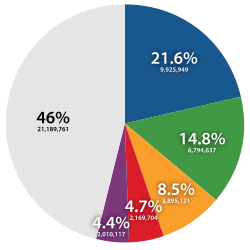
- Commonality: The surnames Kim, Lee, and Park are shared by nearly half of the South Korean population.
- Clans: Surnames are often linked to a pon'gwan (the birthplace of a clan's founder).
- Writing: Traditionally written in Hanja (Chinese characters), many modern names are now written exclusively in Hangul.
- Marriage: In South Korea, partners retain their original surnames after marriage.
The Structure of a Korean Name
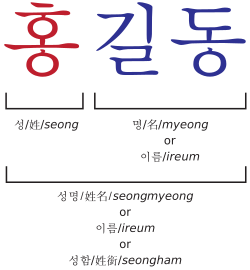
In the modern era, a full name is referred to by terms such as sŏngmyŏng, sŏngham, or irŭm. When written in Hangul, there is typically no space between the surname and the given name.
Surnames and Clans
Most Korean surnames consist of a single syllable, though multisyllabic examples like Namgung do exist. Historically, surnames were a privilege of the nobility, but they eventually became accessible to all. In fact, a 1910 census revealed that over half of the Korean population did not have a surname at that time.
A unique aspect of Korean identity is the connection to clans. Families are often grouped into clans identified by their pon'gwan—the ancestral birthplace of the clan's founder. For example, the Jeonju Yi clan traces its descent patrilineally to Yi Han and originates from Jeonju. As of 2000, there were approximately 286 surnames and 4,179 distinct clans in use.
Given Names and Generation Syllables
Given names usually consist of two syllables, though one or three-syllable variations occur. A traditional practice involves generation names, where members of the same generation in a family share a specific character. In South Korea, this shared syllable is used by all members of that generation, whereas in North Korea, it is typically shared only among siblings.
It is important to note that the use of given names is governed by a strict system of honorifics. In Korean culture, it can be considered rude to address a stranger or someone of higher social status by their given name alone.
Historical Evolution and Changes
The history of Korean naming is marked by significant political and social shifts. During the Japanese occupation of Korea, starting in 1939, Koreans were forced to adopt Japanese names through a policy known as sōshi-kaimei. By 1944, approximately 84% of the population had registered Japanese-style names. Following the liberation of Korea in 1945, people were permitted to return to their Korean names.
In the modern era, naming practices continue to evolve. While many names still utilize Hanja, there is a growing trend toward "Hangul-only" names. In 2015, 7.7% of people had names written exclusively in Hangul. Additionally, as more foreign-origin citizens naturalize in South Korea, the number of distinct surnames has increased, with over 4,800 new surnames registered between 2000 and 2015.
Legal Regulations for Hanja
In South Korea, the use of Hanja in personal names is regulated. To ensure clarity in official records, the Supreme Court maintains a specific list of permitted Hanja for use in names. As of 2024, more than 9,300 Hanja are permitted for this purpose. If a character is not on the approved list, the name must be represented in Hangul in the family relations register.
Romanization and International Usage
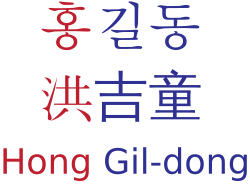
When Korean names are translated into the Latin alphabet (romanization) for international use, several variations can occur. For a two-syllable given name, it might be written as one joined word (Hong Gildong), separated by a hyphen (Hong Gil-dong), or separated by a space (Hong Gil Dong).
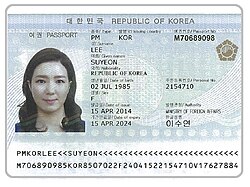
For official documents like passports, specific romanization patterns have become common for the most frequent surnames. While there is some flexibility, certain spellings dominate international recognition.

Common Surname Romanizations
| Surname (Hangul) | Primary Spelling | Secondary Spelling | Other Variations |
|---|---|---|---|
| 김 | Kim (99.3%) | Gim (0.6%) | Ghim |
| 이 | Lee (98.5%) | Yi (1%) | Rhee |
| 박 | Park (95.9%) | Bak (1.8%) | Pak |
| 최 | Choi (93.1%) | Choe (6.5%) | Choy |
| 정 | Jung (48.6%) | Jeong (37%) | Chung |
Frequently Asked Questions
Do Korean women change their surnames when they marry?
No. In South Korea, both partners keep their original full names upon marriage.
What is a "generation name"?
A generation name is a traditional practice where members of the same family generation share one specific character in their given names to signify their kinship.
Why are some Korean names difficult to use on older computers?
While modern Unicode supports 11,172 Hangul syllables, some older legacy systems (like KS X 1001) only support 2,350. This can cause technical issues for individuals whose names use characters outside that limited set.
Is the surname placed first or last in English?
In the usual presentation of Korean names in English, the surname is placed first. For example, in the name Ban Ki-moon, "Ban" is the surname.
Can anyone have a surname in Korea?
Historically, surnames were reserved for the nobility, and many commoners did not have them until the late 19th and early 20th centuries. Today, however, surnames are standard for the entire population.