Understanding Korean Mixed Script: The History of Hanja-honyong
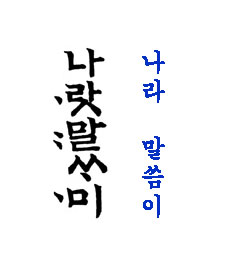
For much of modern history, the Korean language was written using a sophisticated blend of two distinct systems: Hangul (the native phonetic alphabet) and Hanja (logographic Chinese characters). This practice, known as Korean mixed script or gukhanmun honyong, represents a vital bridge between Korea's classical past and its modern linguistic identity.
While Hangul has become the dominant writing system today, the interplay between these two scripts shaped Korean literature, government, and daily communication for centuries. Understanding this evolution provides deep insight into how the Korean language transitioned from a system dominated by literary Chinese to the Hangul-centric society of the 21st century.
Key Facts
- Definition: Mixed script (hanja-honyong) involves interspersing Hangul with Hanja within sentences.
- Historical Peak: The system became the official writing style following the Gap-o reforms of 1894–1896.
- Modern Status: While largely replaced by Hangul-only writing, Hanja is still used for disambiguation and in specific formal contexts.
- Linguistic Importance: Over 70% of the Korean vocabulary is Sino-Korean (derived from Chinese), though only about a third is in common daily use.
- Regional Variation: North Korea transitioned to Hangul-only usage by 1949, whereas South Korea maintained mixed script for a longer period.
The Evolution of Korean Writing
The Rise of Hangul
The journey began with the promulgation of Hangul, a script designed to be accessible to the general population. Initially, the scholarly elite and the ruling classes resisted its use, often disparagingly referring to it as "women's script" or "children's script" to protect their monopoly on knowledge, which was predicated on the ability to read classical Chinese texts.
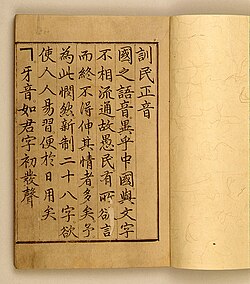
Despite various attempts by rulers to ban the script—most notably by Prince Yeonsan in 1504—Hangul spread rapidly among farmers, fishermen, and women, eventually becoming known as the "national script" (gukmun).
The Era of Mixed Script (Hanja-honyong)
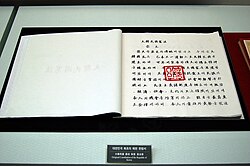
The true turning point for mixed script occurred during the late 19th century. The Gap-o reforms (1894–1896) ended the supremacy of literary Chinese in government and education. In this new era, the Korean language written in a mix of Hangul and Hanja became the official language of governance.
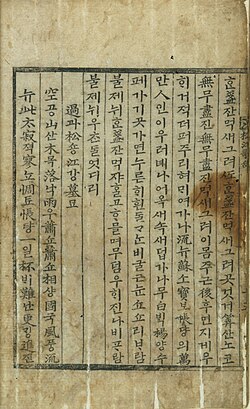
This period saw mixed script used extensively in newspapers, non-fiction, and official documents. It served as a formal written version of Korean that balanced the phonetic ease of Hangul with the semantic precision of Hanja.
The Decline of Hanja in Modern Korea
Political and Technological Shifts
The decline of mixed script was driven by both government policy and technological advancement. In 1968, President Park Chung-hee introduced a plan for Hangul exclusivity, aiming to eliminate Hanja from public schools and the military. Although public backlash led to a softening of these rules in 1972, the momentum toward Hangul-only usage continued.
Simultaneously, the development of the Hangul typewriter and later computer keyboards played a decisive role. Writing in mixed script was significantly slower and more cumbersome than using Hangul alone, especially with the advent of modern layouts like Sebeolsik. By the 1970s, most government documents had transitioned to Hangul-only formats.

The Modern Landscape
While the formal ban on Hanja was lifted in 1992, and there were efforts in the late 1990s to reintroduce it in schools, the practical use of Hanja has continued to dwindle. Today, Hanja is primarily used in three specific ways:
- Abbreviations: Used in newspaper headlines (e.g., 中 for China, 韓 for Korea).
- Disambiguation: Clarifying words that are homophones (words that sound the same but have different meanings).
- Stylistic Use: For branding or aesthetic purposes on packaging.
The Role of Hanja in Disambiguation
One of the most significant scientific reasons for the continued (though limited) use of Hanja is the issue of homophones. Because Korean lost the tonal distinctions present in Middle Korean, many different Sino-Korean words now share the exact same Hangul spelling.
For example, the syllable "sin" (신) can represent a vast array of meanings depending on the Hanja used, such as "new" (新), "god/deity" (神), or "kidney" (腎). Without the Hanja, the reader must rely entirely on context to determine the intended meaning. In academic, technical, or highly formal texts, Hanja is often included in parentheses to ensure absolute clarity.
| Feature | Mixed Script (Hanja-honyong) | Hangul-only Script |
|---|---|---|
| Primary Use | Historical formal documents, older newspapers | Modern daily communication, digital text |
| Clarity | High (uses Hanja to distinguish homophones) | Context-dependent (relies on surrounding words) |
| Writing Speed | Slower (requires character selection) | Faster (phonetic typing) |
| Complexity | High (requires knowledge of Chinese characters) | Low (phonetic alphabet) |
Frequently Asked Questions
Why did the use of mixed script decline in South Korea?
The decline was caused by a combination of government policies promoting Hangul exclusivity, the practical difficulty of using Hanja in modern printing and typewriting, and the increasing efficiency of Hangul-only digital keyboards.
Is Hanja still taught in Korea today?
Yes, Hanja has been reintroduced as a school elective in various capacities. While it is no longer the primary writing system, proficiency tests exist, and some elementary schools in major cities like Seoul include Hanja in their curriculum.
What is the difference between Hangul and Hanja?
Hangul is a phonetic alphabet where characters represent sounds, making it easy to learn and type. Hanja refers to logographic characters (derived from Chinese) where each character represents a specific meaning or concept.
Why is Hanja still used in newspaper headlines?
Hanja is used in headlines primarily for brevity. A single character can represent a complex concept or a country name, allowing editors to save space in tight layouts.
How does mixed script help with homophones?
Since many Korean words sound identical when written in Hangul, adding the Hanja character provides a visual cue that immediately tells the reader which specific meaning is intended, removing ambiguity.