Korean Language: History, Writing Systems, and Linguistic Evolution
The Korean language, known as Hangugeo in South Korea and Chosŏn'gŭl in North Korea, is a unique linguistic entity belonging to the Koreanic language family. With approximately 81 million native speakers as of the early 2020s, it serves as the primary medium of communication for the Korean people across the peninsula and in various diaspora communities, including Yanbian and Changbai in China.
Key Facts
- Native Speakers: Approximately 81 million.
- Language Family: Koreanic.
- Primary Writing System: Hangul.
- Official Status: Official language in both North and South Korea.
- Standard Forms: Pyojuneo (South) and Munhwaŏ (North).
Historical Development
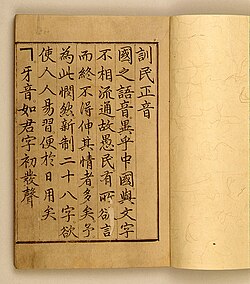
The evolution of the Korean language can be traced through several distinct stages, beginning with Proto-Koreanic. Over centuries, it transitioned through Old Korean and Middle Korean before reaching its Early Modern form. Historically, much of the written language relied on Hanja (Chinese characters), but the landscape changed significantly with the development of a native script.
Writing Systems and Scripts
The most prominent feature of the Korean language is Hangul, a highly systematic writing system. While North Korea uses Chosŏn'gŭl (which is identical to Hangul), South Korea utilizes Hangul as its primary script, occasionally using Hanja for supplementary purposes or in archaic mixed-script formats.
The Hangul Alphabet
Hangul is composed of consonants and vowels that are organized into syllabic blocks. The consonants include various types such as bilabial (using both lips), alveolar (using the ridge behind the teeth), velar (using the soft palate), and glottal (using the vocal folds) sounds. These are further categorized into plain, tense, and aspirated forms.

The vowel system consists of monophthongs (single, stable vowel sounds) and diphthongs (vowels preceded by intermediaries). Understanding these distinctions is essential for accurate pronunciation.

Romanization and International Use
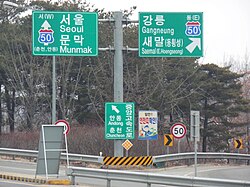
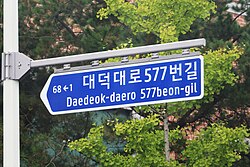
To assist foreigners and facilitate international communication, Korean is often transcribed using the Latin alphabet. This process, known as romanization, is visible on road signs and in various official capacities to help non-native speakers navigate the country.
Phonology and Grammar
Korean phonology is characterized by a complex set of consonants and vowels. For example, the liquid consonant ㄹ (rieul) can function as an 'l' at the end of a syllable or an 'r' in the initial position. The language also features assimilation, where sounds change based on their neighbors to make pronunciation smoother.
Grammatical Structure
Korean grammar relies heavily on particles—small markers added to words to indicate their grammatical role (such as subject, object, or location). The language also employs a sophisticated system of honorifics and speech levels, which adjust the tone and vocabulary based on the social relationship between the speaker and the listener.
Regional Variations and North-South Differences
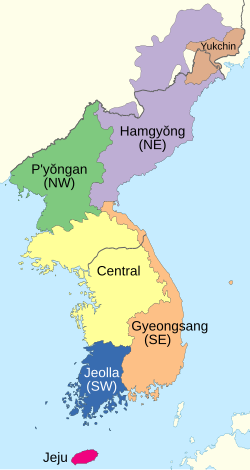
While the language is fundamentally the same, political division has led to noticeable differences between the North and South. These variations appear in spelling, pronunciation, and even vocabulary.
Vocabulary and Spelling Divergence
Some words have evolved differently in each region. For instance, the word for "friend" is chingu in the South, whereas dongmu is used in the North. Similarly, the term for "apartment" is apateu in the South, while the North uses munhwajutaek.
| Meaning | North Korean Term | South Korean Term |
|---|---|---|
| Korean Language | Chosŏn'gŭl | Hangugeo |
| Friend | Dongmu | Chingu |
| Apartment | Munhwajutaek | Apateu |
| Lunch Box | Gwakbap | Dosirak |
The Digital Age and Global Popularity
In the modern era, Korean has become a vital part of the digital landscape. The language is fully integrated into computing and mobile technology, with specialized keyboards designed to handle the unique syllabic structure of Hangul.
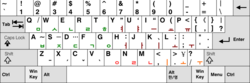
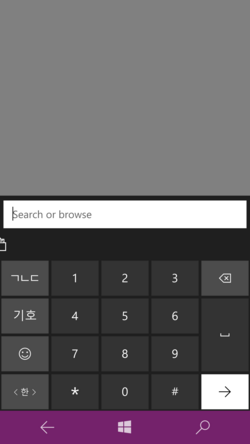
Furthermore, the global popularity of the Korean Wave (Hallyu), including K-Pop and television dramas, has driven a massive surge in interest among foreign learners. This has led to increased enrollment in Korean language courses at universities worldwide and a rising demand for standardized testing like the TOPIK (Test of Proficiency in Korean).
Frequently Asked Questions
What is the difference between Hangul and Hanja?
Hangul is the native phonetic alphabet of Korea, designed to be easy to learn and write. Hanja refers to Chinese characters that were historically used in Korean writing and are still used today for specific meanings or supplementary purposes.
Why are there different names for the Korean language?
The different names, Hangugeo and Chosŏn'gŭl, reflect the political division of the peninsula. South Korea uses Hangugeo, while North Korea uses Chosŏn'gŭl.
Is Korean difficult to learn?
While the grammar and honorific systems can be complex, the Hangul writing system is widely regarded as one of the most logical and easy-to-learn scripts in the world.
How does the Korean language use honorifics?
Honorifics are used to show respect. The speaker changes their verb endings and vocabulary depending on the age, social status, and level of familiarity of the person they are addressing.
What is the role of Sino-Korean vocabulary?
Sino-Korean vocabulary consists of words derived from Chinese characters. This makes up a significant portion of the Korean lexicon and is often used in formal, academic, or technical contexts.