Kingdom of Mitanni: The Forgotten Power of the Bronze Age
The Kingdom of Mitanni was a formidable Hurrian-speaking state that dominated northern Syria and southeast Anatolia from approximately 1600 BC to 1260 BC. Known by various names in ancient records—including Ḫabigalbat in Babylonian texts, Ḫanigalbat in Assyrian records, and Naharin in Egyptian documents—this Bronze Age power acted as a critical bridge between the great empires of the East and West.
Unlike its contemporaries, Mitanni left behind no royal annals or chronicles. Consequently, historians must reconstruct its history through the eyes of its neighbors, relying on the diplomatic correspondence and records of the Egyptians, Hittites, and Assyrians.
Key Facts
- Capital: Washukanni.
- Primary Languages: Hurrian, Akkadian, and Amorite.
- Timeline: Established c. 1600 BC; disestablished c. 1260 BC.
- Cultural Influence: Strong Hurrian population with distinct Indo-Aryan linguistic and political influences.
- Major Rivals: The Hittite Empire and the Middle Assyrian Empire.
The Rise and Reach of Mitanni
The Hurrians had been present in the region since the late 3rd millennium BC, with evidence of Hurrian leadership appearing as early as 2300 BC at Tell Mozan. By 1600 BC, they had coalesced into the state of Mitanni. At its zenith under King Barattarna (c. 1490 BC), the kingdom exerted significant influence over the northern Euphrates-Tigris region.
Diplomacy and the Egyptian Alliance
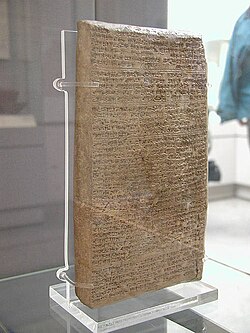
Mitanni maintained a sophisticated diplomatic relationship with New Kingdom Egypt. This alliance was cemented through the exchange of sumptuous gifts and royal marriages. For instance, the daughter of Artatama I married Thutmose IV, and later, Kilu-Hepa (daughter of Shuttarna II) was wed to Amenhotep III. These ties are well-documented in the Amarna letters, a collection of diplomatic correspondence that reveals Mitanni's keen interest in Egyptian gold.
Military Prowess and Conflict
The kingdom was not merely a diplomatic entity but a military power. King Shaushtatar (c. 1465 BC) famously sacked the Assyrian capital of Assur, seizing the gold and silver doors of the royal palace and transporting them to the capital, Washukanni.
The Decline and Fall
The decline of Mitanni began in the 14th century BC. Internal dynastic struggles between Tushratta and his brother Artatama II allowed the Assyrians, under Eriba-Adad I, to exert influence over Mitanni affairs. By the mid-14th century BC, King Ashur-uballit I of Assyria attacked and annexed significant territories.
The kingdom was further squeezed by the expanding Hittite Empire. Eventually, Mitanni was reduced to a vassal state and later a province of the Middle Assyrian Empire, effectively disappearing as an independent power by c. 1260 BC.
Archaeology and Material Culture
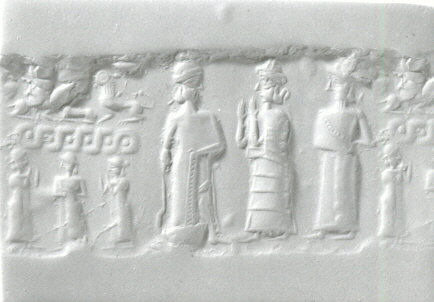
Archaeological evidence provides a window into the daily life and transitions of the region. Scholars have identified a transition period known as "Late Bronze Age 0," leading into the predominance of Mitanni. The most characteristic marker of this era is Painted Nuzi Ware, a distinct style of pottery that developed alongside Younger Khabur Ware between 1550 and 1270 BC.
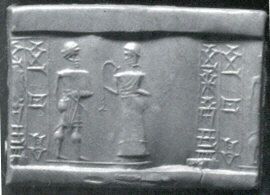
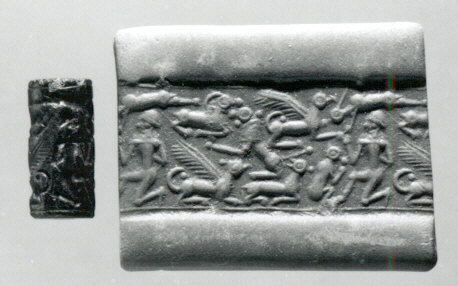
Excavations at sites like Tell Bazi and Bassetki have uncovered cylinder seals and ritual bowls, confirming Mitanni's administrative reach into northeastern Syria and northern Iraq.
Summary of Mitanni Governance and Culture
| Category | Details |
|---|---|
| Government | Monarchy |
| Religion | Hurrian and Ancient Mesopotamian |
| Key Pottery | Painted Nuzi Ware, Khabur Ware |
| First Known King | Kirta (c. 1540 BC) |
| Last Known King | Shattuara II (c. 1260 BC) |
Frequently Asked Questions
Who were the Hurrians?
The Hurrians were an ancient people who spoke the Hurrian language and inhabited northern Mesopotamia and the Armenian Highlands. They formed the demographic core of the Kingdom of Mitanni.
What were the Amarna letters?
The Amarna letters are a series of diplomatic tablets found in Egypt that record the correspondence between the Egyptian administration and various neighboring rulers, including the kings of Mitanni.
Why is Mitanni called "Naharin" in some texts?
"Naharin" is the term used primarily in Egyptian and some Akkadian texts to refer to the region or state of Mitanni.
What was the significance of Painted Nuzi Ware?
Painted Nuzi Ware is the most characteristic pottery of the Mitanni period, serving as a primary archaeological marker for identifying Mitannian occupation and cultural influence in the region.
How did the Hittites and Assyrians contribute to Mitanni's fall?
The Hittites weakened Mitanni through military campaigns and treaties, while the Assyrians exploited internal dynastic conflicts to annex territory, eventually reducing the kingdom to an Assyrian province.