Canaan: History, Culture, and Archaeology of the Ancient Levant
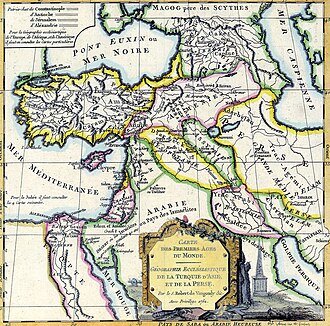
Canaan refers to a historical region and a collection of peoples inhabiting the Levant—the eastern Mediterranean coastal area—during the Bronze and Iron Ages. Known for its strategic position as a land bridge between the great empires of Egypt and Mesopotamia, Canaan developed a complex network of city-states and a rich material culture that deeply influenced subsequent civilizations in the region.
The transition from prehistoric hunter-gatherer societies to settled farming and herding communities began before 4500 BC, setting the stage for the rise of the sophisticated urban centers that would define the Canaanite era.
Key Facts
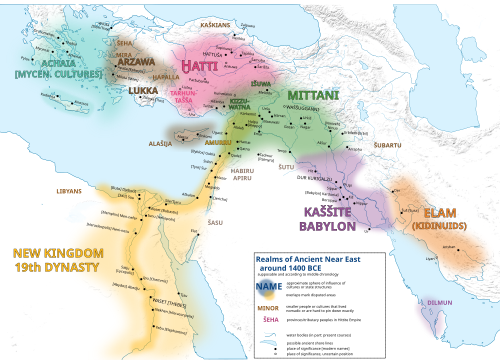
- Geographical Range: The Levant, primarily the Southern Levant.
- Timeline: Spans the Chalcolithic, Early Bronze, Middle Bronze, Late Bronze, and Iron Ages.
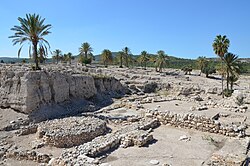
- Major Urban Centers: Byblos, Hazor, Jericho, Lachish, Megiddo, and Shechem.
- Political Structure: Primarily organized as independent city-states, often under the hegemony of larger empires like Egypt.
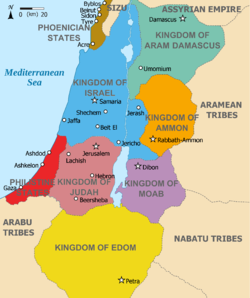
- Successor States: Phoenicia, Israel, Judah, Moab, Edom, Ammon, and Philistia.
Chronological History and Archaeology
Prehistory and the Chalcolithic (4500–3500 BC)
Before 4500 BC, the region was dominated by hunter-gatherer societies. By the Chalcolithic period (the transition between the Stone Age and the Bronze Age), early metal-working and farming became established. This era is often associated with the Ghassulian culture.
The Early and Middle Bronze Ages (3500–1550 BC)
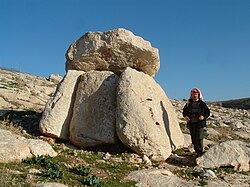
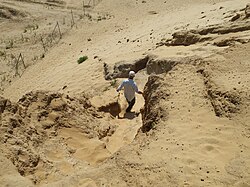
The Early Bronze Age (3500–2000 BC) predates written records in the area. However, by the Middle Bronze Age (2000–1550 BC), the region evolved into a series of organized city-states. Early textual evidence from this period appears in the Mari letters (c. 1809–1776 BC), where the term Kinahnum is used to describe people in Rahisum, though scholars debate whether this refers to a specific region or people of foreign origin.
The Late Bronze Age and Egyptian Hegemony (1550–1200 BC)
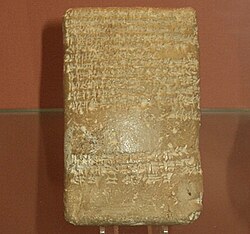
During the Late Bronze Age, Canaan fell under the influence and control of Egypt. This period is well-documented through the Amarna letters—diplomatic correspondence between the Egyptian Pharaoh and various Canaanite rulers. These letters mention cities like Byblos and figures such as Aziru of Amurru and Labaya of Shechem.
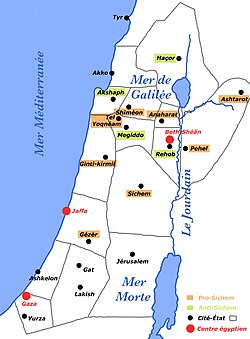
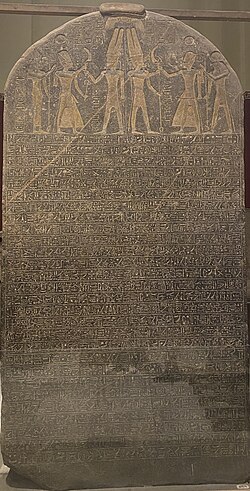
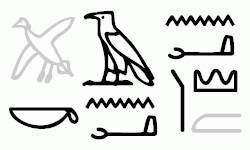
Other significant records include the Merneptah Stele (13th century BC), which contains one of the earliest known mentions of "Canaan" in Egyptian hieroglyphs (kꜣnꜥnꜥ), and the Ashur and Hattusa tablets, which reference Canaanite cities like Sidon and Tyre.
The Bronze Age Collapse and the Iron Age
Around 1200 BC, the region experienced the Bronze Age collapse, characterized by the violent destruction of major cities like Hazor. This transition led into the Iron Age, where the Canaanite culture fragmented into several distinct entities, including the Phoenicians in the north and the kingdoms of Israel and Judah in the highlands.
![Basalt lions from the Orthostat Temple of Hazor (c. 1500–1300 BC)[48] Hazor was violently destroyed during the Bronze Age collapse.[49]](/images/70/4e/704eebbb2f33e31bb1df83eb89638017bf836b12378b280224a36d11a91ee7b7.jpg)
Canaanite Culture and Society
Governance and Significant Figures
Canaan was not a single unified empire but a collection of city-states. Notable rulers include the dynasty of Ugarit (such as Niqmaddu II and Ammurapi) and the later kings of Tyre, including Hiram I, who is famous for his maritime trade and cooperation with early Israelite kings.
Material Culture and Art
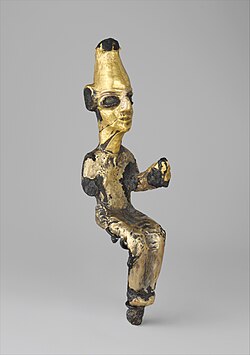
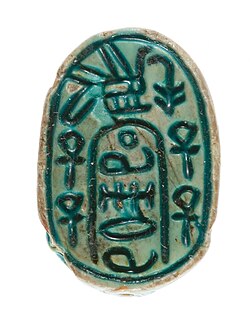
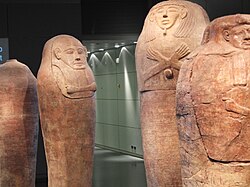
Archaeological finds reveal a society with advanced craftsmanship. Artifacts include basalt lion sculptures from Hazor, ornate sarcophagi from Deir al-Balah, and scarabs featuring Egyptian symbols, indicating a high degree of cultural exchange with Egypt.
Religious and Linguistic Foundations
The Canaanites spoke Canaanite languages, a branch of the Northwest Semitic family. Their religion was polytheistic, centered on a pantheon of deities that influenced later regional beliefs. Modern archaeological data suggests that early Israelite culture largely overlapped with and derived from this Canaanite foundation.
Summary of Canaanite Eras
| Period | Approximate Dates | Key Characteristics |
|---|---|---|
| Chalcolithic | 4500–3500 BC | Early metal-working and farming; Ghassulian culture. |
| Early Bronze Age | 3500–2000 BC | Pre-literate society; early urban development. |
| Middle Bronze Age | 2000–1550 BC | Rise of independent city-states. |
| Late Bronze Age | 1550–1200 BC | Egyptian hegemony; Amarna diplomatic letters. |
| Iron Age | 1200 BC onwards | Fragmentation into Phoenicia, Israel, Judah, and others. |
Frequently Asked Questions
Who were the Canaanites?
The Canaanites were a group of Semitic-speaking people who inhabited the Levant during the Bronze and Iron Ages, living in a network of city-states that traded extensively with Egypt and Mesopotamia.
What is the significance of the Amarna letters?
The Amarna letters are a collection of diplomatic tablets that provide a first-hand look at the political instability, local rivalries, and the relationship between Canaanite city-state rulers and the Egyptian Pharaoh during the Late Bronze Age.
How did Canaanite culture relate to early Israelite culture?
Archaeological evidence suggests that Israelite culture in the Iron I period (c. 1200–1000 BC) largely overlapped with and derived from Canaanite culture, indicating a shared ancestry and common cultural roots.
What happened during the Bronze Age collapse?
Around 1200 BC, the region suffered widespread systemic failure and violent destruction of major urban centers, such as Hazor, leading to the end of Egyptian hegemony and the rise of smaller Iron Age kingdoms.
What are some of the most important Canaanite cities?
Key cities included Byblos (a major port), Hazor (a powerful inland center), Megiddo (strategic military location), and Ugarit (a center of literature and trade).
![Ramesses III prisoner tiles depicting Canaanites and Shasu Leader captives[citation needed]](/images/d2/eb/d2ebe62e4df39a4f480d33e2ccded38547f79e9e3b1f3c724b3c84fbda22d18b.png)
![Coin of Alexander II Zabinas with the inscription "Laodikeia, metropole of Canaan"[77]](/images/e9/3d/e93de2e2ce38c438eef572bb92ab0823e2b8ca5cfc0d694463f097d253289e26.png)