King Cake: History, Traditions, and Regional Variations
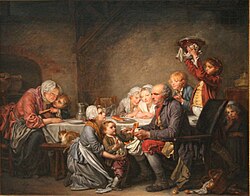
The king cake, also known as the three kings cake or baby cake, is a celebratory dessert enjoyed across many cultures to mark the Epiphany—the celebration of the Twelfth Night after Christmas. Whether it is a flaky pastry in France or a colorful brioche in Louisiana, the heart of the tradition lies in the fève (French for "fava bean"), a small hidden object that transforms a simple dessert into a game of chance and royalty.
Traditionally crafted from brioche dough, the cake hides a figurine or bean inside. The person who finds the fève in their slice is crowned the "king" or "queen" for the day, often winning a prize or inheriting the responsibility of hosting the next gathering.
Key Facts
- Purpose: Celebrates Epiphany and the witness of the Three Kings.
- The Fève: A hidden bean or figurine; the finder is designated as royalty.
- Common Ingredients: Brioche dough, candied fruits, and various sweet fillings.
- Global Reach: Popular in France, Spain, Portugal, Latin America, and the United States.
- Mardi Gras Connection: In the U.S., it is a cultural icon of the Carnival season in Louisiana.
The History of the King Cake
The origins of the king cake are believed by some to stem from the Roman Saturnalia, festivals dedicated to the god Saturn to celebrate the return of longer days after the winter solstice. This theory suggests a common root with other traditions, such as the Greek vasilopita.
During the Middle Ages, the tradition evolved; the chosen "king" was often required to pay for a round of drinks for the assembly. To prevent cheating, edible beans were eventually replaced by porcelain ones. In the Christian tradition, the cake serves as a commemoration of the Three Kings.
The tradition traveled to North America early on. A 1649 record from Port Royal, Acadia (modern-day Nova Scotia), describes a settler required to deliver a round cake made with white wheat flour, eggs, and butter, containing a black bean, to the lord of Port Royal on the eve of the Feast of Kings.
Regional Variations Around the World
France and French-Speaking Regions
France features two primary versions of the cake. The galette des rois is a flaky puff pastry typically filled with frangipane (an almond cream), though modern versions may use chocolate or fruit. In the south of France, the gâteau des rois is more common; this is a crown-shaped brioche decorated with coarse sugar and candied fruits.
In French Guiana, the Creole galette is consumed throughout the Carnival period, from Epiphany until Ash Wednesday, often garnished with coconut or guava and paired with champagne.
Spain and Latin America
The roscón de reyes is the standard in Spain and Latin America. These cakes are often oval-shaped to accommodate larger groups and are decorated with candied fruits like cherries and quinces. In Spain, the brioche is aromatized with orange blossom water and may be filled with whipped cream or almond paste.
In Mexico and South America, the hidden figurine represents the Child Jesus, symbolizing the flight of the Holy Family. The person who finds the baby is considered blessed and must take the figurine to church on Candlemas Day or host a party.
Portugal and Germany
Portugal's bolo-rei (king cake) is eaten from December until Epiphany. Derived from the Southern French style, it is a soft white dough with a hole in the center, filled with raisins and nuts. In Germany and Switzerland, the Dreikönigskuchen is shaped like a wreath and uses an almond as the fève.
The United Kingdom
Once popular on Twelfth Night, the Twelfth cake often contained both a bean (for the King) and a pea (for the Queen). While the Industrial Revolution led to a decline in this tradition in favor of the Christmas cake, some customs persist, such as the "Baddeley Cake" ceremony at the Drury Lane Theatre.
The American Tradition: Mardi Gras King Cake
In Louisiana and the Gulf Coast, the king cake is inextricably linked to Mardi Gras. While it may have been introduced by Basque or French settlers, it became a modern cultural icon through the sugar industry in New Orleans.
The cake is typically a ring of twisted cinnamon-style dough, often topped with icing in the traditional Mardi Gras colors: purple (justice), green (faith), and gold (power). Modern bakeries offer a variety of fillings, including praline and cream cheese.
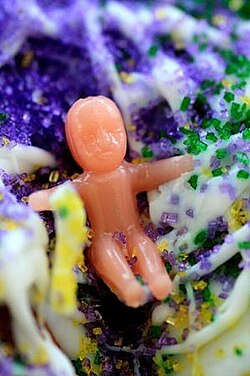
A small plastic baby symbolizing Jesus is hidden inside. Finding the baby brings luck and prosperity, but also tasks the finder with buying the next cake or hosting the next party. Due to choking hazards, many bakers now provide the baby separately for the purchaser to hide.
Summary of Global King Cake Styles
| Region | Name | Primary Dough/Style | Typical Fève |
|---|---|---|---|
| Northern France | Galette des Rois | Puff Pastry | Porcelain figurine |
| Southern France | Gâteau des Rois | Brioche | Porcelain figurine |
| Spain/Latin America | Roscón de Reyes | Orange blossom brioche | Baby Jesus/Bean |
| Portugal | Bolo-Rei | Soft white dough | Dried fava bean |
| USA (Louisiana) | King Cake | Twisted cinnamon brioche | Plastic baby |
| Germany/Switzerland | Dreikönigskuchen | Wreath-shaped | Almond |
Frequently Asked Questions
What is the meaning of the colors on a Mardi Gras king cake?
The traditional colors are purple, which represents justice; green, which represents faith; and gold, which represents power.
Who is responsible for buying the next king cake?
In most traditions, such as those in Louisiana, Portugal, and Spain, the person who finds the hidden fève or plastic baby is responsible for purchasing the next cake or hosting the next party.
What is a fève?
A fève is a small object—originally a fava bean, but now often a porcelain or plastic figurine—hidden inside the cake to determine who will be the "king" or "queen" of the celebration.
How does the French galette differ from the gâteau?
The galette is a flaky puff pastry usually filled with frangipane, whereas the gâteau is a crown-shaped brioche dough decorated with candied fruits and sugar.
When is the king cake traditionally eaten?
It is most commonly associated with the Epiphany (Twelfth Night), though in Louisiana, it is served from Epiphany through the Carnival season and sometimes year-round.