Key Innovations in Evolutionary Biology: How Adaptive Breakthroughs Drive Diversity
In the complex history of life on Earth, some groups of organisms explode in variety while their close relatives remain relatively stagnant. This phenomenon is often driven by a key innovation—an adaptive breakthrough or novel phenotypic trait that triggers a massive expansion in a group's success. These biological advancements allow a lineage to rapidly diversify and occupy ecological niches that were previously inaccessible.
The concept was first introduced in 1949 by Alden H. Miller, who described them as essential morphological or physiological adjustments necessary for the origin of major new groups. Today, scientists define a key innovation as an evolutionary change in individual traits that is directly linked to an increased rate of diversification within a resulting clade.
Key Facts
- Definition: A novel trait that enables a taxonomic group to diversify and invade new niches.
- Primary Effect: Increases the diversification rate of a specific lineage.
- Core Mechanisms: Includes increased individual fitness, niche invasion, and reproductive isolation.
- Scientific Debate: While supported by evidence, the theory is criticized for being difficult to test and potentially oversimplifying complex processes.
Mechanisms of Evolutionary Success
While the exact way a key innovation drives diversity is still being studied, researchers have proposed several primary mechanisms that explain how these traits facilitate rapid speciation.
1. Increasing Individual Fitness
A key innovation can improve the survival and reproductive success of individuals, making extinction less likely and providing a stable foundation for a species to expand. For example, many plants have evolved latex and resin canals. These canals release sticky or toxic secretions when a predator punctures the plant, immobilizing or deterring insects. This trait has evolved independently approximately 40 times. By increasing resistance to predation, these plants can survive long enough to diversify and speciate, often resulting in much higher diversity than their relatives lacking these defenses.
2. Novel Niche Invasion
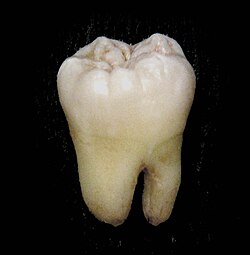
Some innovations act as a "key" that unlocks new environments or food sources, freeing a species from existing competition. A classic example is found in mammalian evolution: the development of the hypocone, or the fourth cusp on mammalian molars. Unlike the triconodont teeth of reptiles, which were designed for slicing and gripping, the evolution of the hypocone allowed for flat molars capable of grinding tough plant matter. This enabled early mammals to transition to herbivorous diets, allowing them to invade new niches and radiate successfully during the middle Eocene.

3. Reproductive Isolation
Innovations can also drive diversity by creating barriers to breeding. When a new trait causes certain individuals to no longer breed with the original population, reproductive isolation occurs, leading to rapid speciation. In the genus Aquilegia, the evolution of nectar spurs serves this purpose. These spurs force pollinators to interact with the plant's reproductive organs in specific ways. As plants and pollinators co-evolve to fit specific spur shapes and sizes, populations become specialized and isolated, leading to the high diversity seen in the genus, which contains over 50 species.
Summary of Key Innovation Mechanisms
| Mechanism | Primary Driver | Biological Example |
|---|---|---|
| Increased Fitness | Reduced predation/extinction risk | Latex and resin canals in plants |
| Niche Invasion | Access to new resources/habitats | Hypocone in mammalian molars |
| Reproductive Isolation | Separation of breeding populations | Nectar spurs in Aquilegia |
Scientific Criticisms and Challenges
Despite its utility, the theory of key innovations faces scrutiny. One major challenge is the difficulty of scientific testing. Identifying an innovation requires finding a correlation between a trait and increased diversity in sister taxa, but correlation does not prove causality. Other factors, such as habitat changes or random chance (stochasticity), could also be responsible for diversity.
Furthermore, critics argue that labeling a complex series of events as a single "key innovation" can be misleading. For instance, the evolution of avian flight was identified as a key innovation by Ernst Mayr in 1963. However, flight actually required multiple, separate adaptations—such as the enlargement of the cerebellum and the ossification of the sternum—that occurred millions of years apart rather than in a single evolutionary step.
Frequently Asked Questions
What is the difference between a key innovation and a standard adaptation?
While all key innovations are adaptations, not all adaptations are key innovations. A key innovation specifically triggers a significant increase in the diversification rate and the ability of a group to occupy new ecological niches.
How do scientists identify a key innovation?
Scientists typically look for a correlation between the appearance of a new trait and a sudden increase in the number of species within that lineage, often by comparing them to "sister taxa" (closely related groups that lack the trait).
Can a key innovation happen in a single step?
Not necessarily. While often discussed as a single event, many "key innovations" are actually the result of multiple, complex physiological changes that may occur over millions of years.
Why is niche invasion important for diversification?
Niche invasion allows a species to move into areas or utilize resources where there is less competition, providing the ecological space necessary for new species to evolve and thrive.
Does a key innovation guarantee a species' success?
No. While it provides a significant advantage and reduces the likelihood of extinction, environmental changes or the evolution of new predators can still impact the lineage's success.