Karl Ernst von Baer: The Father of Embryology and Pioneer of Permafrost Research
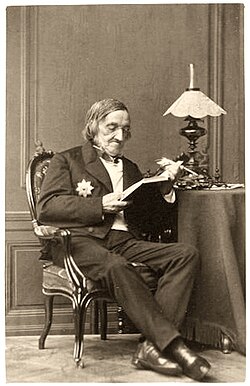
Karl Ernst Ritter von Baer Edler von Huthorn (1792–1876) was a towering figure in 19th-century science. A Baltic German polymath, Baer's intellectual curiosity spanned biology, geology, meteorology, and geography. While he is most widely recognized as the founding father of embryology—the study of the development of an embryo from the fertilization of the ovum—his contributions extended far beyond the microscope, reaching the frozen reaches of the Arctic and the depths of geological time.
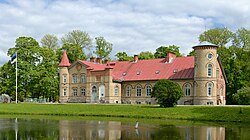
Born in Piep, Estonia, Baer's career took him from the lecture halls of Königsberg University to the prestigious St Petersburg Academy of Sciences. His life was defined by a rigorous commitment to field research and a desire to uncover the fundamental laws governing the natural world.
Key Facts
- Founding Father of Embryology: Discovered the mammalian egg cell and the blastula stage of development.
- Germ Layer Theory: Co-described the ectoderm, mesoderm, and endoderm.
- Permafrost Pioneer: Initiated the scientific study of perennial ground ice in Russia and Siberia.
- Institutional Leader: Co-founder of the Russian Geographical Society and first president of the Russian Entomological Society.
- Scientific Legacy: Formulated Baer's laws of embryology and contributed to early theories of biological evolution.
Contributions to Embryology
Baer's work in embryology revolutionized the understanding of how complex organisms develop. He identified the blastula (an early stage of an embryo consisting of a hollow sphere of cells) and the notochord (a flexible rod shaped cellular structure that forms the axial skeleton of all chordates). Together with Heinz Christian Pander and building upon the work of Caspar Friedrich Wolff, Baer described the germ layer theory. This theory posits that embryos develop from three primary layers: the ectoderm, mesoderm, and endoderm.
In 1826, Baer achieved a landmark discovery by identifying the mammalian ovum (egg cell). He became the first person to observe human ova in 1827, providing a critical missing piece in the puzzle of reproduction. His findings were synthesized in his 1828 book, Über Entwickelungsgeschichte der Thiere, which established the foundation for comparative embryology.
Baer also formulated Baer's laws of embryology, the most prominent of which states that the form of any given embryo does not converge upon other definite forms, but rather separates itself from them as development progresses.
Pioneering Permafrost Research
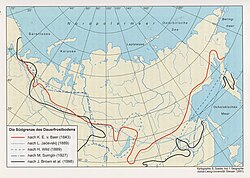
Beyond the laboratory, Baer was an intrepid explorer. In 1837, he explored Novaya Zemlya, where he studied periglacial features and permafrost—ground that remains completely frozen for at least two years. His interest in the geothermal gradient began even earlier, through observations of a 116.7-meter deep shaft in Yakutsk.
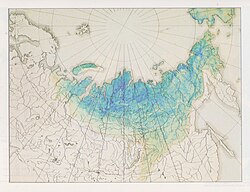
Baer is credited with initiating the scientific investigation of permafrost in Russia. He provided extensive instructions—exceeding 200 pages—to Alexander von Middendorff for expeditions into Siberia. In 1842/43, Baer authored a comprehensive typescript titled Materialien zur Kenntniss des unvergänglichen Boden-Eises in Sibirien (Materials for the Knowledge of the Perennial Ground Ice in Siberia). Although this first permafrost textbook remained lost for over 150 years, it was rediscovered in 2001 in the archives of the University of Giessen.
Evolution and Biological Time
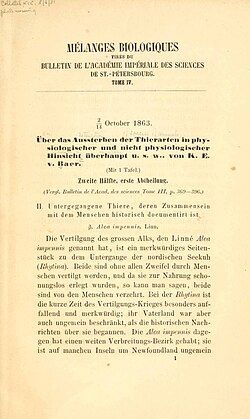
Baer's views on the origin of species were respected by his contemporaries, including Charles Darwin. In the fifth edition of On the Origin of Species, Darwin credited Baer for his conviction that distinct biological forms descended from a single parent-form, based largely on the laws of geographical distribution.
However, Baer differed from Darwin in his belief in orthogenesis—the idea that there is a teleological (goal-oriented) force in nature that directs the course of evolution. He was also a pioneer in studying biological time, examining how different organisms perceive the passage of time.
Academic Career and Honors
Baer's professional journey was marked by prestigious appointments. He served as a professor at Königsberg University and later held chairs in zoology and comparative anatomy at the St Petersburg Academy of Sciences. His expertise was recognized globally, leading to memberships in the American Academy of Arts and Sciences, the Royal Swedish Academy of Sciences, and the Royal Netherlands Academy of Arts and Sciences.
In his later years, Baer returned to Dorpat (now Tartu, Estonia), where he became a prominent critic of Darwinian evolution. Today, his legacy is honored in Tartu with a statue on Toome Hill, which students traditionally wash with champagne every Walpurgis Night.
![Statue of Karl Ernst von Baer on Toome Hill, Tartu: As a tradition, students wash the statue's head with champagne every Walpurgis Night.[35]](/images/a4/cf/a4cf54489a946ea258b5aa897b4ade5b96ea40ddab4ab2b43e5c4e7bc8628432.jpg)
Summary of Karl Ernst von Baer's Profile
| Category | Details |
|---|---|
| Lifespan | 1792 – 1876 |
| Nationality | Baltic German / Russian Empire |
| Primary Fields | Embryology, Geology, Meteorology, Geography |
| Major Discoveries | Mammalian ovum, Blastula, Notochord, Germ Layers |
| Key Publications | Über Entwickelungsgeschichte der Thiere (1828) |
| Key Institutions | Imperial University of Dorpat, Russian Academy of Sciences |
![Coat of arms of the Baer Edle von Huthorn family [et] of 1749, in the Baltic Coat of arms book by Carl Arvid von Klingspor in 1882[36]](/images/16/29/16298fa41aae3cce4884e2633d8fe08d2a7c91d74c1ecbb35792ee33912487fb.jpg)
Frequently Asked Questions
What is the significance of Baer's discovery of the mammalian ovum?
Before Baer's discovery in 1826, the exact nature of the mammalian egg cell was not understood. By identifying the ovum, Baer provided the essential biological basis for understanding fertilization and early embryonic development in mammals.
What are Baer's laws of embryology?
Baer's laws describe how embryos develop. The primary law states that embryos of different species start out looking similar and gradually diverge, separating themselves from one another as they develop more specialized characteristics.
How did Baer contribute to the study of permafrost?
Baer initiated the scientific study of permafrost in Russia through field research in Novaya Zemlya and by organizing expeditions to Siberia. He wrote the first comprehensive textbook on the subject, which laid the groundwork for future arctic research.
Did Karl Ernst von Baer agree with Charles Darwin?
While Darwin respected Baer's views on the descent of species from common ancestors, Baer was a critic of some of Darwin's theories. Specifically, Baer believed in orthogenesis, the idea that evolution is guided by a predetermined goal or force.
What is the "germ layer theory"?
The germ layer theory is the principle that all animals develop from three primary layers of cells: the ectoderm (outer), mesoderm (middle), and endoderm (inner), which eventually give rise to all the different tissues and organs of the body.