Exploring the Genus Juniperus: A Guide to the World's Diverse Junipers
From the high-altitude forests of the Himalayas to the arid landscapes of North America, junipers are a resilient and widespread presence across the globe. Belonging to the Cupressaceae (cypress) family, these coniferous trees and shrubs have thrived for millions of years, with a temporal range stretching from the Turonian period to the present day.
Whether they appear as towering trees reaching 40 metres in height or as low-spreading, trailing shrubs, junipers are defined by their evergreen nature and unique reproductive structures. This article explores the fascinating biology, classification, and diverse uses of the genus Juniperus.
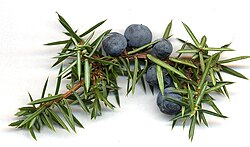
Key Facts
- Scientific Classification: Genus Juniperus, Family Cupressaceae.
- Global Distribution: Northern Hemisphere, including the Arctic, tropical Africa, Asia, and Central America.
- Extreme Habitats: Found at altitudes as high as 4,900 metres in southeastern Tibet.
- Reproduction: Gymnosperms (produce seeds but no true flowers or fruits).
- Distinctive Feature: Fleshy, berry-like seed cones known as galbulus.
- Allergy Note: Male plants are highly allergenic, while female plants are considered "allergy-fighting."
Biological Characteristics and Growth
Junipers are gymnosperms, a group of plants that produce seeds but lack true flowers or fruits. Instead of fleshy fruit, they produce distinctive female seed cones. These cones consist of coalescing scales that fuse together to form a berry-like structure called a galbulus. These structures range from 4 to 27 millimetres in length and contain one to 12 hard-shelled, unwinged seeds.
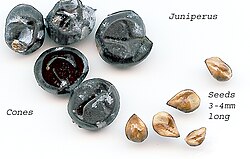
The seeds themselves are protected by an impermeable coat, which prevents water from entering and protects the embryo. This coat can lead to long periods of dormancy, often requiring physical damage to the seed coat to trigger germination. This durability allows seeds to survive being swallowed by mammals and dispersed over long distances through their digestive systems.
Foliage and Leaf Types
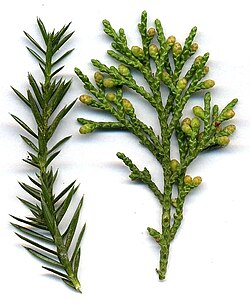
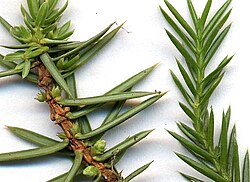
One of the most interesting aspects of many juniper species, such as J. chinensis and J. virginiana, is their dimorphic foliage. This means they can exhibit two different types of leaves depending on the age of the plant or its environment:
- Juvenile leaves: Often needle-like and found on seedlings or shaded shoots of older trees.
- Adult leaves: Typically overlapping, scale-like leaves found on mature plants in full sunlight.
Classification and Species Diversity
The taxonomy of junipers has evolved significantly. While older systems divided the genus into three sections—Caryocedrus, Juniperus, and Sabina—a 2022 classification of gymnosperms recognized these sections as three separate genera: Arceuthos, Sabina, and Juniperus sensu stricto.
Major Sections and Examples
Depending on the taxonomic framework used, there are between 50 and 67 species. Key groups include:
- Section Caryocedrus: Includes the Syrian juniper (J. drupacea), characterized by large, blue, woody cones.
- Section Juniperus: Primarily needle-leaf junipers. A notable member is the common juniper (J. communis), which is circumboreal.
- Section Sabina: The largest group, containing approximately 60 species distributed across the eastern and western hemispheres.
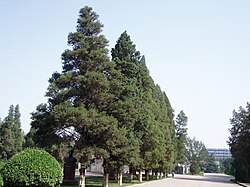
Global Varieties
Junipers have adapted to nearly every corner of the Northern Hemisphere. Examples of their diverse habitats include:
- Juniperus phoenicea: Found on El Hierro in the Canary Islands.
- Juniperus grandis: Located in the eastern Sierra Nevada of California.
- Juniperus virginiana: Known as the eastern redcedar, often seen laden with ripe cones in autumn.
- Juniperus osteosperma: The Utah juniper, found in Nevada.
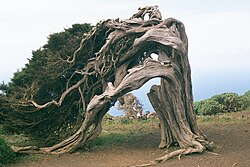
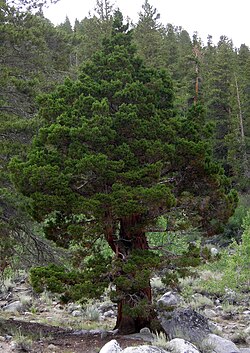
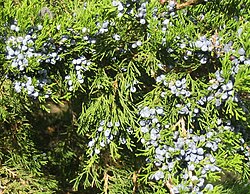
Uses and Human Interaction
Humans have interacted with junipers for millennia, utilizing them for culinary, medicinal, and industrial purposes.
Culinary and Aromatic Uses
The aromatic "berries" (galbulus) of many species are used as a spice. Most famously, they are the primary flavoring agent in gin.
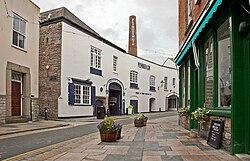
In other cultures, young twigs are used to make tea, and in Finland, twigs or needles are used to flavor the traditional beer known as sahti.
Historical and Cultural Significance
The use of juniper extends into ancient history and traditional crafts:
- Ancient Egypt: Evidence from Saqqara shows that juniper oil or tar was used in embalming processes.
- Mesopotamia: Ancient peoples believed juniper oil could ward off the "evil eye."
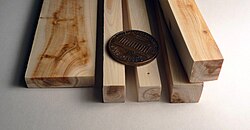
- Northern Europe: Juniper is used in traditional cladding techniques, such as those found in Norway.
Summary of Juniper Characteristics
| Feature | Description |
|---|---|
| Plant Type | Evergreen coniferous trees or shrubs |
| Seed Type | Gymnosperm (seeds in fleshy galbulus) |
| Leaf Forms | Needle-like (juvenile) or scale-like (adult) |
| Pollination | Wind-pollinated; can bloom multiple times in hardiness zones 7–10 |
| Primary Use | Spice (gin), tea, and traditional cladding |
Frequently Asked Questions
Are junipers poisonous?
While the source does not explicitly label them as "poisonous" to humans, it notes that monoecious (having both male and female parts) junipers are highly allergenic. Specifically, male plants have a high allergy rating, whereas female plants are considered "allergy-fighting."
Why do some junipers have needles and others have scales?
Many species exhibit dimorphic foliage. Seedlings and shaded shoots often produce needle-like leaves, while mature plants in full sunlight typically develop overlapping, scale-like leaves.
How are juniper seeds dispersed?
Dispersal often occurs when animals or mammals swallow the seeds whole. The hard, impermeable seed coat protects the embryo as it passes through the digestive system, allowing the seed to be deposited in new locations.
What is the difference between a juniper "berry" and a fruit?
Technically, junipers are gymnosperms and do not produce true fruits. The "berry" is actually a galbulus, a structure formed by fleshy, coalescing scales.
Can junipers be used in gardening for allergy sufferers?
Yes. Because all-female juniper plants lack pollen, they have a very low allergy rating (1 out of 10 on the OPALS scale) and are considered "allergy-fighting" options for gardens.