Julian Huxley: The Architect of the Modern Synthesis and Global Humanism
Sir Julian Sorell Huxley (1887–1975) was a towering figure of 20th-century science, blending the rigor of evolutionary biology with a passionate commitment to internationalism and secular humanism. As a primary proponent of natural selection, Huxley played a pivotal role in the modern synthesis—the mid-century unification of Mendelian genetics with Darwinian evolution.
Beyond the laboratory and the field, Huxley was a global statesman of science. He served as the first Director-General of UNESCO and was a founding member of the World Wildlife Fund (WWF), cementing his legacy as a pioneer of both global education and environmental conservation.
Key Facts
- Scientific Legacy: A leading figure in the modern synthesis of evolutionary biology.
- Global Leadership: First Director-General of UNESCO (1946–1948).
- Conservation: Founding member of the World Wildlife Fund.
- Humanism: First president of the British Humanist Association.
- Major Awards: Recipient of the Kalinga Prize (1953), Darwin Medal (1956), and Darwin–Wallace Medal (1958).
Early Life and Academic Foundations
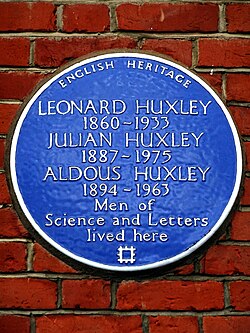
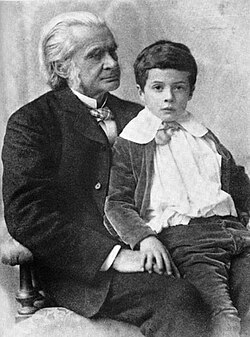
Born on June 22, 1887, in London, Julian Huxley was born into a family of intellectual distinction. His father, Leonard Huxley, was a writer and editor, and his mother, Julia Arnold, was a high-achieving graduate of Somerville College, Oxford. Julian followed in these academic footsteps, attending Balliol College, Oxford.
Huxley's early career was marked by a deep interest in ethology—the scientific study of animal behavior. His 1914 work, Courtship Habits of the Great Crested Grebe, remains a landmark in the field, illustrating his ability to combine meticulous observation with evolutionary theory.

The Modern Synthesis and Scientific Contributions
Huxley is perhaps best known for his role in the modern synthesis, a theoretical framework that bridged the gap between genetics and natural selection. In his influential 1942 book, Evolution: The Modern Synthesis, he provided a comprehensive account of how evolution operates across different biological levels.
He was also a prolific creator of scientific terminology, coining terms that are still essential to biology and sociology today, including:
- Clade: A single species and all its descendants.
- Cline: A gradient of gene frequencies within a population.
- Ethnic group: A term introduced in 1936 as a biological alternative to "race."
- Transhumanism: A term he coined in 1957 regarding the transformation of human beings.
Public Life, UNESCO, and Humanism
Huxley believed that science should be accessible to all. He became a master of science communication, writing extensively for the general public and directing an Oscar-winning wildlife film. This passion for the popularization of science earned him the Kalinga Prize in 1953.
His commitment to global cooperation led him to become the first Director-General of UNESCO from 1946 to 1948. Parallel to his administrative work, Huxley was a staunch advocate for secular humanism—a philosophy emphasizing reason, ethics, and social justice over religious dogma. He served as the first president of the British Humanist Association in 1963.
Complexities: Eugenics and Race
Like many scientists of his era, Huxley was involved in the eugenics movement, serving as president of the British Eugenics Society from 1959 to 1962. He initially viewed eugenics as a tool to remove "undesirable variants" from the human gene pool. However, following World War II, his views evolved; he began to argue that the concept of "race" was biologically meaningless when applied to humans and advocated for improved nutrition and education for the lower classes as a means of human progress.
Summary of Sir Julian Huxley's Career
| Domain | Key Role / Achievement | Notable Period/Year |
|---|---|---|
| Biology | Modern Synthesis / Ethology | 1914–1942 |
| International | Director-General of UNESCO | 1946–1948 |
| Conservation | Founding Member of WWF | Mid-20th Century |
| Humanism | President, British Humanist Association | 1963 |
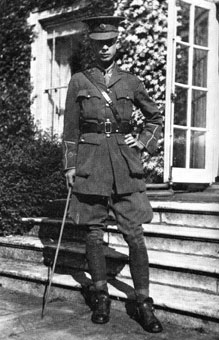
| Military | Second Lieutenant, British Army | 1917–1919 |
Frequently Asked Questions
What was Julian Huxley's contribution to the "Modern Synthesis"?
Julian Huxley helped unify Darwinian natural selection with Mendelian genetics, creating a cohesive framework for understanding how evolution occurs. His 1942 book, Evolution: The Modern Synthesis, was instrumental in this theoretical unification.
What is the relationship between Julian and Aldous Huxley?
Julian and Aldous Huxley were brothers. While Julian focused on evolutionary biology and international diplomacy, Aldous became a world-renowned novelist, most famous for Brave New World.
How did Julian Huxley influence modern conservation?
Huxley was a founding member of the World Wildlife Fund (WWF) and used his scientific prestige to advocate for the preservation of biodiversity and the protection of endangered species.
What was Huxley's view on eugenics?
Huxley was a prominent member and president of the British Eugenics Society. While he initially supported the removal of undesirable traits from the gene pool, he later concluded that biological "race" was a meaningless concept in humans.
Which scientific terms did Julian Huxley coin?
He introduced several key terms, including clade (a monophyletic taxon), cline (a gene frequency gradient), and transhumanism (the transformation of human beings).