World Heritage Convention: Protecting Our Global Cultural and Natural Legacy
The preservation of our planet's most significant landmarks and ecosystems is not merely a local concern, but a global responsibility. The World Heritage Convention, formally known as the Convention Concerning the Protection of the World Cultural and Natural Heritage, serves as the primary international framework for safeguarding these treasures. By uniting nations under a shared mission, this treaty ensures that the most exceptional sites on Earth are protected for future generations.
Developed over a seven-year period between 1965 and 1972, the convention was designed to provide a structured approach to nature conservation and the security of cultural properties. It establishes the criteria for what constitutes a World Heritage Site and outlines the specific duties that governments must undertake to identify, protect, and restore these invaluable assets.

Key Facts
- Adopted: 16 November 1972, by the UNESCO General Conference.
- Effective Date: 17 December 1975.
- Ratifications: 196 states (including 192 UN member states, the Holy See, Palestine, the Cook Islands, and Niue).
- Primary Goal: The conservation of nature and the preservation of cultural heritage.
- Management: Guided by the World Heritage Committee.
The Origins of Global Heritage Protection
The movement toward a formal international treaty was catalyzed by urgent conservation crises. A pivotal moment occurred in 1959 during the International Campaign to Save the Monuments of Nubia. Following appeals from Egypt and Sudan, a coalition of 50 countries worked to relocate 22 monuments—including the Abu Simbel and Philae temples—to prevent them from being flooded by the construction of the Aswan High Dam.
The success of this massive undertaking demonstrated the power of international solidarity. This momentum, combined with calls from a 1965 White House conference for a "World Heritage Trust" and proposals from the International Union for Conservation of Nature, led UNESCO and the International Council on Monuments and Sites (ICOMOS) to draft the convention we recognize today.
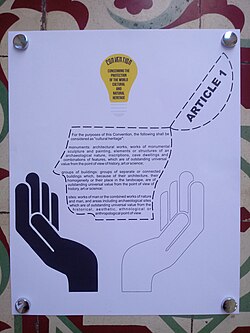
Defining Cultural and Natural Heritage
The convention provides precise definitions to ensure that only sites of outstanding universal value are inscribed on the World Heritage list. These definitions are divided into two main categories:
Cultural Heritage
Cultural heritage includes elements that hold significant historical, artistic, or scientific value, such as:
- Monuments: Architectural works, monumental sculpture or painting, and archaeological structures or cave dwellings.
- Groups of Buildings: Collections of buildings that are significant due to their architecture, homogeneity, or landscape placement.
- Sites: Works created by man, or the combined works of nature and man, including archaeological areas.
Natural Heritage
Natural heritage focuses on the physical and biological wonders of the world, including:
- Natural Features: Physical and biological formations of outstanding aesthetic or scientific value.
- Habitats: Geological and physiographical formations that serve as habitats for threatened species of animals and plants.
- Natural Sites: Precisely delineated areas of outstanding natural beauty or scientific importance.
Governance and Implementation
The implementation of the convention is managed by the World Heritage Committee. This intergovernmental body is composed of 15 to 21 States Parties, elected to ensure equitable representation of the world's diverse regions and cultures. The committee is supported by advisory organizations such as ICOMOS, the International Union for Conservation of Nature (IUCN), and the International Centre for the Study of the Preservation and Restoration of Cultural Property (ICCROM).
To support these efforts, the World Heritage Fund was established. This trust fund is fueled by compulsory and voluntary contributions from member states, other UN organizations, and private donors. The fund provides essential assistance to signatory countries, which may include:
- Technical studies regarding the conservation and rehabilitation of sites.
- The provision of experts, technicians, and skilled labor.
- The supply of necessary equipment.
- Low-interest or interest-free loans and, in exceptional cases, non-repayable subsidies.
While the international community provides support, Article 4 of the convention emphasizes that the primary duty for identifying and protecting heritage situated within a territory belongs to the individual State Party.
Summary of the World Heritage Convention
| Feature | Details |
|---|---|
| Formal Name | Convention Concerning the Protection of the World Cultural and Natural Heritage |
| Depositary | Director-General of UNESCO |
| Official Languages | Arabic, Chinese, English, French, Hebrew, Portuguese, Russian, and Spanish |
| Implementation Start | 1977 (following the 40th ratification) |
| First Inscriptions | 1978 |
Frequently Asked Questions
What is the main purpose of the World Heritage Convention?
The primary goal is to promote the conservation of nature and the preservation and security of cultural properties of outstanding universal value.
How are World Heritage Sites selected?
The convention defines specific criteria for cultural and natural heritage. Sites must demonstrate outstanding universal value from historical, aesthetic, scientific, or conservation perspectives to be considered for inscription.
Who is responsible for protecting a site within a country?
According to Article 4, the primary responsibility for the identification, protection, and conservation of heritage located within a territory belongs to that specific State Party.
How does the World Heritage Fund help countries?
The fund provides international assistance in the form of technical studies, expert training, equipment supply, and financial support such as loans or subsidies to help preserve heritage sites.
Which country has not ratified the convention?
As of August 2024, Liechtenstein is the only UN member state that has not ratified the convention.