Preserving the Planet's Treasures: A Guide to UNESCO World Heritage Sites
From the breathtaking peaks of ancient civilizations to the vibrant ecosystems of our oceans, certain places on Earth possess a significance that transcends national borders. These are World Heritage Sites—locations recognized for their outstanding universal value to humanity. Managed by UNESCO, these sites serve as a global catalog of our intellectual history and the natural beauty of our planet.
As of July 2026, the World Heritage List includes 1,273 sites spanning 170 countries. Whether they are cultural masterpieces or natural wonders, these sites are protected under an international framework designed to ensure they remain intact for future generations.
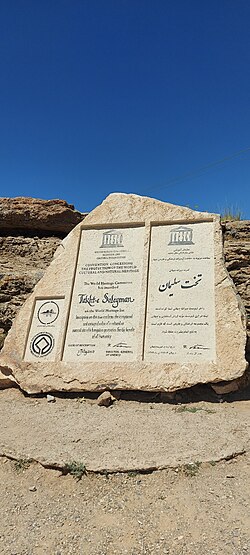
Key Facts
- Total Sites: 1,273 sites across 170 countries (as of July 2026).
- Founding Convention: Adopted by UNESCO on November 16, 1972.
- Ratification: 196 states have ratified the convention.
- Site Categories: Cultural, Natural, and Mixed (both cultural and natural).
- Selection Basis: Sites must meet at least one of ten specific criteria of "outstanding universal value."
The Origins of Global Protection
The movement to protect global heritage was born out of necessity. In 1954, the Egyptian government planned the construction of the Aswan High Dam. While a major infrastructure project, the resulting reservoir threatened to submerge vast stretches of the Nile Valley, including priceless ancient Egyptian and Nubian monuments. In 1959, Egypt and Sudan turned to UNESCO for assistance in rescuing these endangered treasures.
The rescue mission cost US$80 million (approximately $312.6 million in 2025 value), with $40 million raised from 50 different countries. The success of this campaign paved the way for future safeguarding efforts, including the protection of Venice in Italy, the ruins of Mohenjo-daro in Pakistan, and the Borobudur Temple Compounds in Indonesia.
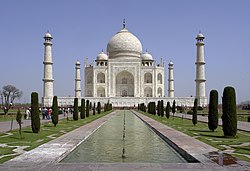
The 1972 Convention
The formal framework for modern heritage protection was developed over seven years (1965–1972). The concept was bolstered by a 1965 White House conference in the United States, which called for a "World Heritage Trust." By 1972, the Convention Concerning the Protection of the World Cultural and Natural Heritage was adopted by the UNESCO General Conference. The convention officially came into force on December 17, 1975.
How Sites are Selected and Categorized
To be included on the World Heritage List, a site must demonstrate outstanding universal value. While the selection process previously used separate sets of criteria for cultural and natural sites, UNESCO unified these into a single set of ten criteria in 2005.
Types of Heritage
- Cultural Heritage: Sites that represent a masterpiece of human creative genius or significant historical milestones.
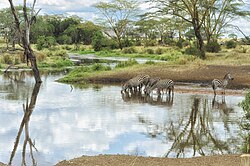
- Natural Heritage: Areas containing superlative natural phenomena or exceptional natural beauty.
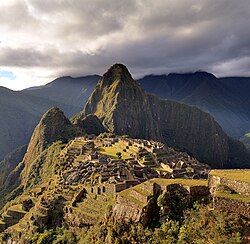
- Mixed Heritage: Sites that combine both significant cultural elements and outstanding natural features.
Threats and the "In Danger" List
World Heritage status is not a guarantee of permanent safety. Sites can be placed on a "danger list" if they face significant threats, or they can be removed from the list entirely if their value is lost. For example, the Arabian Oryx Sanctuary was delisted in 2007 after the protected area was reduced by 90%. Similarly, Liverpool's status was revoked in 2021 due to developments that caused an "irreversible loss" of its historical attributes.
Natural sites face particularly intense pressure. A global assessment revealed that 63% of Natural World Heritage Sites have been damaged by human pressures—such as encroaching roads, agriculture, and infrastructure—over the last two decades. Notably, 91% of Natural World Heritage forest sites have experienced some form of loss since the year 2000.
The Debate Over Conservation
The process of designating sites as "in danger" can sometimes lead to political tension. In 2021, international scientists recommended that the Great Barrier Reef be placed on the endangered list due to climate change impacts on coral and water quality. However, the World Heritage Committee, composed of representatives from 21 countries, declined to follow the scientific assessment, leading to criticism from environmental groups regarding the influence of lobbying.
Global Distribution of Heritage Sites
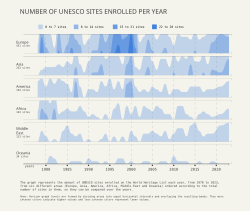
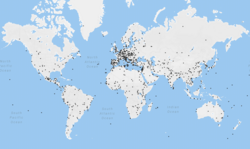
The distribution of World Heritage Sites varies significantly by region. As shown in the table below, Europe and North America hold the largest share of inscribed properties.
| Region | Cultural | Natural | Mixed | Total | Percentage |
|---|---|---|---|---|---|
| Africa | 65 | 45 | 5 | 115 | 9.06% |
| Arab States | 91 | 8 | 3 | 102 | 8.03% |
| Asia and the Pacific | 228 | 73 | 13 | 314 | 24.72% |
| Europe and North America | 500 | 74 | 12 | 586 | 46.14% |
| Latin America and the Caribbean | 105 | 40 | 8 | 153 | 12.26% |
| Total | 989 | 240 | 41 | 1,270 | 100% |
Frequently Asked Questions
What makes a site "World Heritage"?
A site must possess outstanding universal value, meaning its importance is so exceptional that it transcends national boundaries and is of significance for all humanity. It must meet at least one of the ten specific criteria established by UNESCO.
What is the difference between cultural and natural sites?
Cultural sites are man-made achievements, such as monuments or historic towns, that represent human creativity or history. Natural sites are areas of exceptional biological, geological, or aesthetic importance, such as national parks or unique ecosystems.
Can a site lose its World Heritage status?
Yes. If a site undergoes significant changes—such as through urban development, environmental degradation, or a reduction in protected area size—that result in the loss of its "outstanding universal value," it can be removed from the World Heritage List.
How many countries have ratified the World Heritage Convention?
As of November 2024, 196 states have ratified the convention. This includes 192 UN member states, two UN observer states (the Holy See and the State of Palestine), and two states in free association with New Zealand (the Cook Islands and Niue).
What are the main threats to natural heritage sites?
Natural sites are primarily threatened by human pressures, including the expansion of agriculture, the construction of roads and infrastructure, and encroaching settlements. Climate change is also a significant factor affecting marine and forest ecosystems.