Modern Synthesis: The Unification of Darwinian Evolution and Mendelian Genetics
The modern synthesis represents one of the most significant milestones in biological science. Emerging in the early 20th century, it fused Charles Darwin's theory of evolution by natural selection with Gregor Mendel's principles of heredity into a single, cohesive mathematical framework. This intellectual merger bridged the gap between microevolution—small-scale changes within local populations—and macroevolution—the broad-scale patterns observed by paleontologists over geological time.
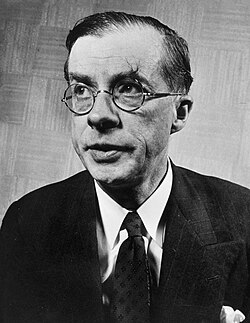
Coined by Julian Huxley in his 1942 landmark work, Evolution: The Modern Synthesis, this framework integrated natural selection, Mendelian genetics, and population genetics to explain how species change and diversify.
![Several major ideas about evolution came together in the population genetics of the early 20th century to form the modern synthesis, including genetic variation, natural selection, and particulate (Mendelian) inheritance.[1] This ended the eclipse of Darwinism and supplanted a variety of non-Darwinian theories of evolution.](/images/f3/83/f383c6186259ca795213553efc8e9ec739813c4439982dea154f8e8135f5d075.webp)
Key Facts
- Core Integration: Combines Darwinian natural selection with Mendelian particulate inheritance.
- Mathematical Basis: Relies on population genetics to quantify how genetic variation changes over time.
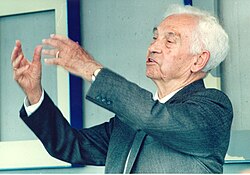
- Key Figures: Developed by scientists including Julian Huxley, Theodosius Dobzhansky, Ernst Mayr, and G. Ledyard Stebbins.
- Primary Mechanism: Natural selection acting upon heritable variation produced by mutation.
- Scope: Connects genetic mutations in individuals to the emergence of new species and higher taxa.
The Road to Synthesis: Overcoming the Eclipse of Darwinism
Following the publication of On the Origin of Species in 1859, the scientific community accepted that evolution occurred, but many doubted that natural selection was the primary driver. This period, often called the "eclipse of Darwinism," saw the rise of alternative theories such as Lamarckism (the inheritance of acquired characteristics), orthogenesis (progressive, linear evolution), and saltationism (evolution via sudden jumps).
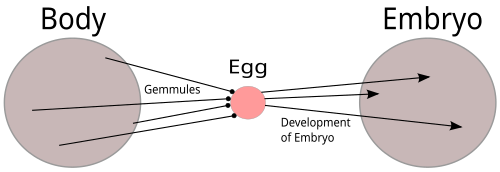
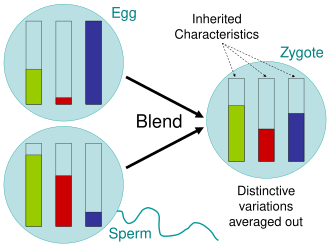
Darwin's own theory of pangenesis—which suggested that body parts emitted "gemmules" to pass traits to offspring—actually mirrored some Lamarckian ideas and implied a "blending inheritance." This blending was a major theoretical hurdle; as engineer Fleeming Jenkin noted, if traits simply averaged out, the variation required for natural selection would vanish.
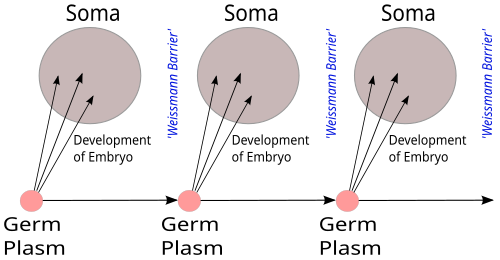
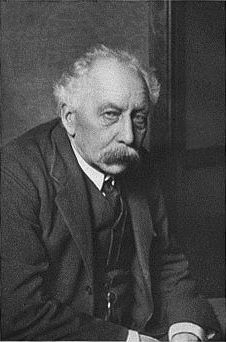
The tide turned with August Weismann's germ plasm theory in 1892. Weismann proposed that hereditary material (germ plasm) is confined to the gonads and gametes, while somatic cells (body cells) are developed afresh each generation. This effectively decoupled acquired physical changes from hereditary transmission.
The Conflict Between Biometrics and Mendelism
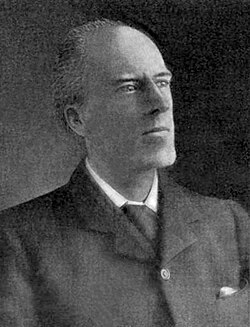
At the turn of the century, a divide emerged between the biometric school, led by Karl Pearson, and the champions of Mendelism, such as William Bateson. Biometricians focused on continuous variation, while Mendelists emphasized discrete, particulate inheritance.
Building the Framework: Population Genetics and Ecology
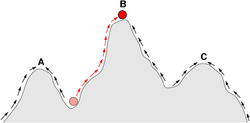
The resolution of these conflicts began with the application of mathematics to biology. R.A. Fisher's 1918 paper on mathematical population genetics demonstrated how Mendelian inheritance could be compatible with continuous variation and natural selection. This work was further expanded by Ronald Haldane and Sewall Wright, the latter of whom introduced the fitness landscape—a conceptual model showing how populations move toward local optima of adaptation.
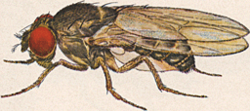
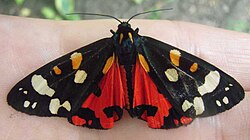
Experimental evidence followed. Theodosius Dobzhansky used Drosophila pseudoobscura (fruit flies) to show how genetic variation functions in wild populations, while E.B. Ford studied polymorphism in the scarlet tiger moth to demonstrate ecological genetics in action.
Expanding the Scope: Paleontology and Botany
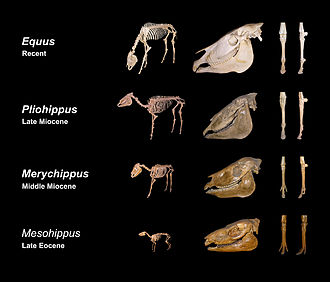
The synthesis was not limited to genetics. Ernst Mayr introduced the concept of allopatric speciation, arguing that geographic isolation is necessary to create the reproductive isolation required for new species to form. Meanwhile, George Gaylord Simpson challenged the "straight-line" view of evolution (such as the simplistic view of horse evolution), arguing instead that evolution is a complex, branching tree without a predetermined direction.
Defining the Synthesis
While the founders agreed on the central role of natural selection and mutation, they defined the components of the synthesis with slight variations. The following table summarizes the perspectives of three primary architects.
| Component | Ernst Mayr (1959) | G. Ledyard Stebbins (1966) | Theodosius Dobzhansky (1974) |
|---|---|---|---|
| Mutation | Random events producing new genotypes | Source of variability, not direction | Yields genetic raw materials |
| Recombination | Randomness in fertilization/recombination | Source of variability, not direction | (Included in raw materials) |
| Natural Selection | The only direction-giving factor | Guides changes to the gene pool | Constructs changes from raw materials |
| Reproductive Isolation | Limits the direction of selection | Makes divergence irreversible | (Essential for speciation) |
Beyond the Modern Synthesis
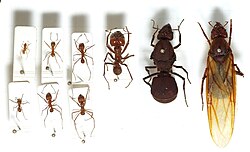
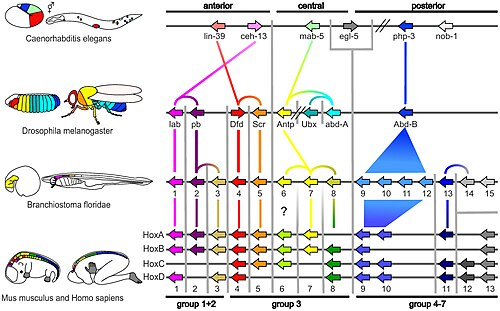
Since the 1940s, the synthesis has continued to evolve. In 1975, E.O. Wilson integrated social behavior into the framework through sociobiology. Later, evolutionary developmental biology (Evo-Devo) began integrating embryology, discovering deep homology—shared genetic mechanisms for development—between vastly different animals like insects and vertebrates.
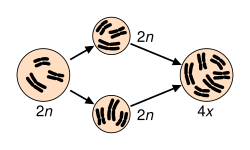
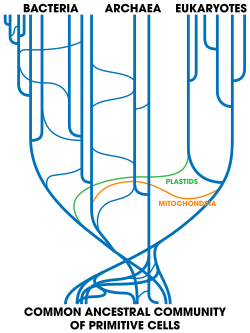
In the 21st century, some scientists propose an extended evolutionary synthesis (Pigliucci and Müller, 2007). Others, like Eugene Koonin, suggest a "post-modern" synthesis is needed to account for molecular biology discoveries, such as horizontal gene transfer among prokaryotes and the endosymbiosis events that created eukaryotes, which do not fit the traditional branching tree model.
![Inputs to the modern synthesis, with other topics (inverted colours) such as developmental biology that were not joined with evolutionary biology until the turn of the 21st century[103]](/images/d1/12/d1122fa6af8047ba69a66724c8be676f18a1873bec059d25075475a4b73f4243.webp)
Frequently Asked Questions
What exactly is the modern synthesis?
It is the unification of Charles Darwin's theory of natural selection and Gregor Mendel's laws of heredity, supported by the mathematical tools of population genetics.
How did the modern synthesis solve the problem of "blending inheritance"?
By incorporating Mendelian genetics, the synthesis showed that inheritance is particulate (genes remain discrete) rather than blending, which preserves the genetic variation necessary for natural selection to work.
What is allopatric speciation?
Proposed by Ernst Mayr, it is the process where new species form because a population becomes geographically isolated, preventing interbreeding and allowing the groups to diverge genetically.
Is the modern synthesis still the current standard in biology?
While it remains the foundation of evolutionary biology, it is being expanded. New fields like Evo-Devo and genomics have led to proposals for an "extended" or "post-modern" synthesis to include mechanisms like horizontal gene transfer.