Ecological Speciation: How Environmental Adaptation Drives the Origin of Species
In the vast tapestry of evolution, the emergence of new species is often driven by the complex interplay between organisms and their surroundings. This process, known as ecological speciation, occurs when reproductive isolation arises due to ecological factors that reduce or eliminate gene flow between populations. Unlike other evolutionary mechanisms, ecological speciation is fundamentally powered by divergent natural selection—the process where different environmental pressures favor different traits in separate populations.
Whether it is a change in predator-prey dynamics, shifts in foraging habits, or the specific requirements of a pollinator, these ecological drivers force populations to adapt. Over time, these adaptations create barriers to interbreeding, eventually splitting a single lineage into distinct species.
Key Facts
- Core Driver: Ecological speciation is triggered by divergent natural selection among different habitats.
- Mechanisms: It can occur through pre-zygotic barriers (before fertilization) or post-zygotic barriers (after fertilization).
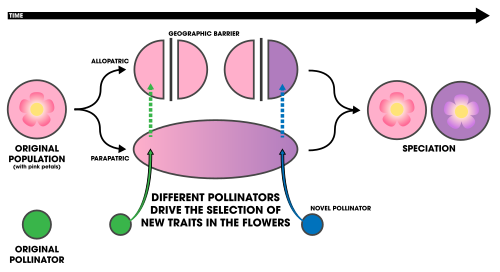
- Geographic Context: Speciation can happen in allopatry (geographic isolation), sympatry (same area), or parapatry (adjacent areas).
- Defining Feature: It is distinguished from random genetic drift or non-ecological sexual selection by its reliance on environmental adaptation.
Mechanisms of Reproductive Isolation
To understand how one species becomes two, we must examine the barriers that prevent gene flow. These barriers are categorized based on when they occur in the reproductive cycle.
Pre-zygotic Isolation
Pre-zygotic isolation refers to barriers that prevent the formation of a zygote (a fertilized egg). These mechanisms ensure that mating or fertilization never occurs between divergent groups. Common forms include:
- Habitat Isolation: Spatial separation where members of different species occupy different niches, reducing the likelihood of encounter.
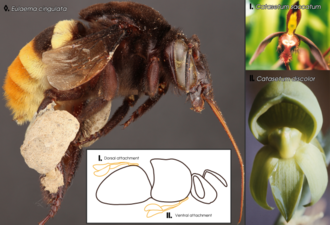
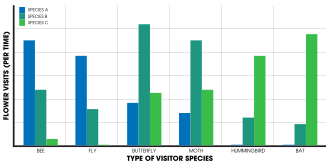
- Pollinator Isolation: Differences in how plants attract pollinators, such as mechanical or ethological (behavioral) differences.
- Temporal Isolation: Also known as allochronic speciation, this occurs when populations breed at different times of the day, season, or year.
- Selection Against Migrants: When individuals moving between habitats are less fit and thus less likely to reproduce.
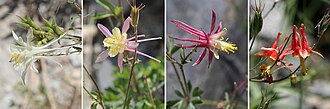
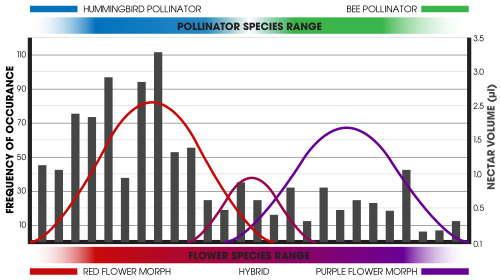
Pollinator-driven isolation is a particularly striking example. For instance, different flower morphologies may attract specific pollinators, creating a biological barrier between plant populations.
Post-zygotic Isolation
If mating does occur, post-zygotic isolation acts as a secondary barrier after the zygote has formed. These barriers reduce the success of the resulting offspring. These include:
- Selection Against Hybrids: Hybrids may have low fitness because they are not well-adapted to either parental environment.
- Ecologically-Dependent Isolation: Hybrid offspring may be viable in a lab but fail to survive in the specific ecological niches of their parents.
- Ecologically-Independent Isolation: Genetic incompatibilities that prevent successful reproduction regardless of the environment.
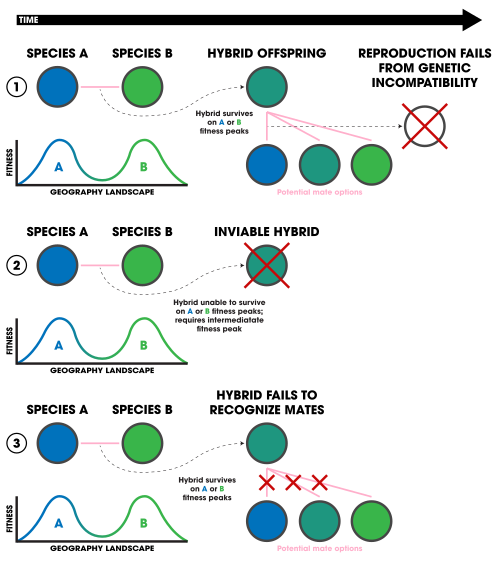
The Role of Geography and Environment
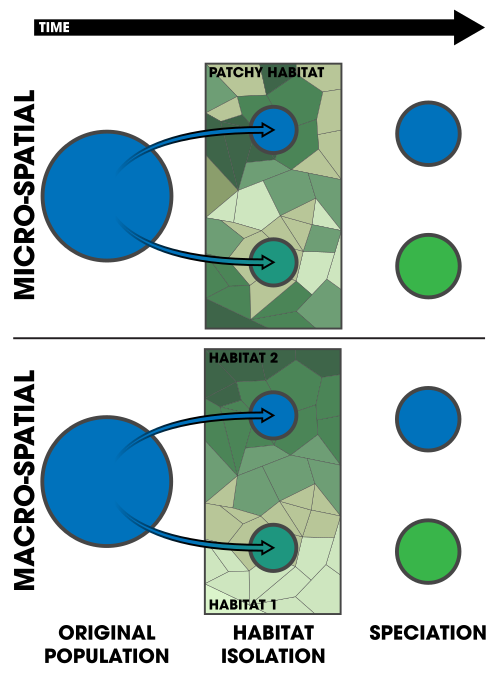
The spatial relationship between populations significantly influences the path of speciation. In allopatry, populations are physically separated by geographic barriers. In sympatry, they inhabit the same area but remain distinct through ecological or behavioral niches. In parapatry, populations are adjacent and may have a narrow zone of contact.
Habitat isolation is a primary driver in these scenarios. Even if species exist in the same general area (sympatry), competition for resources can drive them into different micro-habitats, a process that might be harder to detect if they were geographically separated (allopatry).
![Two types of experimental tests of ecological speciation caused by divergent environments. Experiment 1: a speciation event predicted to have occurred due to an ecologically-based divergent factor giving rise to two new species (1a). The experiment produces viable and fertile hybrid offspring and places them in isolated settings that match their parental environments (1b). The experiment predicts that, "reproductive isolation should then evolve in correlation with environment, building [increasing] between populations in different environments and being absent between laboratory and natural populations from similar environments."[4] Experiment 2: a peripatric speciation event between a mainland species and an isolated endemic population occurs (2a). A laboratory setting replicates the mainland environmental conditions thought to have driven speciation and a mainland population is placed within it. The experiment predicts that the transplant will show evidence of isolation that matches that of the island endemic (2b).[4]](/images/f8/f4/f8f4b0d07b392b760d8f79d048893a034ead825331b1b7104dcfa0542ddc8a49.webp)
Temporal isolation, or allochrony, provides another fascinating pathway. For this to be recognized as true allochronic speciation, three criteria must be met: the species must be closely related (sister taxa), the breeding timing must be a heritable genetic trait, and the divergence must be caused by timing rather than other mechanisms like reinforcement.
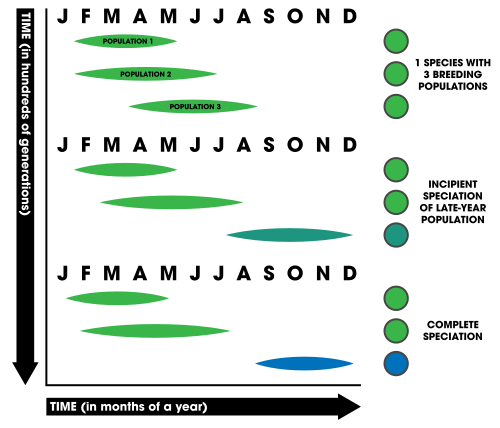
Examples of species exhibiting temporal isolation include various corals (such as Montastraea species), certain fish like Oncorhynchus nerka, and even various insects and plants.
Summary of Ecological Selection Drivers
| Reproductive Isolation Type | Pre- or Post-zygotic | Ecological Cause of Selection |
|---|---|---|
| Habitat | Pre-zygotic | Divergent environments |
| Sexual/Pollinator | Pre-zygotic | Ecological interactions |
| Temporal | Pre-zygotic | Sexual selection |
| Selection against migrants | Pre-zygotic | Reinforcement |
| Post-mating | Pre-zygotic | Habitat |
| Selection against hybrids | Post-zygotic | Selection against hybrids |
| Ecologically-independent | Post-zygotic | Ecologically-independent |
| Ecologically-dependent | Post-zygotic | Ecologically-dependent |
Frequently Asked Questions
What is the main difference between ecological and non-ecological speciation?
The primary distinction is that ecological speciation is driven by divergent natural selection resulting from adaptation to different environments or niches, whereas non-ecological speciation may be driven by random genetic drift or sexual selection that does not involve ecologically relevant traits.
How does pollinator isolation work?
Pollinator isolation occurs when different plant species evolve traits—such as specific colors, shapes, or nectar volumes—that attract different types of pollinators. This ensures that pollen is transferred within a species rather than between different species.
What is allochronic speciation?
Allochronic speciation is a form of temporal isolation where populations diverge because they breed at different times. For this to be considered true allochronic speciation, the timing must be a heritable genetic trait.
Can speciation happen in the same geographic area?
Yes, this is known as sympatric speciation. In these cases, reproductive isolation is maintained through ecological factors, such as habitat preference or different mating behaviors, even though the populations live in the same location.
What are hybrid fitness issues in ecological speciation?
In many cases, hybrid offspring may be biologically healthy but lack the specific adaptations required to survive in the specialized environments of their parent species. This "low fitness" acts as a post-zygotic barrier to gene flow.