Jugtown Historic District
Nestled at the intersection of Harrison and Nassau Streets in Princeton, New Jersey, the Jugtown Historic District serves as a living chronicle of American colonial and industrial evolution. Spanning 15 acres, this district preserves a cluster of buildings that date from the 18th century through 1918, reflecting a transition from a bustling pottery center to a refined residential neighborhood.
Originally settled by Europeans around 1730, the area grew around a crossroads on the King's Highway. While it is officially recognized as Jugtown, it was also known as Queenston—a more formal name adopted in the late 18th century to align with other royally-named settlements like Kingston and Princessville. Today, the district is listed on both the National Register of Historic Places and the New Jersey Register of Historic Places.
Key Facts
- Established: European settlement began circa 1730.
- Primary Industry: Renowned for pottery and clay production in the 18th and 19th centuries.
- Architectural Styles: Features Federal, Georgian, Queen Anne, Shingle Style, and Colonial Revival architecture.
- Historic Recognition: Added to the National Register of Historic Places on January 22, 1987.
- Notable Institution: Home to Evelyn College for Women from 1887 to 1897.
The Evolution of a Pottery Hub
The district's identity was forged by the land itself. Local clay pits provided the raw materials that fueled the community's growth. In 1766, John Morton established the first pottery in the village, sparking an industry so prominent that the colloquial name "Jugtown" appeared on maps as early as 1789.
By the early 19th century, Jugtown was a diverse commercial center. Beyond pottery, the village hosted a brickyard, pipe factory, ice company, and various trades including blacksmithing and cooperage. The arrival of the Delaware and Raritan Canal in the 1830s brought a surge of economic prosperity, supporting the construction of hotels and a Presbyterian Chapel, known as the Queenston Chapel.
However, the industry faced a decline in the mid-19th century due to stiff competition from ceramics producers in Trenton. As the potteries closed, the area shifted toward a residential character, though it maintained its unique identity within the growing borough of Princeton.
Education and Social History
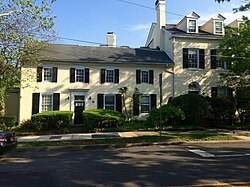
Jugtown's history is marked by significant social milestones. During the American Revolutionary War, the village housed both British and Patriot soldiers. It also played a role in the fight for freedom; a stop on the Underground Railroad existed here, featuring an underground tunnel beneath Nassau Street that connected the Horner house to the home of Esther Johnson to aid fugitive slaves.
In the late 19th century, the district became a site of educational experimentation. In 1887, Evelyn College for Women was established in a large residence known as "the Pines." As a coordinate college to Princeton University, it featured instruction from notable professors, including Woodrow Wilson. Despite its academic prestige, the college struggled financially following the Panic of 1893 and closed its doors in 1897.
Architectural Significance and Preservation
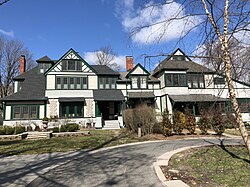
The Jugtown Historic District is celebrated for its architectural diversity. The surviving structures range from the Vernacular Georgian style of the earliest 18th-century homes to the ornate Queen Anne and Shingle Style residences of the late 19th century.
Preservation efforts began in earnest in 1980, leading to the formal designation of the district in the mid-1980s. The district includes 23 houses that represent the core of pre-1900 Jugtown, including several key properties that date back to the 1700s.
Summary of Contributing Properties
| Address/Name | Approx. Date | Architectural Style | Significance |
|---|---|---|---|
| 342 Nassau Street | c. 1730 | Vernacular Georgian | Earliest still-extant building in the community. |
| 344 Nassau Street | c. 1700-1824 | Vernacular/Federal | Original Horner family land; site of Underground Railroad tunnel. |
| 306 Nassau Street | Late 18th Century | Georgian | Former home of the Netherlands Minister Resident. |
| 7-8 Evelyn Place | 1881 | Shingle/Queen Anne | Former site of Evelyn College for Women. |
| 341 Nassau Street | c. 1800-1810 | Federal | Former general store and preparatory school. |
Modern Challenges
Despite its protected status, the district faces contemporary pressures. In recent years, municipal zoning overlays intended to provide affordable housing have overlapped with historic sites. This has led to conflict between development goals and preservation efforts, most notably regarding a proposed apartment complex behind the Horner House. In 2024, the Horner House was named one of the ten most endangered historic sites in New Jersey by Preservation New Jersey.
Frequently Asked Questions
Why is the area called Jugtown?
The name originated from the substantial production of stone and clay jugs in the village during the late 18th century, a trade that became the community's primary identity.
What is the difference between Jugtown and Queenston?
Jugtown was the colloquial name used by locals and on early maps. Queenston was a more formal name adopted in the late 18th century to sound more respectable and align with other royally-named towns along the King's Highway.
What was Evelyn College for Women?
Established in 1887, Evelyn College was a short-lived coordinate college to Princeton University. It provided higher education for women and was taught by prominent faculty before closing in 1897 due to debt.
Is there any evidence of the Underground Railroad in Jugtown?
Yes, local history records a stop on the Underground Railroad in the village, which included an underground tunnel beneath Nassau Street connecting the Horner house to the home of Esther Johnson.
Which building is the oldest in the district?
The building at 342 Nassau Street is considered the earliest still-extant structure, with a basement beam inscribed with the year 1730.