Johnny St. Cyr: The Banjo Pioneer of Early Jazz
Johnny St. Cyr (1890–1966) was a foundational figure in the evolution of American jazz. As a master of the banjo and guitar, St. Cyr helped define the rhythmic and harmonic backbone of the genre during its formative years. His innovative integration of the banjo into jazz ensembles left a lasting impact on the music world, bridging the gap between traditional folk instruments and the emerging sounds of the 20th century.
Best known for his collaborations with legendary figures like Louis Armstrong and King Oliver, St. Cyr was not only a virtuoso performer but also a composer, penning enduring tracks such as "Oriental Strut" and "Messin' Around."
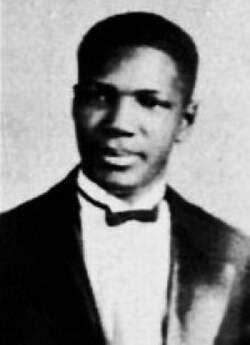
Key Facts
- Role: Pioneer jazz banjoist and guitarist.
- Notable Collaborations: Louis Armstrong's Hot Five and Hot Seven, King Oliver's Jazz Band, and Jelly Roll Morton's Red Hot Peppers.
- Key Compositions: "Oriental Strut," "Messin' Around," "Buddy's Habit," and "High Fever."
- Career Span: Active from 1904 until 1965.
- Legacy: Instrumental in establishing the banjo's role in early jazz orchestration.
Early Career in New Orleans
St. Cyr's professional journey began in the vibrant musical landscape of New Orleans. In 1912, he joined the band of Papa Celestin, embarking on his first tour through Louisiana with John Rucker’s Minstrel Show. By 1914, he was performing with Armand J. Piron, and by 1915, he worked with pianist Arthur Campbell.
In 1916, St. Cyr joined King Oliver’s Magnolia Band, playing alongside Johnny Dodds, Ernest Kelly, Pops Foster, and Henry Zeno. This period of rapid growth saw him transition through several influential groups, including Kid Ory’s band, where he performed with Mutt Carey and Jimmie Noone.
The Riverboat Era
A pivotal shift in St. Cyr's career occurred in 1917 when bandleader Fate Marable recruited him for the Streckfus Steamers riverboat excursions. St. Cyr performed on the 221-foot sternwheeler SS Sidney alongside Louis Armstrong, Baby Dodds, and Pops Foster.
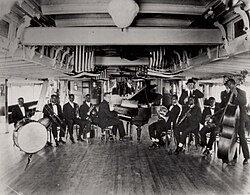
Following the damage of the SS Sidney in a storm, St. Cyr joined a new ensemble on the Capitol in 1920, which later moved to the steamer St. Paul for the St. Louis summer season. The St. Paul band became a local sensation, drawing massive crowds to the docks. During this time, the musicians were exposed to a wide array of new sheet music from publishers, which pushed their sound toward a style more reminiscent of a swing band than traditional New Orleans jazz.
It was in St. Louis that St. Cyr acquired the four-string banjo that would become his signature instrument. Purchased for $20.00 from a pool room owner, this instrument was used on all his subsequent recordings with the Louis Armstrong Hot Five.
The Chicago Years and Recording Legacy
St. Cyr moved to Chicago in September 1923, where he initially lived with King Oliver and later with Louis Armstrong and Lil Hardin. His time in Chicago was marked by high-profile recordings and steady work. He joined Doc Cook’s Dreamland Orchestra in 1924, remaining until 1929. He also performed after-hours at the Edelweiss Club with Jimmie Noone’s band, which featured Earl Hines and Johnny Wells.
His most significant contributions to the jazz canon came through his work with the Louis Armstrong Hot Five and Hot Seven sessions. These recordings cemented his reputation as a premier rhythm player and composer.
Later Life and the Disneyland Revival
During the 1930s and 1940s, St. Cyr balanced his musical passion with a career as a plasterer, playing part-time with Paul Barbarin and Alphonse Picou. The late 1940s saw a resurgence of interest in early jazz, marketed as "Dixieland," which brought St. Cyr back into the spotlight. In 1951, he was voted the "All-Time All-Star Banjoist" by The Record Changer magazine.
In 1955, St. Cyr moved to Los Angeles to provide music for the new Disney riverboats at Disneyland, specifically the Mark Twain. He formed the Young Men of New Orleans and the New Orleans Creole Jazz Band. He remained employed at Disneyland for the rest of his life, hosting jam sessions known as the "South Wall Street Barefoot Philharmonic" at his home.
In 1961, a historic reunion occurred on a Disneyland cruise when Louis Armstrong and Kid Ory joined St. Cyr, marking the first time Armstrong and Ory had played together in 40 years.
Summary of Career Highlights
| Period | Key Affiliations | Notable Locations | Major Milestone |
|---|---|---|---|
| 1912–1916 | Papa Celestin, King Oliver | New Orleans, LA | Early professional touring |
| 1917–1923 | Fate Marable's Riverboat Bands | Mississippi River / St. Louis | Acquisition of signature 4-string banjo |
| 1923–1929 | Hot Five, Hot Seven, Doc Cook | Chicago, IL | Defining recordings with Louis Armstrong |
| 1955–1966 | Young Men of New Orleans | Los Angeles, CA | Musical director for Disneyland riverboats |
Frequently Asked Questions
What instrument did Johnny St. Cyr primarily play?
Johnny St. Cyr was primarily a banjoist and guitarist. He is specifically credited with pioneering the use of the banjo within jazz music, which significantly influenced the genre's rhythmic structure during the Jazz Age.
Which famous jazz musicians did he work with?
He collaborated with some of the most influential figures in jazz history, including Louis Armstrong, King Oliver, Jelly Roll Morton, Kid Ory, and Johnny Dodds.
What are some of his most famous compositions?
St. Cyr is best known for writing "Oriental Strut," "Messin' Around," "Buddy's Habit," and "High Fever."
How did he end up at Disneyland?
In 1955, Disneyland opened its replica paddle steamers, including the Mark Twain. The park hired St. Cyr to provide authentic New Orleans-style music for the excursions, leading him to move to Los Angeles.
When and how did Johnny St. Cyr die?
Johnny St. Cyr died of leukemia on June 17, 1966, in Los Angeles at the age of 76.