Johnny Dodds: The Architect of the Jazz Age Clarinet
Johnny Dodds was a towering figure in the early evolution of jazz, recognized as the premier clarinetist of his era. A master of the Dixieland style—a lively, improvised form of early jazz—Dodds blended technical virtuosity with a deep, soulful connection to the blues. His influence was so profound that he has been described as a prime architect in the creation of the Jazz Age.
Key Facts
- Born: April 12, 1892, in New Orleans, Louisiana.
- Died: August 8, 1940, in Chicago, Illinois.
- Primary Instruments: Clarinet and alto saxophone.
- Notable Collaborations: Louis Armstrong, Joe "King" Oliver, and Jelly Roll Morton.
- Legacy: Posthumously inducted into the DownBeat Jazz Hall of Fame in 1987.
Early Life and Musical Roots
Born into a musical household in New Orleans, Dodds was surrounded by melody from a young age. His father and uncle were violinists, and his sister played the melodeon. In his youth, Johnny contributed to the family quartet as a high tenor singer. Legend suggests his journey into instrumentation began with a toy flute originally bought for his brother, Warren "Baby" Dodds.
As he matured, Dodds developed a reputation for being reserved and serious, a stark contrast to his "funky blues playing." This distinctive style earned him the nickname "toilet." To refine his craft, he studied the clarinet under the guidance of Lorenzo Tio Jr. and Charlie McCurdy, eventually performing with influential bands led by Frankie Duson, Kid Ory, and Joe "King" Oliver.
The Chicago Years and Professional Peak
In 1923, Dodds moved to Chicago to join Joe "King" Oliver's Creole Jazz Band, marking the start of his first recording sessions. However, the band eventually split due to musical conflicts and Dodds' reluctance to travel. Following the breakup in 1924, he became the house clarinetist and bandleader at Kelly's Stables, where he remained a fixture from 1924 to 1930.
During this golden era of Chicago jazz, Dodds collaborated with some of the most legendary names in music history, including Louis Armstrong's Hot Five and Hot Seven, as well as Jelly Roll Morton's Red Hot Peppers. Between 1927 and 1929, he recorded extensively as a leader with Johnny Dodds' Black Bottom Stompers for labels such as Paramount, Victor, and Brunswick/Vocalion.
Technical Mastery and Influence
Dodds was celebrated for a heartfelt, blues-laden tone that left a lasting impression on future generations. Even Benny Goodman, a giant of the swing era, remarked that no one ever surpassed Dodds in achieving a finer clarinet tone.
Musicologists suggest this unique sound was the result of a double embouchure (placing both the lower and upper lips over the mouthpiece) paired with a very hard reed (the thin piece of cane that vibrates to produce sound). This combination allowed him to achieve the rich, piercing quality that defined his recordings.
Sibling Rivalry and Reconciliation
The relationship between Johnny and his brother, Warren "Baby" Dodds—one of jazz's first great drummers—was often strained. Early jealousy stemmed from Johnny receiving a clarinet from their father while Baby was denied a drum set. In adulthood, Johnny initially refused to play with Baby due to his brother's heavy drinking.
This tension shifted when Joe Oliver hired Baby, and Johnny recognized his brother's immense growth as a musician. While they continued to clash over Baby's habits, they eventually grew closer, collaborating in the New Orleans Bootblacks in 1926. Baby was deeply affected by Johnny's passing.
Later Years and Legacy
The onset of the Great Depression caused a sharp decline in Dodds' career. Coupled with failing health, he spent most of the 1930s away from the recording studio, producing only two sessions for Decca in 1938 and 1940. Johnny Dodds died of a stroke on August 8, 1940, at the age of 48.
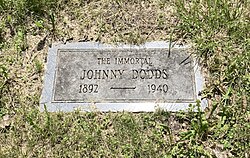
He was laid to rest at Lincoln Cemetery in Blue Island, Illinois, leaving behind a discography that serves as a blueprint for the New Orleans jazz sound.
Summary of Career Highlights
| Category | Details |
|---|---|
| Key Eras | New Orleans (Early), Chicago (1920s-1940) |
| Major Groups | Creole Jazz Band, Hot Five, Hot Seven, Red Hot Peppers |
| Recording Labels | Paramount, Victor, Brunswick, Vocalion, Decca |
| Honors | DownBeat Jazz Hall of Fame (Inducted 1987) |
Frequently Asked Questions
What instrument was Johnny Dodds most famous for?
Johnny Dodds was primarily known as a virtuoso clarinetist, though he also played the alto saxophone.
Who were some of Johnny Dodds' most famous collaborators?
He worked extensively with jazz legends such as Louis Armstrong, Joe "King" Oliver, and Jelly Roll Morton.
What contributed to the unique tone of Dodds' clarinet?
His tone is attributed to the use of a double embouchure (both lips over the mouthpiece) and the use of a very hard reed.
How did the Great Depression affect his career?
The Great Depression led to a precipitous decline in his career, and combined with ill health, he recorded very little during the 1930s.
What was the nature of his relationship with his brother, Baby Dodds?
Though they experienced childhood jealousy and adult conflicts over Baby's drinking, they eventually reconciled and respected each other as fellow musicians.