John Lindley: The Pioneer of Orchidology and Natural Botany
John Lindley (1799–1865) was a towering figure in 19th-century science, serving as an English botanist, gardener, and orchidologist—a specialist in the study of orchids. From his humble beginnings in a Norfolk nursery to his tenure as a professor and a key leader in the Royal Horticultural Society, Lindley's career was defined by an industrious commitment to classifying the plant kingdom.
His work bridged the gap between practical horticulture and academic botany, leaving an indelible mark on how plants are categorized and preserved globally.
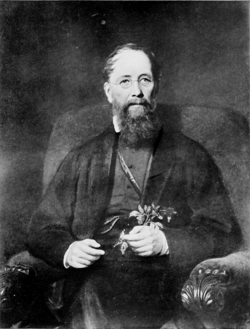
Key Facts
- Specialization: Renowned as the leading authority on orchid classification of his era.
- Academic Impact: Professor of Botany at University College, London, from 1829 to 1860.
- Institutional Role: Served as Assistant Secretary to the Royal Horticultural Society.
- Major Achievement: Played a critical role in saving the Royal Botanic Gardens at Kew from government abolition.
- Scientific Contribution: Championed the "natural" classification system over the "artificial" Linnaean system.
Early Life and Education
Born on February 5, 1799, in Catton, Norfolk, John Lindley was the son of George and Mary Lindley. His father was a pomologist (a specialist in fruit cultivation) who ran a commercial nursery. Although the business struggled financially, the environment provided John with early exposure to horticulture and a passion for collecting wildflowers.
Educated at Norwich School, Lindley's path to higher education was blocked by family debt. Instead, he entered the professional world in 1815 as a Belgian agent for a London seed merchant. His trajectory changed when he met botanist William Jackson Hooker, who granted him access to a vast botanical library and introduced him to Sir Joseph Banks.
Professional Ascent and Botanical Monographs
Under the mentorship of Sir Joseph Banks, Lindley began working in Banks' herbarium. He quickly established himself as a skilled researcher and artist, producing detailed drawings of the plants he described. His early publications focused on specific plant groups, including the Monographia Rosarum (1820) and Monographia Digitalium (1821).
Following the death of Banks, Lindley was supported by William Cattley, a wealthy merchant. In gratitude for this patronage, Lindley named the orchid genus Cattleya after him. By age 21, Lindley's expertise earned him election as a fellow of the Linnean Society of London.
The Royal Horticultural Society and Academic Career
In 1822, Lindley was appointed Assistant Secretary to the Horticultural Society of London (later the Royal Horticultural Society) and supervised its garden at Chiswick. He became the administrative backbone of the organization, helping it navigate severe financial crises caused by the previous secretary, Joseph Sabine.
His academic influence grew in 1829 when he was appointed to the chair of botany at University College, London. Despite lacking a university degree himself, he became a highly regarded teacher, delivering six hours of lectures weekly and authoring textbooks to fill gaps in available botanical literature.
Scientific Contributions and the Natural System
Lindley was a fierce advocate for the natural classification system developed by Antoine Laurent de Jussieu. Unlike the "artificial" system of Linnaeus, which relied on a few specific characteristics, the natural system sought to reflect the overall plan of nature and the true affinities between plants.
This philosophy was detailed in his seminal works, A Synopsis of British Flora (1829) and An Introduction to the Natural System of Botany (1830). His dedication to orchidology was equally profound; he spent a decade writing The Genera and Species of Orchidaceous Plants, naming and describing over 100 genera that were later accepted by other leading botanists.
Global Flora and Public Service
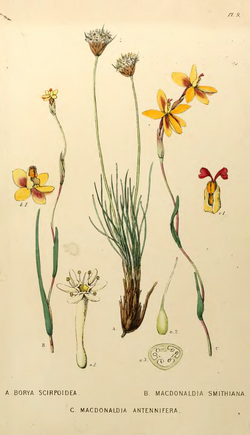
Lindley's work extended to the flora of distant colonies. He described plants from Thomas Livingstone Mitchell's expeditions and authored the 1840 Sketch of the Vegetation of the Swan River Colony, providing a succinct portrait of the flora in Western Australia.
Beyond classification, Lindley used his influence for public good. In 1840, he alerted the Prime Minister to government plans to abolish the Royal Botanic Gardens at Kew, sparking a public outcry that saved the institution. Later, in 1845, he served on a government commission to investigate the potato blight and Irish famine, a mission that contributed to the repeal of the 1815 Corn Laws to allow cheaper wheat imports.
Later Years and Legacy
In his final years, Lindley organized colonial exhibits for the 1861 International Exhibition at South Kensington. The exhausting nature of this work, combined with deteriorating health and memory, led to his resignation from his university and society posts by 1863.
John Lindley died on November 1, 1865, at his home in Acton Green. He left behind a legacy of rigorous taxonomic work and a modernized approach to botanical education.
| Period/Year | Role/Achievement | Key Contribution |
|---|---|---|
| 1819–1821 | Early Researcher | Published monographs on roses and digitalis. |
| 1822 | Assistant Secretary, RHS | Managed the Chiswick garden and stabilized society finances. |
| 1829–1860 | Professor of Botany, UCL | Taught botany and wrote foundational textbooks. |
| 1830s–1840s | Orchidologist | Authored The Genera and Species of Orchidaceous Plants. |
| 1840 | Conservationist | Successfully campaigned to save Kew Gardens. |
| 1857 | Royal Medalist | Awarded the Royal Medal by the Royal Society. |
Frequently Asked Questions
What is the difference between the natural and artificial systems of botany?
The artificial system, championed by Linnaeus, categorized plants based on a few easily observable traits. The natural system, which Lindley promoted, grouped plants based on a broader range of shared characteristics to better reflect their actual biological relationships.
How did John Lindley contribute to the study of orchids?
Lindley is considered a pioneer of orchidology. He spent ten years documenting the Genera and Species of Orchidaceous Plants and described numerous new species and genera, establishing himself as the world's leading authority on orchid classification during his time.
What role did Lindley play in saving Kew Gardens?
When the government proposed abolishing the Royal Botanic Gardens at Kew and selling its plants, Lindley informed the Prime Minister that the issue would be raised in Parliament. This triggered a public outcry that forced the government to reverse its decision.
Who was William Cattley and why is he mentioned in Lindley's work?
William Cattley was a wealthy merchant and patron who funded Lindley's early work, including the publication of Digitalia Monographia. Lindley honored him by naming the orchid genus Cattleya after him.
What was Lindley's involvement in the Irish famine?
Lindley was part of a government scientific commission in 1845 to investigate potato blight. While they could not cure the fungal disease, their report helped lead to the repeal of the Corn Laws, allowing for the import of cheaper American wheat to feed the starving population.