Johannes Kepler: The Architect of Planetary Motion
Johannes Kepler was a towering figure of the Scientific Revolution, a polymath whose work in astronomy, mathematics, and natural philosophy fundamentally altered our understanding of the cosmos. By transitioning from the traditional mathematical descriptions of the heavens to a physical understanding of celestial mechanics, Kepler bridged the gap between the ancient world and the modern era of astrophysics.
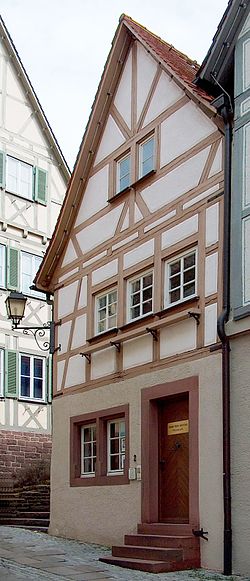
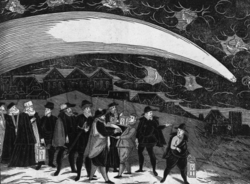
Born on December 27, 1571, in the Free Imperial City of Weil der Stadt, Germany, Kepler's early curiosity was sparked by the heavens. As a child, he witnessed the Great Comet of 1577, an event that captivated astronomers across Europe and set him on a path toward scientific inquiry.
Key Facts
- Primary Achievement: Formulated the three laws of planetary motion.
- Major Works: Authored the Rudolphine Tables and Astronomia Nova.
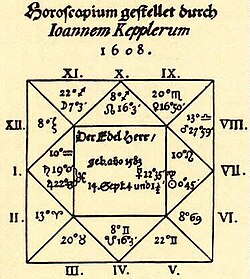
- Interdisciplinary Reach: Contributed significantly to optics, mathematics (the Kepler conjecture), and astrology.
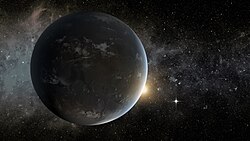
- Legacy: The Kepler space telescope is named in his honor, having detected thousands of exoplanets.
- Education: Studied at the University of Tübingen under Michael Maestlin.
The Scientific Journey: From Graz to Prague
Kepler's academic foundation was laid at the Tübinger Stift, where he earned his MA. His early career took him to Graz, where he served as a teacher and researcher. However, his tenure there was marked by religious and political tension, eventually leading to his expulsion.
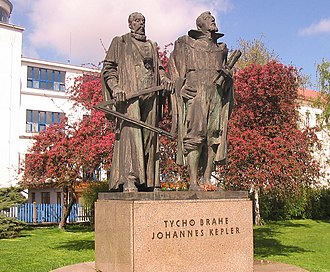
In 1600, Kepler moved to Prague, where he entered a pivotal partnership with the Danish astronomer Tycho Brahe. Brahe possessed the most accurate observational data of the time, which Kepler used to challenge the long-held belief that planets moved in perfect circles.
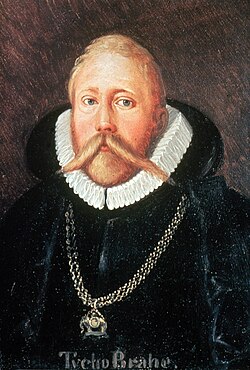
During his time in Prague, Kepler served as an Imperial Advisor and documented the Supernova of 1604, a rare celestial event that provided further evidence of a changing universe.


Revolutionizing Astronomy and Mathematics
Kepler's most enduring legacy is his set of laws describing planetary motion. In his work Astronomia Nova (1609), he broke away from geocentric and simple heliocentric models to prove that planets move in elliptical orbits with the sun at one focus.
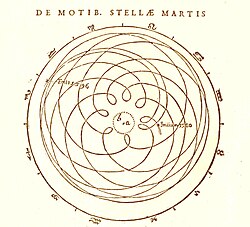
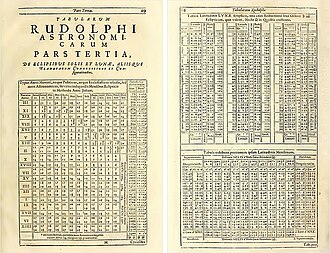
He further expanded his research in Harmonice Mundi (1619), where he explored the geometrical harmonies of the universe, and the Rudolphine Tables (1627), which provided highly accurate predictions of planetary positions.
Beyond astronomy, Kepler made significant strides in other fields:
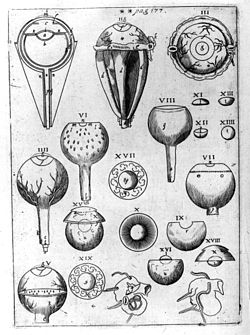
- Optics: In Astronomiae Pars Optica and Dioptrice, he studied the structure of the eye and the behavior of light.
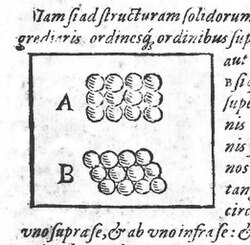
- Mathematics: He proposed the Kepler conjecture regarding the most efficient way to pack spheres, a problem that remained a challenge for centuries.
- Natural Philosophy: He wrote De nive sexangula, exploring the six-sided geometry of snowflakes.
Personal Struggles and Later Life
Kepler's life was not without hardship. He faced excommunication and the devastating impact of war. One of the most stressful periods of his life was the trial of his mother for witchcraft, a legal battle he fought tirelessly to resolve.
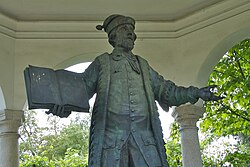
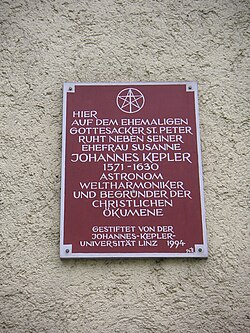
He spent his later years in Linz, where he married Susanna Reuttinger, and eventually moved to Ulm and Sagan. Even in his final years, he remained productive, establishing a printing press in 1629 to publish his Ephemerides (tables of celestial positions).
Summary of Major Works
| Year | Work | Primary Focus |
|---|---|---|
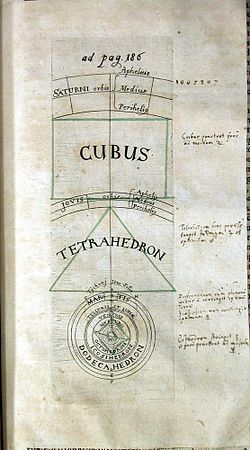
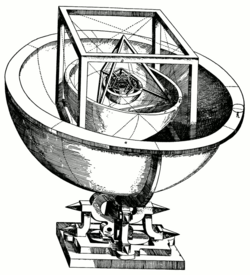
| 1596 | Mysterium Cosmographicum | Platonic solid model of the Solar System |
| 1609 | Astronomia Nova | Elliptical orbits and planetary motion |
| 1611 | De nive sexangula | Geometry of snowflakes |
| 1619 | Harmonice Mundi | Harmonies of the worlds and celestial music |
| 1627 | Rudolphine Tables | Precise planetary and eclipse tables |
| 1634 | Somnium | Lunar astronomy and a fictional dream |
Legacy and Modern Influence
Kepler's transition from mathematical astronomy to celestial physics paved the way for Isaac Newton's law of universal gravitation. His insistence on mathematical precision and physical evidence remains a cornerstone of the scientific method.
Today, his name lives on through the Kepler space telescope. This mission has observed over 530,000 stars and confirmed 2,778 planets as of June 2023, continuing Kepler's lifelong quest to map the architecture of the universe.
Frequently Asked Questions
What are Kepler's laws of planetary motion?
Kepler's laws describe how planets move around the sun. They establish that orbits are ellipses rather than circles, that planets sweep out equal areas in equal times, and that there is a precise mathematical relationship between a planet's distance from the sun and its orbital period.
Did Johannes Kepler practice astrology?
Yes, Kepler viewed astrology as a legitimate science of his time and wrote works such as De Fundamentis Astrologiae Certioribus to establish firmer foundations for the practice.
What is the Kepler conjecture?
The Kepler conjecture is a mathematical hypothesis regarding the most efficient way to pack spheres (such as oranges) in a space, suggesting that a face-centered cubic packing is the densest possible arrangement.
How did Tycho Brahe influence Kepler's work?
Tycho Brahe provided the highly accurate observational data on planetary positions—particularly Mars—that Kepler needed to prove that orbits were elliptical rather than circular.
What was the significance of the Rudolphine Tables?
The Rudolphine Tables were the most accurate star and planetary catalogs of the early 17th century, allowing astronomers to predict the positions of celestial bodies with unprecedented precision.