Johann Baptist von Spix: The Pioneer of Brazilian Zoology
Johann Baptist von Spix was a distinguished German biologist whose relentless curiosity and daring expeditions fundamentally expanded the Western world's understanding of South American biodiversity. From his early academic pursuits in philosophy and medicine to his tenure as a leading zoologist in Munich, Spix dedicated his life to the systematic classification of the natural world.
His most enduring legacy stems from a perilous journey through the heart of Brazil, where he collected thousands of specimens that now form the bedrock of several prestigious museums in Germany. His work bridged the gap between early natural history and modern zoological science.
Key Facts
- Born: February 9, 1781, in Höchstadt, Germany.
- Died: March 13, 1826, in Munich, Germany.
- Major Achievement: Led a massive biological expedition to Brazil (1817–1820).
- Scientific Contribution: Described between 500 and 600 new species and subspecies.
- Institutional Impact: Founded the basis for the National Zoological Collection in Munich.
Early Life and Academic Foundation
Born the seventh of eleven children in Höchstadt, Spix began his intellectual journey by studying philosophy in Bamberg, where he earned a doctoral degree. He later transitioned to theology in Würzburg, but his exposure to the lectures of professor F. W. J. Schelling sparked a deep passion for nature. This shift led him to abandon theology for medicine, completing a second doctorate in 1807.
In 1808, King Maximilian I Joseph of Bavaria appointed Spix as a student of zoology at the Bavarian Academy of Sciences and Humanities. To refine his expertise, Spix traveled to Paris to study under the renowned Georges Cuvier, a pioneer of comparative anatomy. This period of study was complemented by field excursions to the coast of Normandy, Southern France, and Italy, where he investigated marine animals.
The Rise of a Zoological Director
Upon returning to Munich in 1810, Spix began publishing his findings on starfish and marine life. In 1811, he released a significant work on the history of zoological classification, which earned him a membership in the Bavarian Academy of Sciences. He was subsequently appointed as the first conservator (director) of the Bavarian zoological collection, the precursor to today's Zoologische Staatssammlung München.
One of his most influential early works was Cephalogenesis (1815). Written in Latin and featuring detailed lithographs, this study provided a comparative morphology of skulls across various species, including humans, primates, reptiles, and birds.
The Great Expedition to Brazil (1817–1820)
In 1817, Spix and fellow naturalist Carl Friedrich Philipp von Martius embarked on an ambitious expedition to Brazil. While they initially traveled with a group of Austrian naturalists accompanying Maria Leopoldina of Austria, Spix and Martius soon ventured out on their own to explore the interior of the continent.
Their journey took them from Rio de Janeiro through northern São Paulo, accompanied for a time by the painter Thomas Ender. They documented diamond mining in Ouro Preto and Diamantina before pushing further inland toward Salvador. The journey was fraught with danger; while crossing the arid Caatinga (a xeric shrubland), the duo suffered from severe diseases and nearly perished from thirst.
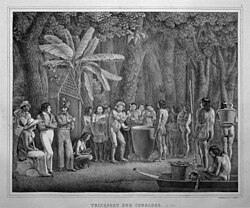
Beyond biological specimens, Spix and Martius documented indigenous cultures, investigated the giant Bendegó meteorite, and discovered fossil fish within the Santana Formation. The final leg of their journey took them to the Amazon River. While Martius explored the Yupurá River, Spix traveled as far as Tabatinga on the Peruvian border and navigated the Negro River from Manaus.
Scientific Legacy and Publications
Spix and Martius returned to Munich in 1820 with thousands of plants, animals, and ethnographic objects. These collections became the foundation for the Natural History Museum in Munich and the Museum für Völkerkunde München (now the Museum Fünf Kontinente).
Spix spent his final years synthesizing his findings. He and Martius co-authored a three-volume description of their journey, published between 1823 and 1831. Although Spix died in 1826—possibly from a tropical disease contracted during his travels—Martius completed the second volume using Spix's extensive notes.
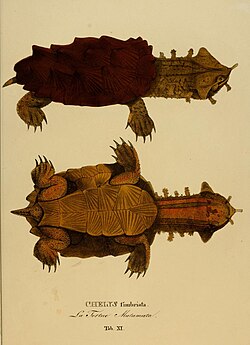
Spix's taxonomic work was vast, describing 500 to 600 species. His name is immortalized in numerous taxa, most notably the Spix's macaw, a rare parrot species.
| Category | Example Species | Scientific Name |
|---|---|---|
| Birds | Spix's Macaw | Cyanospitta spixii |
| Reptiles | Spix's Turtle | Acanthochelys spixii |
| Mammals | Spix's Night Monkey | Aotus vociferans |
| Fish | Spix's Catfish | Cathorops spixii |
Frequently Asked Questions
What was the primary purpose of Spix's trip to Brazil?
Spix and Martius traveled to Brazil to collect and describe biological specimens, study indigenous peoples, and investigate the region's economic and scientific potential under the auspices of King Maximilian I Joseph of Bavaria.
Which major institutions were founded based on Spix's collections?
His zoological specimens formed the basis of the National Zoological Collection (Zoologische Staatssammlung München) and the Natural History Museum in Munich, while his ethnographic finds helped establish the Museum für Völkerkunde München.
What is the Cephalogenesis?
Published in 1815, Cephalogenesis is a scientific work written in Latin that examines the comparative morphology of skulls across various animal classes, including primates and birds.
How many species did Spix describe during his career?
Johann Baptist von Spix is credited with describing approximately 500 to 600 different species and subspecies.
What happened to the children brought back from Brazil?
Carl Friedrich Philipp von Martius brought two indigenous children from the Juri and Miranha tribes back to Munich; they were baptized as Johannes and Isabella.