Joachim Gauck: From Civil Rights Activist to President of Germany
Joachim Gauck is a defining figure in modern German history, embodying the transition from the restrictive regime of East Germany to a unified, democratic republic. A former Lutheran pastor and a relentless anti-communist civil rights activist, Gauck rose from the grassroots movements of the 1980s to serve as the President of Germany from 2012 to 2017.
His journey is marked by a steadfast commitment to human rights and a belief in the necessity of confronting the past to build a free future. Known as the "President of Hearts," Gauck's tenure was characterized by moral leadership and a focus on the responsibilities of freedom.
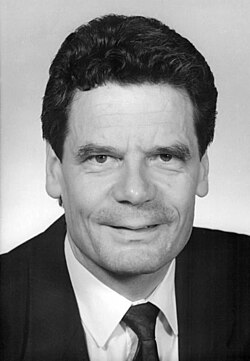
Key Facts
- Presidential Term: Served as President of Germany from March 18, 2012, to March 18, 2017.
- Stasi Records: Served as the first Federal Commissioner for the Stasi Records (1990–2000).
- Background: Originally a Lutheran pastor and anti-communist activist in East Germany.
- Political Status: Has remained an Independent politician since 1990.
- Key Honors: Recipient of the Grand Cross Special Class of the Order of Merit of the Federal Republic of Germany.
Early Life and Activism in East Germany
Born on January 24, 1940, in Rostock, Germany, Joachim Gauck spent his early adulthood navigating the complexities of the German Democratic Republic (GDR). As a Lutheran pastor, he became a prominent voice for civil liberties, challenging the state's authority and advocating for human rights.
During the Peaceful Revolution of 1989, Gauck was deeply involved in the movements that led to the fall of the Berlin Wall. He was affiliated with the New Forum and Alliance 90, groups that pushed for democratic reforms and the end of communist rule.

The Fight Against State Surveillance
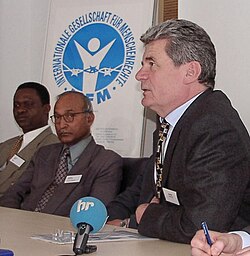
Gauck's activism was particularly focused on the abuses of the Stasi (the Ministry for State Security), the East German secret police known for its pervasive surveillance of citizens. He frequently lectured on the Stasi's campaigns to discredit human rights organizations, positioning himself as a defender of transparency and truth.
The "Stasi Hunter" and Political Ascent
Following the reunification of Germany, Gauck was appointed as the first Federal Commissioner for the Stasi Records on October 4, 1990. In this role, he oversaw the opening of the secret police archives, allowing victims of the regime to discover who had spied on them and ensuring that the crimes of the GDR were documented.
His political career also included brief tenures in legislative bodies, serving as a member of the Volkskammer (the East German parliament) for Rostock and briefly as a member of the Bundestag on October 3, 1990.
The Path to the Presidency
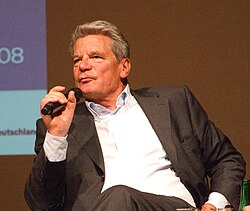
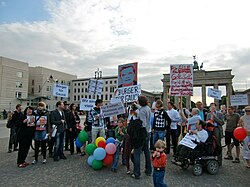
By 2010, Gauck had become a widely respected figure, though his staunch anti-communism made him a polarizing figure for some political factions, particularly the Left party. Despite this, he gained significant public support, leading to demonstrations such as "Citizens for Gauck" in front of the Brandenburger Tor.
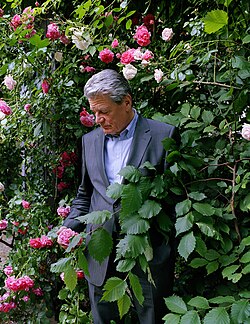
After the resignation of Christian Wulff, Gauck was nominated and eventually elected as President. He took office on March 18, 2012, under the chancellorship of Angela Merkel. His presidency was seen as a bridge between the East and West, emphasizing the moral dimensions of citizenship.
Presidential Tenure and Global Diplomacy
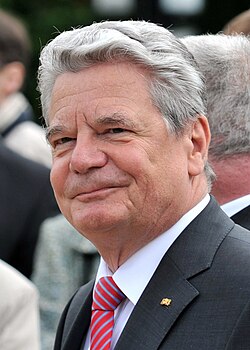
As President, Gauck focused on the concept of "daring freedom" and living with responsibility. He was an active diplomat, conducting state visits and receptions that reinforced Germany's international ties. He notably boycotted the Sochi Winter Olympics in 2013 as a critique of Russia.
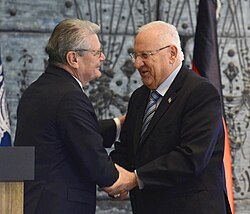
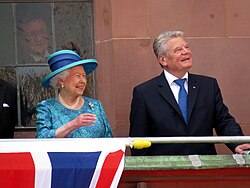
His diplomatic efforts included meetings with world leaders, such as Israeli President Reuven Rivlin and Queen Elizabeth II, reflecting Germany's commitment to historical reconciliation and global partnership.
Personal Life and Legacy
Joachim Gauck was married to Gerhild Radtke in 1959, though they separated in 1991. Since 2000, he has been in a domestic partnership with Daniela Schadt. He is a father of four children.
Beyond his political roles, Gauck is a published author and a member of the Senate of the Berlin-Brandenburg Academy of Sciences and Humanities, as well as the Atlantik-Brücke. His legacy remains tied to his role as a "therapist" for a nation recovering from dictatorship, urging Germans to embrace the fragility and responsibility of liberty.
| Role | Period | Key Focus |
|---|---|---|
| Member of the Volkskammer | 1990 | Democratic transition in East Germany |
| Federal Commissioner for Stasi Records | 1990–2000 | Opening and managing secret police archives |
| President of Germany | 2012–2017 | Moral leadership and international diplomacy |
Frequently Asked Questions
What was Joachim Gauck's role regarding the Stasi?
Joachim Gauck served as the first Federal Commissioner for the Stasi Records from 1990 to 2000. He was responsible for managing the archives of the East German secret police, allowing citizens to access their surveillance files.
Was Joachim Gauck a member of a political party during his presidency?
No, Joachim Gauck has been an Independent politician since 1990, although he had earlier affiliations with the New Forum and Alliance 90 during the transition period of 1989–1990.
Why was Gauck referred to as the "President of Hearts"?
This nickname reflected his wide public appeal and his reputation as a moral authority and civil rights hero who resonated with the emotions and aspirations of the German people.
What was Gauck's stance on communism?
Gauck was a staunch anti-communist. Throughout his career, he advocated for the recognition of the crimes of communism and the importance of freedom over state-controlled ideologies.
Who succeeded Joachim Gauck as President of Germany?
Joachim Gauck was succeeded by Frank-Walter Steinmeier on March 18, 2017.