The Rise and Reunification of the Federal Republic of Germany (1949–1990)
From its formation in the aftermath of World War II to the historic reunification in 1990, the Federal Republic of Germany (FRG)—commonly known as West Germany—stood as a cornerstone of the Western Bloc during the Cold War. Established from twelve states within the American, British, and French occupation zones, the FRG evolved from a divided territory into a global economic powerhouse and a stable federal parliamentary republic.
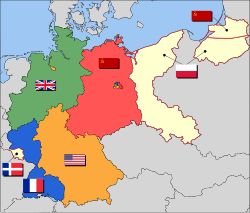
Key Facts
- Formation Date: 23 May 1949
- Capital City: Bonn
- Currency: Deutsche Mark (DM)
- Political System: Federal parliamentary republic
- Reunification Date: 3 October 1990
- Motto: "Unity and Justice and Freedom" (Einigkeit und Recht und Freiheit)
Foundations of the West German State
The Federal Republic was born out of the complex geopolitical landscape of the post-war era. While the nation was officially the Federal Republic of Germany, it was frequently referred to as the Bonn Republic, named after its capital, or the Second German Republic. During the 1950s and 1960s, the neighboring East Germany often used the terms Westdeutschland or westdeutsche Bundesrepublik to describe the state.
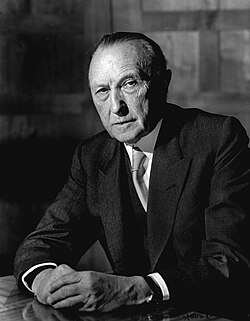
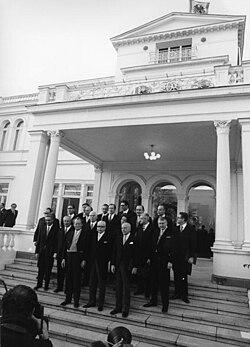
The government was structured as a bicameral legislature, consisting of the Bundestag (the lower house) and the Bundesrat (the upper house). Leadership during the early decades was defined by influential figures such as Konrad Adenauer, the first Chancellor, and Theodor Heuss, the first President.
International Integration and NATO
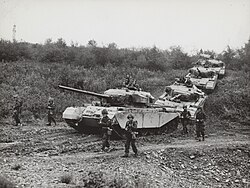
A defining characteristic of West Germany was its deep integration into Western alliances. A pivotal moment occurred on 9 May 1955, when the country became a member of NATO (the North Atlantic Treaty Organization). This membership, alongside the creation of the European Economic Community (EEC) in 1957, solidified West Germany's position within the Western political and military framework.
Political Dynamics and Social Change
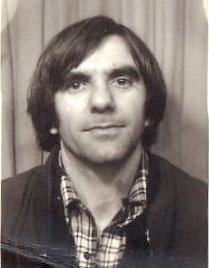
The 1960s and 1970s were periods of significant internal tension and transformation. The decade of the 1960s saw social unrest that eventually led to the emergence of the Red Army Faction (RAF), a group that engaged in terrorist activities throughout the 1970s until its activities ceased in the late 1990s.
Ostpolitik: Normalizing Relations with the East
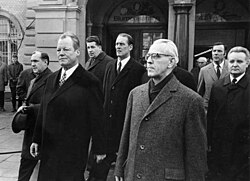
In the early 1970s, Chancellor Willy Brandt introduced Neue Ostpolitik, a policy aimed at normalizing relations between West Germany and the Eastern Bloc. Through a series of treaties—including the Treaty of Moscow and the Basic Treaty of 1972—West Germany moved away from the strict Hallstein Doctrine (which had previously claimed an exclusive mandate for all of Germany) and toward mutual recognition. This diplomatic shift eventually paved the way for both German states to join the United Nations in 1973.
Economic Growth and the "Economic Miracle"
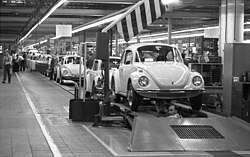
Despite the devastation of war, West Germany experienced a period of rapid economic expansion. This era of prosperity saw the rise of major industrial icons, such as the Volkswagen Beetle, which became one of the most successful vehicles globally. By 1990, the West German economy had reached an estimated GDP (PPP) of approximately $1.0 trillion, making it the 4th largest in the world at the time.
Demographic Trends
The population of West Germany saw steady growth throughout its existence, rising from roughly 51 million in 1950 to over 63 million by 1990. However, demographic data also shows a shift in birth rates and natural population changes toward the end of the 20th century.
| Category | 1950 | 1970 | 1990 |
|---|---|---|---|
| Total Population | 50,958,000 | 61,001,000 | 63,254,000 |
| GDP (PPP) Estimate | — | — | ~$1.0 trillion |
| Currency | Deutsche Mark (DM) |
The Path to Reunification
The collapse of the Eastern Bloc in 1989, signaled by the opening of the Berlin Wall, triggered a rapid movement toward unification. Following democratic elections, East Germany agreed to join the Federal Republic under the terms of the Unification Treaty. On 3 October 1990, the five new states (Länder) from the GDR and the reunited Berlin formally joined the Federal Republic.
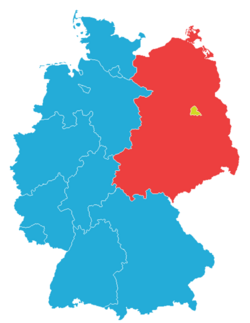
This reunification expanded the number of German states from 10 to 16 and ended the division of the nation. The expanded Federal Republic maintained its existing political culture, Western foreign policy, and memberships in NATO and the European Union. Full sovereignty was eventually attained in March 1991.
Frequently Asked Questions
What was the "Bonn Republic"?
The "Bonn Republic" was a common nickname for the Federal Republic of Germany, referring to its capital city, Bonn, which served as the seat of government during the period of division.
How did West Germany's relationship with East Germany change in the 1970s?
Through Willy Brandt's Ostpolitik, West Germany moved toward a policy of normalization and mutual recognition, resulting in several treaties that improved relations and eventually led to both states joining the United Nations.
What was the significance of the 1955 NATO membership?
Joining NATO was a critical step in West Germany's integration into the Western Bloc, providing military security and solidifying its political alignment with the United States and Western Europe during the Cold War.
When did German reunification officially occur?
German reunification was finalized on 3 October 1990, when the five states of the former East Germany and the city of Berlin joined the Federal Republic of Germany.
What was the role of the Deutsche Mark?
The Deutsche Mark (DM) was the official currency of West Germany, serving as a symbol of the country's economic stability and its "economic miracle" during the post-war era.