Jizya: The History and Application of the Non-Muslim Tax in Islamic Law
Jizya is a form of taxation historically levied on non-Muslim subjects living within a state governed by Islamic law. Derived from the Arabic root meaning "reward" or "repayment," the tax has been a subject of significant legal and historical discussion. While the Quran and hadiths mention jizya, they do not specify a fixed percentage or amount, leading to varied applications across different eras and dynasties.
Historically, early Muslim rulers often adapted existing local taxation systems, modifying them to align with Islamic religious law. The tax served multiple purposes: it was viewed as a fee for protection provided by the state, a substitute for military service, and a formal acknowledgment of allegiance to the Muslim state's laws while allowing non-Muslims to maintain their faith and communal autonomy.
Key Facts
- Purpose: Primarily served as a payment for state protection and an exemption from mandatory military service.
- Eligibility: Generally required from adult, free, sane males of the dhimma (protected non-Muslim) community.
- Exemptions: Women, children, the elderly, the disabled, the ill, monks, hermits, and slaves were typically exempt.
- Military Service: Non-Muslims who chose to serve in the Muslim army were exempted from paying the tax.
- Flexibility: Rates often varied based on economic status, with the wealthy paying more and the poor paying less or being exempted entirely.
The Rationale and Legal Basis
The legal sanction for jizya is found in the Quran, specifically in verse 9:29. Jurists have interpreted this requirement through various lenses. One primary rationale is the concept of protection; if a Muslim state was unable to provide safety and security to its non-Muslim subjects, it was argued that the state had no right to collect the tax.
For example, historical records indicate that during the Crusades, Saladin returned jizya payments to the Christians of Syria when he was forced to retract from the region, as the state could no longer guarantee their protection.
Liability, Rates, and Collection
The application of jizya was not uniform. While the majority of jurists focused on able-bodied men, some scholars, such as Ibn Hazm, argued that anyone who had reached puberty should be liable. In contrast, the Hanbali, Hanafi, Shafi'i, and Maliki schools generally agreed on exempting those unable to fight or work.
Regarding the cost, the Shafi'i manual Reliance of the Traveller suggests a minimum of one dinar (approximately 4.235 grams of gold) per year, with the maximum being whatever was agreed upon by both parties. Ibn Khaldun also noted that there were fixed limits that should not be exceeded.
| Category | Status | Reason for Status |
|---|---|---|
| Adult Free Males | Liable | Standard requirement for protection/military exemption |
| Women & Children | Exempt | Not required for military service |
| Elderly & Disabled | Exempt | Inability to perform military duties |
| Monks & Hermits | Exempt | Religious seclusion |
| Military Volunteers | Exempt | Direct contribution to state defense |
| Musta'mins | Exempt | Temporary residents/foreigners |
Historical Implementation
The Ottoman Empire
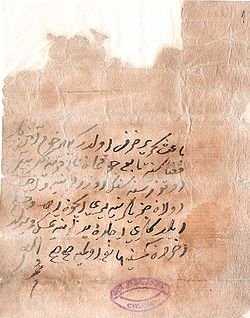
In the Ottoman Empire, jizya was integrated into a complex administrative system. Documents from the 17th century illustrate how the tax was recorded and managed as part of the state's revenue and the Millet system, which granted non-Muslim communities a degree of self-governance.
The Indian Subcontinent
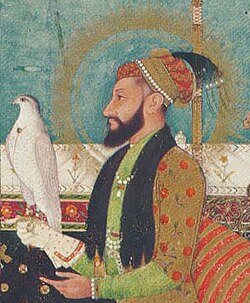
The history of jizya in India was more volatile. While it was used by various rulers, it became a prominent political symbol during the Mughal Empire. Emperor Aurangzeb is well-known for re-introducing the tax, which some historians view as a discriminatory measure and others as a return to classical Islamic law.
Other Regions
The tax was also applied in other territories, including Southern Italy during periods of Muslim rule, though the specific implementation varied based on local treaties and the economic conditions of the conquered populations.
Frequently Asked Questions
Was jizya intended to force conversion to Islam?
Many scholars argue it was not. They point to the fact that the tax was often progressive, exempted the poor, and was waived for those who served in the military, suggesting its purpose was political and protective rather than a tool for forced conversion.
What is the difference between Jizya and Kharaj?
Jizya is a poll tax levied on individuals (non-Muslim subjects), whereas Kharaj is a land tax levied on the land itself, regardless of the religion of the owner.
Could non-Muslims avoid paying jizya?
Yes. Non-Muslims could be exempted if they were poor, disabled, or if they volunteered for military service in the Muslim army.
What happened if a person could not afford to pay?
In many instances, those who were destitute were exempted. Some historical treaties, such as those by Khalid b. al-Walid, specified that the Bayt al-Mal (public treasury) would provide sustenance to those unable to pay due to disaster or poverty.
Is jizya still practiced today?
In the modern era, most Muslim-majority states have abolished jizya in favor of national citizenship and uniform taxation systems. However, some modern political theorists have discussed its theoretical reintroduction in an idealized Islamic state.