Umayyad Caliphate: The Rise and Fall of Islam's Second Great Empire
The Umayyad Caliphate (661–750 CE) stands as one of the most influential eras in early Islamic history. As the second caliphate established after the death of the prophet Muhammad, it transformed the Islamic state from a regional power into a sprawling global empire. Ruling from the city of Damascus, the Umayyad dynasty expanded the reach of Islam across three continents, blending diverse cultural influences into a centralized administrative machine.
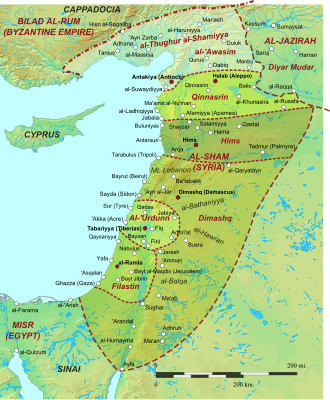
The dynasty emerged from the turmoil of the First Fitna—a period of civil war—when Mu'awiya I, the governor of Syria, established hereditary rule. This shift marked a departure from the elective nature of the preceding Rashidun Caliphate, setting the stage for a century of imperial growth, architectural brilliance, and eventual internal collapse.
Key Facts

- Duration: 661 to 750 CE.
- Capitals: Damascus (661–744) and Harran (744–750).
- Maximum Extent: Approximately 15,000,000 km², making it one of history's largest empires.
- Government: A hereditary monarchy.
- Official Language: Arabic.
- Key Achievements: Introduction of the gold dinar and construction of the Dome of the Rock.
The Rise of the Umayyads
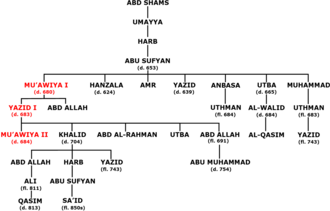
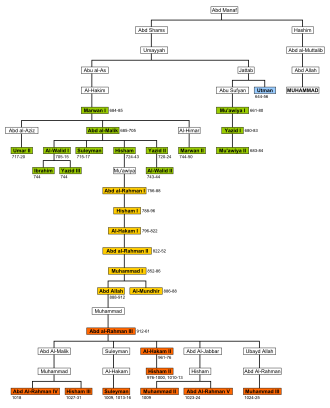
The roots of Umayyad power lay in the clan's early influence, most notably through Uthman ibn Affan, the third Rashidun caliph. However, the formal establishment of the dynasty occurred under Mu'awiya I. After the assassination of Ali in 661, Mu'awiya emerged victorious from the First Fitna, consolidating his power base in Syria.
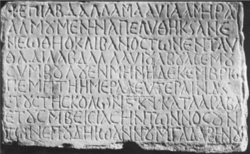
Mu'awiya's rule was characterized by administrative stability and the use of existing Byzantine structures. His efforts to maintain infrastructure, such as the restoration of Roman bathhouses, highlight the pragmatic approach the Umayyads took toward the lands they governed.
The Sufyanid and Marwanid Lines
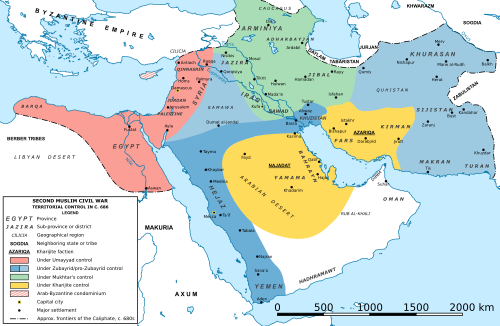
The dynasty is broadly divided into two familial branches. The Sufyanids, descending from Mu'awiya I, ruled until 684. Following a period of instability known as the Second Fitna—where authority was challenged by figures like Abd Allah ibn al-Zubayr—the Marwanids took control. Founded by Marwan ibn al-Hakam, this line restored order and oversaw the empire's greatest territorial expansions.
Imperial Expansion and Administration
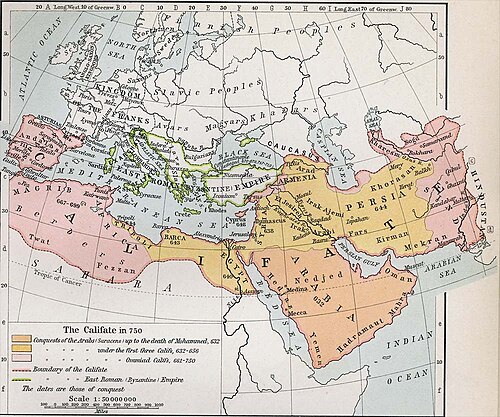
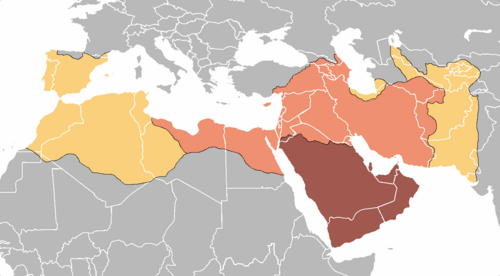
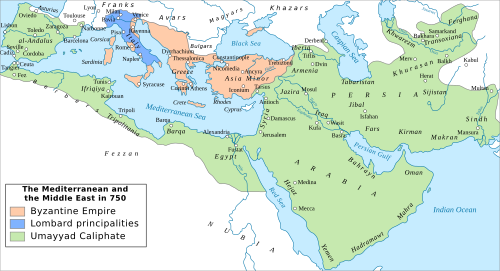
Under the Umayyads, the Muslim conquests reached an unprecedented scale. The empire pushed westward into the Maghreb and Hispania (modern-day Spain and Portugal), and eastward into Transoxiana and Sindh (modern-day Pakistan).
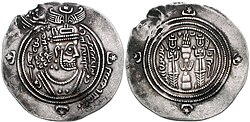
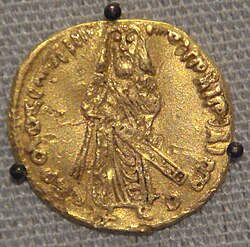
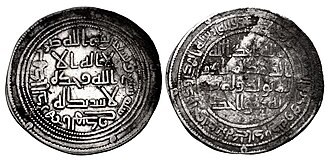
To manage this vast territory, the Umayyads implemented a centralized government. They introduced a standardized currency to replace foreign coins, most notably the gold dinar introduced by Abd al-Malik in 693. Initially featuring human figures, these coins evolved to feature purely Qur'anic and Islamic inscriptions by 697.
Social Hierarchy
The society of the Umayyad Caliphate was structured into four primary social classes:
- Muslim Arabs: The ruling elite.
- Muslim non-Arabs: Known as clients of the Muslim Arabs.
- Dhimmis: Protected non-Muslim free persons, including Christians, Jews, and Zoroastrians.
- Slaves: The lowest social tier.
Architectural and Cultural Legacy
The Umayyads left an indelible mark on the world through their architecture, which blended Roman, Byzantine, and Persian styles. The Dome of the Rock in Jerusalem remains the oldest surviving major Islamic building, serving as a testament to the dynasty's ambition and piety.
![The Dome of the Rock, located within the Al-Aqsa Mosque compound in Jerusalem, is considered the oldest surviving major Islamic building.[116]](/images/0e/95/0e95d80ee02d06807c8c9b8bc152d97a8506047c7dd429b10e602e81c950da20.jpg)
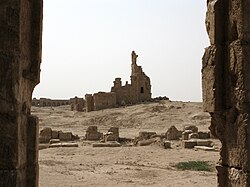
Other significant projects included the Umayyad Mosque in Damascus, commissioned by Al-Walid I and completed around 715, and the lavish desert palaces like Hisham's palace at Resafa, which featured intricate frescoes and courtly art.
![The Umayyad Mosque in Damascus was constructed on the orders of Al-Walid I, begun c. 705 and completed shortly after his death in 715.[205]](/images/60/e0/60e084d5e915ac61c7c3dd8203a8459feb15bad782cc6d8b50cb80be55131a29.jpg)
![Musicians and hunting cavalier, circa 730 CE. Floor fresco from Hisham's Qasr al-Hayr al-Gharbi, Syria. National Museum, Damascus.[169]](/images/76/a8/76a8ffa8ff10060498b79755b48d9345cc16683ef7c7411e11d2733129ad135e.jpg)
The Fall of the Dynasty
Despite its size, the empire faced growing internal resentment. The Hashimiyya movement in Khurasan, led by Abu Muslim around 746, sparked a massive revolt under the black flag. This movement culminated in the Abbasid Revolution.
The decisive blow came in January 750 at the Battle of the Zab, where the forces of the last Umayyad caliph, Marwan II, were defeated. By April 750, Damascus fell to the Abbasids, and Marwan II was killed in Egypt shortly thereafter.
While the caliphate in the East collapsed, a survivor of the dynasty established a new stronghold in al-Andalus. This evolved into the Emirate and later the Caliphate of Córdoba, which became a global center for science, philosophy, and medicine during the Islamic Golden Age.
![Ivory (circa 8th century) discovered in the Abbasid homestead in Humeima, Jordan. The style indicates an origin in northeastern Iran, the base of Hashimiyya military power.[192]](/images/43/63/4363a295b595d8c5e7aa40f62b757dcaf5b52e0827e4689de11c94509092edc1.jpg)
| Feature | Details |
|---|---|
| Period | 661–750 CE |
| Founding Caliph | Mu'awiya I |
| Last Caliph | Marwan II |
| Core Region | Syria (Damascus) |
| Major Conquests | Hispania, Maghreb, Sindh, Transoxiana |
| Successor State | Abbasid Caliphate (East), Umayyad Caliphate of Córdoba (West) |
Frequently Asked Questions
Who was the founder of the Umayyad Caliphate?
The Umayyad Caliphate was founded by Mu'awiya I, who became caliph in 661 CE after the First Fitna and established a hereditary monarchy based in Damascus.
How large was the Umayyad Empire at its peak?
At its greatest extent around 720 CE under Caliph Umar II, the empire covered approximately 15,000,000 square kilometers, stretching from Spain in the west to India in the east.
What was the significance of the gold dinar?
Introduced by Caliph Abd al-Malik in 693 CE, the gold dinar was an independent Islamic currency that helped centralize the economy and reduce reliance on Byzantine and Sasanian coinage.
Why did the Umayyad Caliphate collapse?
The dynasty fell due to internal instability and the Abbasid Revolution, which began in Khurasan. The Umayyads were decisively defeated at the Battle of the Zab in 750 CE.
What happened to the Umayyads after 750 CE?
While most were overthrown by the Abbasids, some survivors fled to al-Andalus (Spain), where they established the Emirate and later the Caliphate of Córdoba.