Jinju: The Historic Cultural and Educational Hub of South Korea
Located in the heart of South Gyeongsang Province, Jinju is a city where ancient heritage meets modern innovation. Known for its deep ties to Korean history, its reputation as a center for learning, and its stunning landscapes along the Nam River, Jinju offers a unique glimpse into the soul of the Yeongnam region.
From its origins as an ancient city of Goryeonggaya to its current status as a bio-industrial hub, Jinju has evolved while preserving the monuments and traditions that define its identity. Whether it is the floating lanterns of the Namgang River or the soft texture of its world-famous silk, the city is a testament to Korean resilience and artistry.
Key Facts
- Location: South Gyeongsang Province, South Korea.
- Population: 337,529 (as of September 2025).
- Historical Significance: Site of the first and second Sieges of Jinju during the Imjin War.
- Economic Pillars: Bio-industrial technology and a dominant silk industry (producing 70% of Korea's silk).
- Educational Status: A renowned "educational city" with a high population of young adults (20-29).
A Journey Through History
Jinju's history spans several eras. During the Gaya Era, it served as an ancient city of Goryeonggaya. In the Three Kingdom Era, it was known as 'Geoyeolseong' under Baekje, and later took names such as 'Geoyeolju', 'Cheongju', and 'Gangju' during the Unified Silla Era. The name Jinju was officially adopted in 940 during the Goryeo Dynasty.
The city is perhaps most remembered for its role in the Imjin War (1592–1598). It was the site of two major sieges by Japanese forces. The second siege was particularly devastating, resulting in the deaths of the entire garrison and a significant portion of the population; Korean accounts estimate the death toll at 60,000.
Administratively, Jinju served as the capital of Gyeongsangnam-do starting in 1896, a role it held until 1925 when Busan replaced it. In 1995, the city underwent a major reorganization, merging Jinju-si and Jinyang-gun into a single integrated urban-rural city.
Culture, Festivals, and Landmarks
Jinju is a city of vibrant celebrations and poignant memorials. The Jinju Namgang Lantern Festival, held every October, is one of the city's most iconic events. Lanterns are floated on the Nam River to commemorate those who perished during the Imjin War.
Another significant event is the Nongae Festival in May. This festival honors the patriotic gisaeng (professional entertainer) Nongae, who famously committed suicide by jumping into the Nam River while embracing a Japanese general. The event includes a reenactment of her sacrifice below the Chokseongnu pavilion of Jinju Fortress.
Other notable cultural highlights include the Gaecheon Arts Festival, the Korea Drama Festival, and the Jinju National Bullfighting Contest, which is the oldest of its kind in South Korea.
Visitors to the city often explore the Jinju Fortress, the Jinju National Museum, and the Nam-gang Prehistoric Site Museum to connect with the region's deep ancestral roots.
Local Flavors and Traditions
The culinary scene in Jinju is distinct, with Jinju bibimbap being the standout dish. Unlike many other versions of this mixed rice bowl, the Jinju variety features yukhoe (raw beef) and sesame oil.
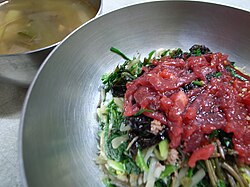
Other local delicacies include minmul jangeo (grilled freshwater eel) caught from the Nam River and a spicy version of pajeon (scallion pancake) known colloquially as jijimi, often paired with makkeolli (local rice wine). For those seeking history in their dining, Cheonhwang Sikdang, established in 1927, remains one of the oldest active restaurants in the country.
Beyond food, Jinju is the heart of the Korean silk industry. The city's factories produce approximately 70% of all silk in South Korea, prized for its exceptionally soft texture.
Education and Economic Innovation
Jinju is widely recognized as an educational center. It hosts several prestigious institutions, including Gyeongsang National University, Chinju National University of Education, and the International University of Korea, which primarily serves foreign students. This academic focus is reflected in the demographics, with those aged 20-29 making up 17.5% of the population.
Economically, the city has transitioned into a hub for bio-industrial technological innovation. Since 2000, the government has supported the development of biological and chemical material industries. The establishment of Jinju Hyeoksin Dosi (New Innovation City) brought the headquarters of the LH Corporation (State-run Land & Housing corp) and Namdong Thermal Power to the region, further boosting the local economy.
City Overview and Climate
| Category | Details |
|---|---|
| Total Area | 712.86 km² |
| Population Density | 473.49/km² |
| Main Highway | National Highway 10 (Namhae Expressway) |
| Rail Access | Jinju Station (Gyeongjeon Line) |
| Annual Precipitation | 1,518 mm |
| Average Annual Temp | 13.4°C |
Frequently Asked Questions
What makes Jinju bibimbap different from other types?
Jinju bibimbap is unique because it typically includes yukhoe (raw beef) and sesame oil, distinguishing it from the more common cooked vegetable versions found elsewhere in Korea.
What is the significance of the Namgang Lantern Festival?
The festival involves floating lanterns on the Nam River to commemorate the Korean lives lost during the Imjin War (1592–1598), blending remembrance with cultural celebration.
Why is Jinju known as an educational city?
Jinju hosts several major universities and colleges, and it has a high concentration of residents in the 20-29 age bracket, attracting students from surrounding towns like Sacheon, Hadong, and Sancheong.
What is the role of Jinju in the Korean silk industry?
Jinju is a primary center for silk production in South Korea, with its local factories producing roughly 70% of the nation's silk, known for its soft texture.
Who was Nongae?
Nongae was a patriotic gisaeng who, according to legend, committed suicide by jumping off a cliff into the Nam River while dragging down a Japanese general during the Imjin War.