Jean-Baptiste Lamarck: The Early Pioneer of Evolutionary Theory
Long before the world recognized the mechanisms of natural selection, Jean-Baptiste Lamarck (1744–1829) stood as one of the first scientists to propose that biological evolution occurred according to natural laws. A French naturalist, biologist, and former soldier, Lamarck transitioned from a career in the military to become a towering figure in the study of botany and zoology, challenging the prevailing belief that species remained unchanging throughout time.
Lamarck's journey into science was unconventional. After serving with bravery in the Seven Years' War against Prussia, an injury in 1766 led him to retire from the army. Though he initially pursued medicine, his passion shifted toward botany under the mentorship of Bernard de Jussieu. This dedication culminated in the 1778 publication of Flore françoise, a three-volume work that earned him membership in the French Academy of Sciences in 1779.
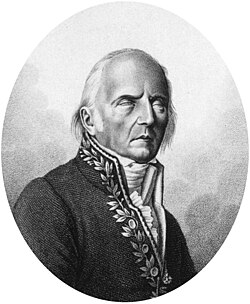
Key Facts
- Full Name: Jean-Baptiste Pierre Antoine de Monet, chevalier de Lamarck.
- Primary Contribution: Early proponent of biological evolution and the inheritance of acquired characteristics.
- Academic Roles: Professor of Zoology at the Muséum national d'Histoire naturelle and Chair of Botany at the Jardin des Plantes.
- Major Work: Philosophie zoologique.
- Taxonomic Legacy: Named thousands of species, including families like the ark clams (Arcidae) and sea hares (Aplysiidae).
From Botany to Zoology
Lamarck's professional ascent was marked by significant institutional roles. In 1788, he was appointed keeper of the herbarium of the Royal Garden. During the French Revolution, he renamed the institution the Jardin des Plantes to distance it from its association with King Louis XVI. By 1793, he became a professor of invertebrate zoology at the newly founded Muséum national d'Histoire naturelle.
While he began his career as an essentialist—someone who believed species were fixed—his extensive research on molluscs in the Paris Basin changed his perspective. He became convinced of transmutation, the idea that the nature of a species changes over time. On May 11, 1800, he delivered a landmark lecture outlining his developing theories on evolution.
The Mechanics of Lamarckian Evolution
Lamarck proposed a two-factor system to explain how life evolves. He believed that life was driven by a complexifying force and shaped by adaptive pressures.
The Complexifying Force (Orthogenesis)
Lamarck posited a power within living beings that drove animal body plans toward higher levels of complexity. This process, known as orthogenesis, created a hierarchical "ladder" of phyla, pushing life toward greater sophistication.
The Adaptive Force: Use and Disuse
To explain the diversity within species, Lamarck introduced the concept of the adaptive force. This was governed by two primary laws:
- Law of Use and Disuse: Organs or traits used frequently to cope with the environment become stronger and more developed, while those not used gradually wither away.
- Inheritance of Acquired Characteristics: These physical changes acquired during an organism's lifetime are passed down to its offspring.
![Lamarck's two-factor theory involves 1) a complexifying force that drives animal body plans towards higher levels (orthogenesis) creating a ladder of phyla, and 2) an adaptive force that causes animals with a given body plan to adapt to circumstances (use and disuse, inheritance of acquired characteristics), creating a diversity of species and genera. Popular views of Lamarckism consider only an aspect of the adaptive force.[26]](/images/cf/2f/cf2f53197bddc99a6a050fc01288f4ea43e79cc68183f5f2ee7654cfe4514888.webp)
Scientific Legacy and Taxonomy
Beyond his evolutionary theories, Lamarck was a prolific taxonomist. He provided names for a vast array of organisms, with records showing over 1,600 species in the World Register of Marine Species and nearly 1,800 in the Indo-Pacific Molluscan Database. His work on invertebrate classification, detailed in Histoire naturelle des animaux sans vertèbres, laid critical groundwork for future zoologists.
| Category | Details |
|---|---|
| Lifespan | August 1, 1744 – December 18, 1829 |
| Key Fields | Botany, Zoology, Natural History |
| Core Theory | Inheritance of acquired characteristics |
| Major Institutions | French Academy of Sciences, Muséum national d'Histoire naturelle |
| Notable Taxa Named | Arcidae, Aplysiidae, Cardiidae, Azolla |
Frequently Asked Questions
What is the main difference between Lamarckism and Darwinism?
Lamarckism suggests that organisms evolve by acquiring traits during their lifetime through use or disuse and passing those traits to offspring. Darwinism, conversely, focuses on natural selection, where individuals with innate, heritable traits better suited to their environment are more likely to survive and reproduce.
Did Lamarck invent the word "biology"?
Lamarck is often associated with the term, though it was introduced independently around the same time by other scientists, including Thomas Beddoes, Karl Friedrich Burdach, and Gottfried Reinhold Treviranus.
What was the "complexifying force" in Lamarck's theory?
The complexifying force was the idea that there is an inherent drive in nature to move organisms toward higher levels of complexity and organization, creating a progression of life forms.
Is Lamarck's theory of acquired characteristics still accepted?
The general mechanism of inheriting acquired physical traits (such as a giraffe stretching its neck) has been largely refuted. However, modern studies in epigenetics explore how environmental factors can influence gene expression across generations, which some see as a nuanced echo of Lamarck's ideas.
What were Lamarck's most significant publications?
His most influential works include Flore françoise (1778), which established his botanical reputation, and Histoire naturelle des animaux sans vertèbres (1815–1822), which focused on invertebrate classification.