Jean-Baptiste Lamarck and the Philosophie Zoologique
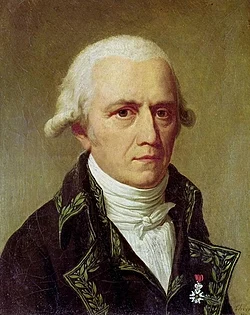
Long before Charles Darwin published his groundbreaking work on natural selection, a French naturalist named Jean-Baptiste Lamarck (1744–1829) sought to explain how animal species change over time. In 1809, Lamarck published Philosophie zoologique (Zoological Philosophy), a seminal text that outlined an early theory of evolution. This work introduced the world to the concept of Lamarckism, the idea that organisms can pass on traits acquired during their lifetime to their offspring.
Lamarck was a distinguished member of the French Academy of Sciences and served as a professor of botany at the Jardin des Plantes before becoming the first professor of zoology at the Muséum national d'Histoire naturelle. While he was highly regarded for his work on the taxonomy of invertebrates, particularly molluscs, his legacy is most defined by his attempts to explain the mechanism of biological change.
Key Facts
- Publication: Philosophie zoologique was published in 1809 in France.
- Core Theory: Proposed that species adapt to their environment through the use and disuse of organs.
- Inheritance: Asserted that acquired characteristics are passed down to subsequent generations.
- Complexity: Believed an innate life force drove organisms toward greater complexity.
- Origin of Life: Argued that simple life forms were created continuously via spontaneous generation.
The Laws of Lamarckism
In Philosophie zoologique, Lamarck proposed two primary laws to explain how species acquire new characteristics under the influence of their environment (which he called the "conditions of life").
The Law of Use and Disuse
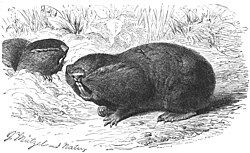
Lamarck's first law stated that the frequent use of a body structure would cause it to grow or strengthen, while the disuse of a structure would cause it to shrink or disappear over several generations. He used vestigial structures—organs that have lost their original function—as evidence for this process.
The Law of Inheritance of Acquired Characteristics
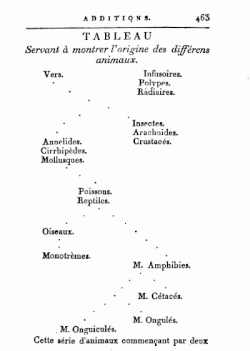
The second law asserted that these physical changes, acquired during an individual's life due to environmental pressure, would be inherited by their offspring. Together, these laws suggested that species are in a state of steady adaptation, forming a branching series of evolutionary paths.
Speciation and the Ladder of Complexity
Lamarck described speciation—the formation of new and distinct species—as a result of individuals being transported to new environments. Once subjected to different influences, these individuals would assume new forms, eventually constituting a new species. He argued that any apparent gaps between different kinds of animals were simply the result of the extinction of intermediate forms.
Unlike Darwin, Lamarck did not believe all living things shared a single common ancestor. Instead, he proposed transformisme (the transmutation of species), believing that simple life forms were constantly created through spontaneous generation. He further theorized that an innate life force, or "nervous fluid," pushed these organisms to advance up a linear ladder of complexity.
Scientific Reception and Criticism
Lamarck's theories were not widely embraced during his lifetime. In France, he was largely ignored or rejected by prominent zoologists like Georges Cuvier. However, his work gained more traction abroad and served as a forerunner to later evolutionary thought.
| Scientist | Perspective | Key Criticism/Contribution |
|---|---|---|
| Charles Darwin | Acknowledging | Recognized Lamarck as an important zoologist and a forerunner to natural selection. |
| Charles Lyell | Critical | Argued that Lamarck lacked evidence for the creation of entirely new organs. |
| Thomas Henry Huxley | Dismissive | Claimed Lamarck's arguments were obsolete or erroneous by 1850. |
| Robert Chambers | Promotional | Popularized Lamarckian ideas in Vestiges of the Natural History of Creation (1844). |
Charles Lyell, in his Principles of Geology, criticized the logic of Lamarckism by suggesting it implied that behavior determines anatomy. For example, Lyell argued that if Lamarck were correct, web-footed animals like otters and frogs did not evolve webbed feet to swim, but rather developed them because they stretched their toes while attempting to swim.
Frequently Asked Questions
What is the main difference between Lamarckism and Darwinism?
Lamarckism proposes that organisms acquire traits during their lifetime through use or disuse and pass those acquired traits to offspring. Darwinism proposes that individuals with naturally occurring advantageous traits are more likely to survive and reproduce (natural selection).
Did Lamarck believe in a common ancestor for all life?
No. Lamarck believed that simple life forms were continuously created through spontaneous generation and then evolved independently toward greater complexity.
What was the "nervous fluid" mentioned in his work?
Lamarck described a nervous fluid as an innate life force that drove species to become more complex over time, moving up a linear scale of organization.
How did Lamarck explain the existence of blind animals like the mole rat?
He used the blind mole rat (Spalax) as an example of the law of disuse, arguing that because the animal lives underground and does not use its sight, the eyes eventually shrank and became vestigial.
Was Philosophie zoologique influential?
While rejected by many contemporaries and later criticized by scientists like Huxley and Lyell, it is recognized as a critical early attempt to theorize evolution and influenced the scientific climate that preceded Darwin.